Franchise Licensing Process: A Complete Step-by-Step Guide to Licensing Your Franchise Business (2026)
Franchise Licensing Process is the foundation of building a legally compliant and scalable franchise business. A well-planned Franchise Licensing Process helps protect your intellectual property, define licensing agreements, standardize operations, and prepare your business for sustainable franchise expansion.
Franchising is one of the most effective ways to expand a successful business without owning every new location. At the heart of every franchise system is the franchise license—the legal permission granted by the franchisor that allows a franchisee to operate under an established brand, business model, and operating system.
However, franchise licensing involves much more than signing an agreement. It requires careful planning, protecting intellectual property, preparing operational systems, complying with applicable laws, training franchisees, and establishing governance mechanisms that ensure consistency across every location.
Whether you’re planning to franchise a restaurant, café, retail store, preschool, salon, fitness center, healthcare clinic, manufacturing business, or service company, understanding the franchise licensing process is essential for building a sustainable and legally compliant franchise network.
This guide explains the complete franchise licensing process, key legal considerations, licensing structures, and best practices for successful franchise expansion.
Important: Franchise laws and licensing requirements vary by country and jurisdiction. Always consult qualified franchise lawyers and regulatory professionals before offering or granting franchise rights.
What is Franchise Licensing?
Franchise licensing is the process by which a business owner (the franchisor) grants another independent business owner (the franchisee) the right to operate a business using the franchisor’s:
- Brand name
- Trademarks
- Business model
- Operating systems
- Intellectual property
- Marketing assets
- Training programs
- Operational support
The franchisor retains ownership of the intellectual property while licensing its use under clearly defined contractual terms.
Why Franchise Licensing Matters
A structured licensing process helps businesses:
- Expand faster with lower capital investment
- Protect intellectual property
- Maintain brand consistency
- Standardize customer experience
- Define legal rights and responsibilities
- Build long-term franchise relationships
- Reduce operational risks
- Increase business value
Licensing creates a scalable framework for sustainable business growth.
The Core Components of Franchise Licensing
A franchise license typically includes rights to use:
Brand Assets
- Business name
- Logo
- Taglines
- Product names
Intellectual Property
- Operations Manual
- SOPs
- Marketing materials
- Training resources
- Software
- Business systems
Operational Systems
- Standard Operating Procedures
- Quality standards
- Customer service protocols
- Reporting systems
Ongoing Support
- Initial training
- Operational guidance
- Marketing assistance
- Business reviews
- Performance monitoring
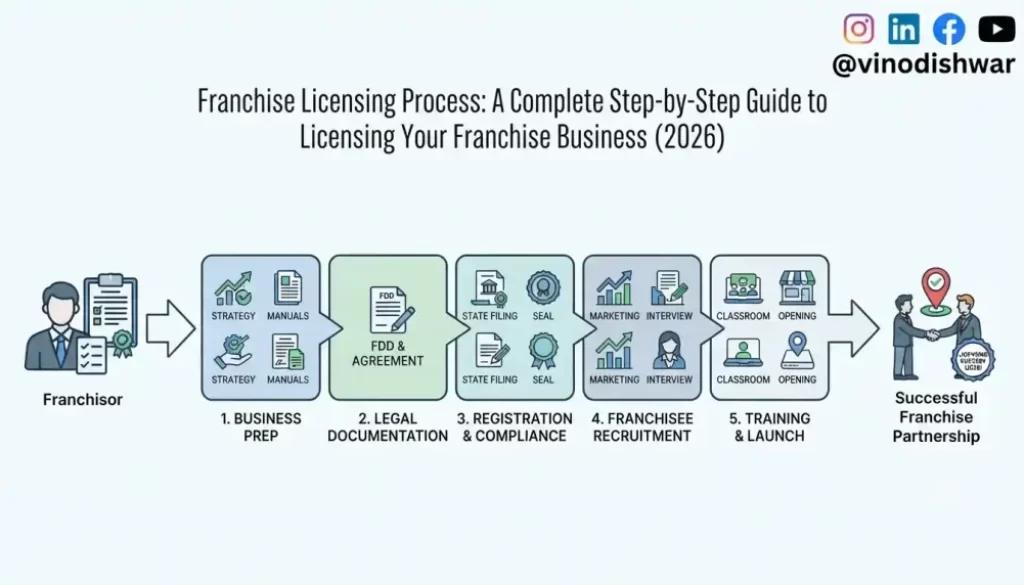
Step-by-Step Franchise Licensing Process
Step 1: Assess Franchise Readiness
Before licensing your business, evaluate whether it has:
- A proven business model
- Consistent profitability
- Repeatable systems
- Strong brand recognition
- Documented operational processes
Businesses should franchise only after demonstrating operational stability.
Step 2: Protect Your Intellectual Property
Secure key assets such as:
- Trademarks
- Copyrights (where applicable)
- Trade secrets
- Domain names
- Digital assets
Protecting intellectual property is fundamental before granting franchise rights. Learn more about trademark registration from the Indian Trademark Registry. Before licensing your business, read our detailed guide on Intellectual Property in Franchise Development.
Step 3: Define the Franchise Model
Choose the licensing structure that aligns with your expansion strategy, such as:
- Single-unit franchise
- Multi-unit franchise
- Area development franchise
- Master franchise
Clearly document responsibilities, territorial rights, and support obligations.
Step 4: Prepare Franchise Documentation
Develop essential documentation including:
- Franchise Agreement
- Operations Manual
- SOPs
- Brand Guidelines
- Compliance policies
- Training materials
These documents create the operational and legal foundation of the franchise system. We also recommend reading Franchise Legal Documentation Explained before preparing your franchise documents.
Step 5: Establish Licensing Terms
Clearly define:
- Initial franchise fee
- Royalty structure
- Marketing contributions
- License duration
- Renewal conditions
- Territory rights
- Performance expectations
- Termination provisions
All licensing terms should be documented in professionally prepared agreements.
Step 6: Recruit and Evaluate Franchisees
Develop a structured franchise recruitment process that includes:
- Application review
- Financial capability assessment
- Business experience evaluation
- Cultural fit assessment
- Due diligence
Selecting the right franchise partners is critical for long-term success.
Step 7: Execute the Franchise Agreement
After completing due diligence and meeting legal requirements, execute the Franchise Agreement and any related licensing documents.
Prospective franchisees should have adequate time to review documentation and obtain independent legal and financial advice.
Step 8: Deliver Initial Training
Provide structured onboarding covering:
- Business operations
- Brand standards
- Technology systems
- Sales processes
- Customer service
- Compliance requirements
Training helps franchisees launch successfully.
Step 9: Support Business Launch
Assist franchisees with:
- Site setup
- Branding implementation
- Marketing launch
- Staff training
- Operational readiness
- Opening support
A successful launch sets the tone for long-term performance.
Step 10: Monitor Compliance
Implement systems for:
- Operational audits
- Brand inspections
- Financial reporting
- Customer feedback
- Performance reviews
- Corrective actions
Ongoing governance protects the value of the franchise network. A structured Franchise Compliance Checklist helps maintain consistency across every franchise location.
Franchise Licensing Checklist
Before licensing your franchise, ensure you have:
Business Readiness
- Proven business model
- Profitable operations
- Scalable systems
Intellectual Property
- Trademark protection
- Brand ownership documented
- Digital assets secured
Documentation
- Franchise Agreement
- Operations Manual
- SOPs
- Brand Guidelines
- Training materials
Legal & Compliance
- Licensing provisions
- Confidentiality agreements
- Compliance framework
- Audit procedures
Franchise Support
- Training program
- Launch plan
- Ongoing support systems
- Performance reporting
Practical Example
A successful cloud kitchen brand decided to expand through franchising.
Before licensing its first franchise, the company:
- Registered trademarks
- Documented operational processes
- Developed comprehensive SOPs
- Created a Franchise Agreement
- Designed Brand Guidelines
- Established training modules
- Built compliance dashboards
- Introduced quarterly operational audits
This preparation enabled the business to license multiple franchise locations while maintaining operational consistency and protecting its brand.
Franchise Licensing Process Framework
Business Readiness
        │
        ▼
Intellectual Property Protection
        │
        ▼
Franchise Model Selection
        │
        ▼
Legal Documentation
        │
        ▼
Licensing Agreement
        │
        ▼
Franchisee Selection
        │
        ▼
Training & Onboarding
        │
        ▼
Business Launch
        │
        ▼
Compliance & Support
        │
        ▼
Scalable Franchise Growth
Common Franchise Licensing Mistakes
Avoid these common mistakes:
- Licensing before documenting systems
- Weak trademark protection
- Using generic franchise agreements
- Selecting franchisees too quickly
- Inadequate training
- Poor operational documentation
- Lack of compliance monitoring
- Unclear territory definitions
- Inconsistent brand governance
Addressing these issues early helps build a stronger and more sustainable franchise network.
How Franchise Development Consultants Help
Experienced franchise development consultants assist businesses by:
- Assessing franchise readiness
- Designing franchise business models
- Developing Operations Manuals and SOPs
- Creating Brand Guidelines
- Building franchise recruitment systems
- Structuring licensing processes
- Coordinating with qualified legal professionals
- Supporting franchise expansion strategies
Legal documentation should always be prepared or reviewed by experienced franchise lawyers.
Why Choose Franchise Alpha?
At Franchise Alpha, we help businesses build investor-ready franchise systems through our proprietary SOLEMN® Framework, combining strategy, operations, governance, and scalable expansion planning.
Strategy
Develop a franchise licensing roadmap aligned with your business goals.
Operations
Create Operations Manuals, SOPs, training systems, and quality standards.
Legal
Coordinate with qualified franchise legal professionals for licensing agreements, intellectual property protection, and compliance documentation.
Entrust
Establish governance frameworks that ensure accountability and operational consistency.
Marketing
Build standardized brand communication, franchise marketing systems, and launch support.
Nitty-Gritty
Implement compliance audits, KPI dashboards, reporting systems, and continuous improvement processes.
Frequently Asked Questions
What is franchise licensing?
Franchise licensing is the process of granting a franchisee the contractual right to operate a business using the franchisor’s brand, trademarks, business systems, and intellectual property under agreed terms.
What documents are required for franchise licensing?
Typical documentation includes a Franchise Agreement, Operations Manual, SOPs, Brand Guidelines, training materials, intellectual property licensing provisions, and compliance policies. Requirements vary by jurisdiction.
Can I license my business without registering a trademark?
It is generally advisable to protect your trademarks and other intellectual property before licensing your business. Consult an intellectual property professional for guidance based on your jurisdiction.
How long does the franchise licensing process take?
The timeline depends on business readiness, legal documentation, intellectual property protection, franchisee selection, and regulatory requirements. Many businesses spend several months preparing before granting their first franchise license.
Conclusion
A successful franchise licensing process goes far beyond signing a contract. It requires careful preparation, protected intellectual property, comprehensive documentation, operational standardization, franchisee training, and ongoing governance.
Businesses that invest in a structured licensing framework are better positioned to protect their brand, support franchisees, and scale sustainably. You can also improve your franchise readiness by following our Business Process Documentation Guide.
With the right systems in place, franchise licensing becomes a powerful engine for long-term business growth.
Call to Action
Ready to License Your Business as a Franchise?
Book a Franchise Readiness Assessment with Vinod Ishwar and discover how to prepare your business for successful franchise licensing and expansion.
Your assessment includes:
- Franchise Readiness Evaluation
- Business Model Assessment
- Intellectual Property Review
- Documentation & Licensing Roadmap
- Customized Franchise Expansion Strategy
Build a legally compliant, operationally strong, and scalable franchise system with confidence.