Protecting Your Brand Identity During Franchise Expansion
Franchise Brand Protection is essential when a successful business expands through franchising. As a franchise network grows, maintaining a consistent brand identity across multiple locations becomes increasingly important. Customers expect the same recognizable brand, quality and experience whether they visit the original outlet or a newly opened franchise.
Strong franchise brand protection combines intellectual property safeguards, clear brand guidelines, operational controls, franchisee training and ongoing monitoring.
Franchise expansion allows a successful business to reach new markets without requiring the franchisor to operate every location directly. But growth also creates a major challenge: maintaining a consistent brand identity across multiple franchise locations.
Customers expect the same brand experience whether they visit the original outlet or a newly opened franchise.
A different logo, inconsistent signage, poor customer service, unapproved advertising or inconsistent messaging can weaken that expectation.
That is why protecting your brand identity during franchise expansion should be treated as a strategic priority—not simply a marketing task.
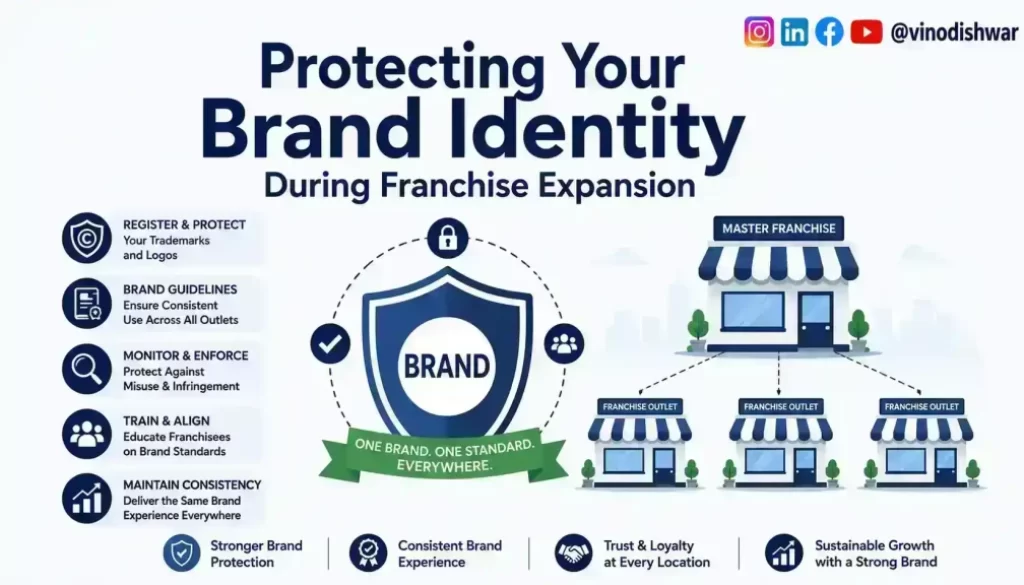
A strong franchise system combines intellectual property protection, brand standards, operational controls, franchisee training and ongoing monitoring.
Why Brand Identity Matters in Franchising
A franchise brand represents much more than a name or logo.
It communicates:
- Quality
- Customer experience
- Business values
- Product standards
- Market positioning
- Trust
- Professionalism
When customers recognize a franchise brand, they form expectations about what they will receive.
If those expectations differ dramatically between locations, brand trust can suffer.
For franchisors, protecting brand identity helps create consistency, recognition and long-term brand equity.
1. Protect Your Trademark and Intellectual Property
Before significant franchise expansion, identify and protect important intellectual property.
This can include:
- Brand name
- Logo
- Tagline
- Product names
- Packaging
- Marketing materials
- Franchise manuals
- Proprietary systems
Trademark protection is particularly important because franchisees may use the brand across multiple locations and marketing channels.
The franchise agreement should also clearly establish the franchisee’s permitted use of the franchisor’s intellectual property.
2. Create Comprehensive Brand Guidelines
A franchise brand guideline should give franchisees clear instructions on how the brand should appear and communicate.
It may cover:
Visual Identity
- Logo usage
- Colours
- Fonts
- Photography
- Graphics
Physical Branding
- Storefront signage
- Interior branding
- Uniforms
- Packaging
- Promotional displays
Digital Branding
- Website design
- Social media
- Digital advertisements
- Email marketing
- Online listings
Communication
- Tone of voice
- Messaging
- Customer communication
- Advertising language
The objective is not to restrict franchisees unnecessarily. It is to ensure that every location represents the same core brand.
3. Standardize the Customer Experience
Brand identity is not purely visual.
Customers experience the brand through:
- Staff behaviour
- Service speed
- Product quality
- Store cleanliness
- Complaint handling
- Packaging
- Communication
A beautiful logo cannot compensate for inconsistent customer experiences.
Franchise operations manuals and SOPs should therefore connect brand standards with everyday operations.
4. Train Franchisees Before Launch
Franchisees need to understand the brand before they represent it.
Training should cover:
- Brand positioning
- Brand values
- Visual identity
- Customer experience
- Marketing standards
- Social media rules
- Communication guidelines
- Trademark usage
- Reputation management
Employees should also receive relevant training so that brand standards continue beyond the franchise owner.
5. Maintain Centralized Marketing Control
Local franchisees often want to create their own promotions and advertising.
Local marketing can be valuable, but uncontrolled marketing can create brand inconsistency.
A franchisor can provide:
- Approved campaign templates
- Social media designs
- Advertising copy
- Promotional calendars
- Email templates
- Local marketing guidelines
A centralized marketing approval process can allow franchisees to customize campaigns while maintaining brand consistency.
6. Build a Multi-Location Digital Brand Strategy
Franchise expansion increasingly happens across digital platforms.
Each location may have its own:
- Website page
- Social media profile
- Google Business Profile
- Digital advertisements
- Customer reviews
Without centralized standards, these profiles can quickly become inconsistent.
Create clear rules for:
- Profile names
- Descriptions
- Logos
- Cover images
- Contact information
- Local content
- Review responses
- Promotional messaging
This allows franchise locations to maintain local relevance without weakening the master brand.
7. Monitor Brand Compliance
Brand guidelines are useful only when they are implemented.
Franchisors should periodically review franchise locations for:
- Signage
- Store appearance
- Marketing
- Customer experience
- Social media
- Digital listings
- Promotional materials
Brand audits can identify problems before they become widespread.
A simple compliance scorecard can help franchisors track performance across locations.
8. Give Franchisees Local Marketing Flexibility
Brand consistency does not mean every location needs identical marketing.
Local markets have different:
- Customer demographics
- Languages
- Competitors
- Cultural preferences
- Seasonal opportunities
The best franchise systems provide controlled flexibility.
For example, franchisees may customize:
- Local offers
- Community events
- Regional content
- Local partnerships
while keeping core elements such as the logo, positioning, tone and brand standards consistent.
9. Protect Your Brand Reputation
One franchise location can affect the perception of the entire network.
Problems such as:
- Poor service
- Negative reviews
- Unprofessional staff behaviour
- Misleading advertising
- Poor product quality
can become associated with the overall brand.
Franchisors should establish reputation-management procedures covering:
- Customer complaints
- Online reviews
- Social media crises
- Media enquiries
- Escalation procedures
Fast and consistent responses can help protect the wider franchise network.
10. Control Brand Usage After Franchise Termination
Brand protection must continue when a franchise relationship ends.
The franchisee may need to:
- Remove signage
- Stop using the brand name
- Remove logos
- Update digital profiles
- Stop using branded packaging
- Return proprietary materials
- Stop representing itself as an authorized franchisee
These requirements should be clearly documented in the franchise agreement.
Common Brand Protection Mistakes
Franchisors should avoid:
- Giving franchisees vague brand guidelines
- Allowing unauthorized logo modifications
- Ignoring inconsistent local advertising
- Failing to train franchisees
- Allowing uncontrolled social media accounts
- Not monitoring customer experience
- Ignoring negative reviews
- Giving franchisees too much or too little marketing flexibility
- Failing to address brand usage after termination
Franchise Brand Protection Checklist
Before expanding your franchise network:
- Protect key trademarks
- Define brand positioning
- Create brand guidelines
- Standardize customer experience
- Develop operations manuals
- Train franchisees
- Provide approved marketing assets
- Establish digital brand standards
- Create local marketing rules
- Conduct regular brand audits
- Monitor online reputation
- Establish corrective-action procedures
- Address post-termination brand usage
How Franchise Alpha Can Help
Brand protection should be built into the franchise system from the beginning.
Franchise Alpha helps businesses develop scalable franchise systems covering:
- Franchise strategy
- Franchise development
- Brand positioning
- Franchise documentation
- Marketing systems
- Lead generation
- Franchise sales
- Operations manuals
- Franchisee training
- Ongoing franchise support
Trademark registration and legal protection should be handled or reviewed by qualified intellectual property professionals.
Frequently Asked Questions
Why is brand identity important during franchise expansion?
Brand identity creates recognition and establishes customer expectations. Consistency across locations helps protect trust and brand equity.
How can franchisors maintain brand consistency?
Franchisors can use brand guidelines, standardized operations, franchisee training, approved marketing materials and regular compliance audits.
Should franchisees be allowed to create their own marketing?
Yes, controlled local marketing can be beneficial. However, franchisees should follow established brand guidelines and approval procedures.
What should a franchise brand guideline include?
It can cover logos, colours, typography, signage, packaging, photography, social media, advertising, messaging and customer communication.
Can one franchise location damage the entire brand?
Yes. Customers often associate individual franchise locations with the wider brand. Poor service, misleading advertising or negative experiences can affect overall brand perception.
Conclusion
Protecting your brand identity during franchise expansion is essential for building a strong and scalable franchise network.
Growth creates more opportunities for customers to encounter your brand—but it also creates more opportunities for inconsistency. Visit Franchise Alpha and Webs Alpha
The solution is not to eliminate franchisee independence. It is to establish a clear framework that combines brand standards, local flexibility, training, marketing controls, operational consistency and ongoing monitoring.
When every franchisee understands what the brand represents and how to protect it, expansion can strengthen rather than dilute brand equity.
Build a Consistent Franchise Brand
Franchise Alpha helps businesses develop structured franchise models, brand systems, marketing strategies, operations and growth frameworks designed for sustainable expansion.
Protect your identity. Empower your franchisees. Build a brand that scales.