Intellectual Property in Franchise Development: The Complete Guide to Protecting Your Franchise Assets (2026)
Intellectual Property (IP) is one of the most valuable assets of any franchise business. While franchisees invest in a proven business model, they are also investing in the brand, reputation, systems, operational know-how, marketing assets, and customer experience developed by the franchisor.
Without proper intellectual property protection, a franchise system can face brand misuse, unauthorized copying, legal disputes, and loss of competitive advantage. Protecting and managing IP is therefore a critical step before launching or expanding a franchise network.
Whether you operate a restaurant, café, retail store, salon, preschool, healthcare clinic, fitness center, manufacturing company, or service business, understanding intellectual property is essential for sustainable franchise growth.
This guide explains the different types of intellectual property, how they apply to franchising, strategies for protecting franchise assets, and best practices for long-term IP management.
Note: Intellectual property laws vary by country. Always consult a qualified intellectual property lawyer before registering, licensing, or enforcing IP rights.
What is Intellectual Property (IP)?
Intellectual Property refers to legally recognized rights that protect creations of the mind, including:
- Brand names
- Logos
- Trademarks
- Copyrighted works
- Business systems
- Software
- Trade secrets
- Product designs
- Marketing materials
- Proprietary processes
In franchising, IP allows the franchisor to license these valuable assets to franchisees while maintaining ownership and control.
Why Intellectual Property in Franchise Development Matters
A strong IP strategy helps franchisors:
- Protect brand identity
- Preserve competitive advantages
- Maintain operational consistency
- Build franchise value
- Support licensing agreements
- Prevent unauthorized use
- Increase investor confidence
- Enable domestic and international expansion
A franchise system without protected intellectual property is more vulnerable to imitation and legal challenges. Learn more about Franchise Development Services: https://franchisealpha.com/
Types of Intellectual Property Used in Franchising
1. Trademarks
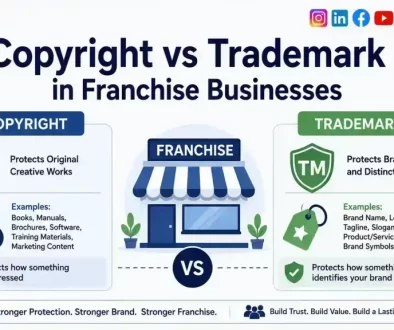
Trademarks protect the visual and commercial identity of the franchise.
Examples include:
- Business name
- Logo
- Brand slogan
- Product names
- Service names
Trademarks are often the most recognizable assets within a franchise system.
2. Copyright
Copyright protects original creative works, including:
- Operations Manuals
- SOP documents
- Employee training manuals
- Marketing brochures
- Website content
- Videos
- Images
- Software documentation
These materials should not be copied without authorization.
3. Trade Secrets
Trade secrets include confidential business information that provides a competitive advantage.
Examples:
- Recipes
- Manufacturing methods
- Pricing formulas
- Supplier lists
- Marketing strategies
- Customer acquisition processes
- Operational systems
Trade secrets should be protected through confidentiality agreements and internal controls.
4. Patents
Some franchise businesses may own patents covering:
- Manufacturing processes
- Specialized equipment
- Product innovations
- Proprietary technologies
Patents are less common than trademarks in franchising but can be valuable for certain industries.
5. Domain Names
Your digital identity is part of your intellectual property.
Secure:
- Primary website domains
- Country-specific domains
- Brand-related URLs
This helps reduce the risk of brand impersonation.
6. Brand Guidelines
Brand Guidelines protect visual consistency by defining:
- Logo usage
- Colors
- Typography
- Photography style
- Advertising standards
- Packaging design
- Digital branding
These standards support a consistent customer experience across franchise locations.
Intellectual Property Licensing in Franchising
Unlike selling intellectual property, franchising involves licensing IP.
The franchisor retains ownership while granting the franchisee limited rights to use:
- Trademarks
- Logos
- Marketing assets
- Business systems
- Manuals
- Proprietary software
The scope of the license should be clearly documented in the Franchise Agreement.
Steps to Protect Intellectual Property Before Franchising
Step 1: Identify Your IP Assets
Create an inventory of:
- Trademarks
- Copyrighted materials
- Trade secrets
- Digital assets
- Proprietary systems
Step 2: Register Applicable Rights
Where appropriate, register:
- Trademarks
- Copyrights (where registration is available or beneficial)
- Patents (if applicable)
Registration requirements differ by jurisdiction.
Step 3: Secure Digital Assets
Protect:
- Website domains
- Social media usernames
- Mobile app names
- Online business profiles
Digital protection complements traditional IP protection.
Step 4: Develop Brand Guidelines
Document standards covering:
- Logo usage
- Marketing materials
- Signage
- Packaging
- Store appearance
- Digital communication
Step 5: Protect Trade Secrets
Implement:
- Non-Disclosure Agreements (NDAs)
- Employee confidentiality policies
- Franchise confidentiality clauses
- Restricted document access
Step 6: Include IP Clauses in Franchise Agreements
Clearly define:
- Permitted use
- Ownership
- Restrictions
- Quality control requirements
- Termination of license upon agreement expiry
Step 7: Train Franchisees
Educate franchisees on:
- Proper brand usage
- Confidentiality obligations
- Marketing standards
- Intellectual property policies
Training reduces the risk of accidental misuse.
Step 8: Monitor and Enforce
Regularly monitor:
- Unauthorized logo use
- Online infringement
- Counterfeit products
- Unauthorized marketing
- Misuse of confidential information
Take appropriate action with legal guidance where necessary.
Intellectual Property Protection Checklist
Before franchising, ensure you have:
- Trademark registrations (where appropriate)
- Copyright protection for manuals and creative assets
- Confidentiality agreements
- Brand Guidelines
- Operations Manual
- Franchise Agreement with IP clauses
- Domain names secured
- Social media accounts protected
- Monitoring process established
- Legal advisor engaged
Practical Example
A successful fitness brand prepared for nationwide franchising.
Before launching, the company:
- Registered its trademarks
- Copyrighted its Operations Manual
- Protected its workout methodology as confidential know-how
- Secured digital assets
- Developed Brand Guidelines
- Added IP licensing provisions to its Franchise Agreement
- Introduced NDAs for employees and franchisees
These measures helped protect the brand while maintaining consistency across multiple franchise locations.
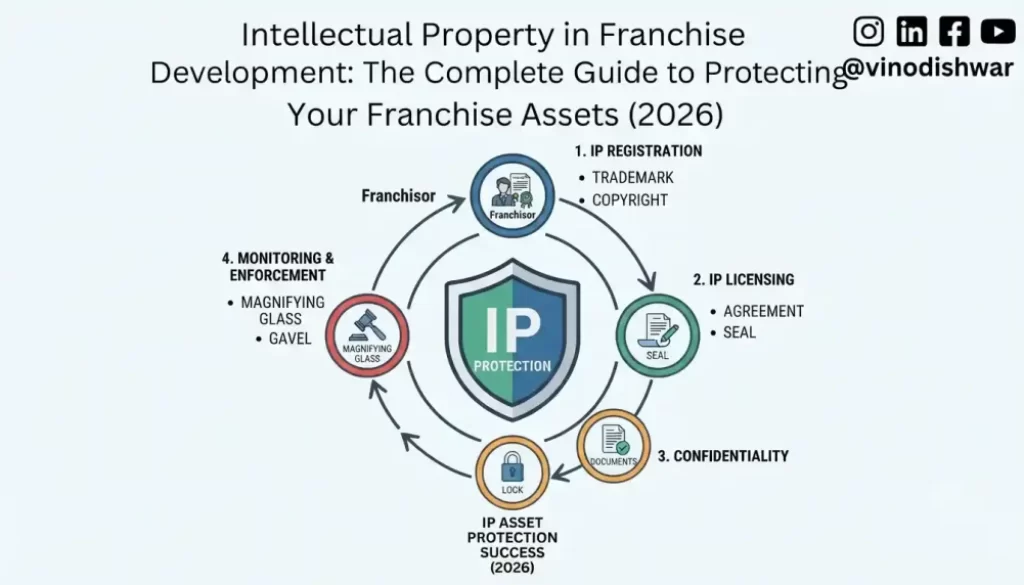
Intellectual Property Protection Framework
Identify IP Assets
        │
        ▼
Trademark Registration
        │
        ▼
Copyright Protection
        │
        ▼
Trade Secret Safeguards
        │
        ▼
Brand Guidelines
        │
        ▼
Franchise Agreement Licensing
        │
        ▼
Franchisee Training
        │
        ▼
Compliance Audits
        │
        ▼
Ongoing Monitoring
        │
        ▼
Protected Franchise Network
Common Intellectual Property Mistakes
Avoid these common mistakes:
- Delaying trademark registration
- Failing to document ownership of creative assets
- Sharing confidential information without NDAs
- Allowing inconsistent brand usage
- Ignoring digital brand protection
- Weak IP clauses in franchise agreements
- Not monitoring for infringement
- Assuming protection in one country automatically applies worldwide
Proactive IP management strengthens the long-term value of a franchise system.
How Franchise Development Consultants Help
Professional franchise development consultants assist businesses by:
- Assessing intellectual property readiness
- Creating Brand Guidelines
- Developing Operations Manuals
- Structuring franchise documentation
- Coordinating with qualified IP lawyers
- Preparing licensing frameworks
- Building governance systems
- Supporting scalable franchise expansion
IP registration and enforcement should always involve qualified legal professionals.
Why Choose Franchise Alpha?
At Franchise Alpha, we help businesses protect and scale their franchise systems through our proprietary SOLEMN® Framework, combining strategic planning, operational excellence, and intellectual property governance.
Strategy
Develop a franchise model that protects long-term business value.
Operations
Create standardized manuals, SOPs, and repeatable systems.
Legal
Coordinate with qualified intellectual property and franchise legal professionals to support trademarks, licensing, and documentation.
Entrust
Establish governance systems that maintain confidentiality and operational consistency.
Marketing
Protect brand identity through standardized visual branding and marketing guidelines.
Nitty-Gritty
Implement audit systems, compliance monitoring, documentation management, and ongoing IP governance.
Frequently Asked Questions
What is intellectual property in franchising?
Intellectual property in franchising includes trademarks, copyrights, trade secrets, patents (where applicable), brand assets, operational systems, and other proprietary business materials licensed to franchisees.
Why is intellectual property important before franchising?
IP protection safeguards your brand, operational know-how, and competitive advantages while allowing you to license these assets to franchisees in a controlled manner.
What types of intellectual property are most important for franchise businesses?
Trademarks, copyrights, trade secrets, and brand guidelines are typically the most important forms of intellectual property in franchise development.
Should franchise agreements include intellectual property clauses?
Yes. Franchise agreements should clearly define ownership, licensing rights, permitted use, restrictions, quality control standards, and post-termination obligations relating to intellectual property.
Conclusion
Intellectual property is the backbone of every successful franchise system. Intellectual Property in Franchise Development is the foundation of a secure and scalable franchise business. By protecting trademarks, copyrights, trade secrets, and proprietary systems, businesses can confidently expand while maintaining brand consistency.
By protecting trademarks, copyrights, trade secrets, and proprietary business systems, franchisors create a secure foundation for growth while maintaining brand consistency across every location.
Investing in intellectual property protection before franchising not only safeguards your business but also increases investor confidence and supports sustainable expansion.
Legal Disclaimer: Intellectual property laws differ between countries and regions. Always seek advice from a qualified intellectual property lawyer before registering, licensing, or enforcing IP rights.
Call to Action
Ready to Protect Your Intellectual Property Before Franchising?
Book a Franchise Readiness Assessment with Vinod Ishwar and discover how to prepare your business for franchise expansion with a comprehensive intellectual property strategy. Explore our Franchise Consulting Services: https://franchisealpha.com/
Your assessment includes:
- Intellectual Property Audit
- Brand Protection Review
- Trademark & Copyright Readiness Assessment
- Franchise Documentation Evaluation
- Customized IP Protection Roadmap
Protect your intellectual property today and build a franchise network with confidence.