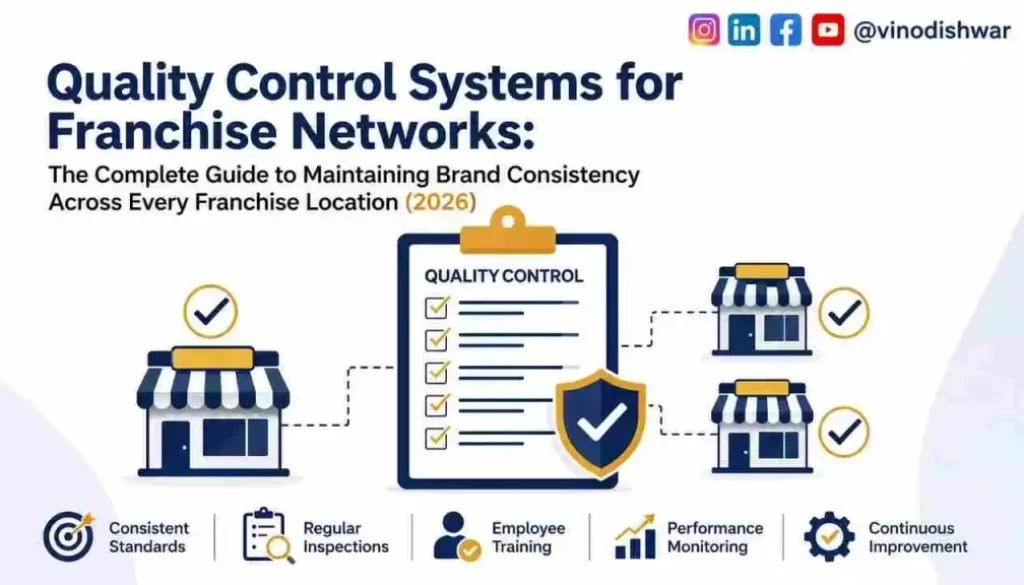
Quality Control Systems for Franchise Networks: The Complete Guide to Maintaining Brand Consistency Across Every Franchise Location (2026)
Franchise Quality Control is one of the most important foundations of a successful franchise network. A strong Franchise Quality Control system ensures every franchise location delivers consistent products, services, operational standards, and customer experiences. Without structured quality control systems, franchise businesses struggle to maintain brand consistency as they expand.
The reputation of a franchise brand depends on one critical factor—consistency. Customers expect the same product quality, service standards, cleanliness, and overall experience whether they visit the first franchise outlet or the hundredth.
As franchise networks grow, maintaining consistent quality becomes increasingly challenging. Without structured quality control systems, operational differences emerge between locations, customer satisfaction declines, and brand reputation suffers.
Quality control systems help franchisors monitor, measure, and improve performance across every franchise location. Through standardized audits, operational checklists, KPIs, training, and continuous improvement, businesses can ensure every franchisee meets the same high standards.
Whether you operate a restaurant, café, retail chain, salon, healthcare clinic, preschool, fitness center, cloud kitchen, manufacturing business, or service company, quality control is essential for sustainable franchise growth.
This guide explains how to build effective quality control systems that support scalable and profitable franchise operations.
What is a Quality Control System in Franchising?
A quality control system is a structured framework used to monitor, evaluate, and improve operational performance across a franchise network.
It ensures every franchise location follows standardized procedures for:
- Product quality
- Customer service
- Operational compliance
- Brand standards
- Safety and hygiene
- Financial reporting
- Employee performance
The objective is to deliver a consistent customer experience regardless of location.
Why Franchise Quality Control Matters
Strong quality control systems help businesses:
- Maintain brand consistency
- Improve customer satisfaction
- Reduce operational errors
- Increase franchisee accountability
- Protect brand reputation
- Improve profitability
- Support regulatory compliance
- Enable scalable franchise expansion
Without quality control, franchise growth often leads to inconsistent customer experiences and declining performance.
Core Components of Franchise Quality Control
1. Standard Operating Procedures (SOPs)
Quality begins with standardized operations.
Develop SOPs for:
- Customer service
- Product preparation
- Inventory management
- Equipment maintenance
- Cleaning
- Cash handling
- Safety procedures
Every franchisee should follow identical operational procedures. Business Process Documentation Guide
2. Franchise Operations Manual
The Operations Manual should define quality expectations for every department.
Include:
- Brand standards
- Operational workflows
- Service protocols
- Health and safety guidelines
- Reporting requirements
- Compliance procedures
The manual becomes the operational benchmark for the franchise network.
3. Quality Audit Program
Conduct regular operational audits.
Audit categories may include:
- Store appearance
- Customer service
- Product quality
- Inventory management
- Financial compliance
- Employee performance
- Safety standards
- Brand consistency
Audits identify improvement opportunities before problems become widespread.
4. Franchise Compliance Monitoring
Monitor compliance with:
- SOPs
- Franchise Agreement
- Brand guidelines
- Marketing standards
- Operational procedures
- Regulatory requirements
Compliance protects both the franchisor and the franchisee.
5. Customer Feedback System
Customer insights help identify operational weaknesses.
Collect feedback through:
- Surveys
- Online reviews
- Mystery shopping
- QR code feedback forms
- Social media monitoring
- Customer interviews
Feedback should drive continuous improvement.
6. KPI Dashboard
Measure performance using Key Performance Indicators.
Common KPIs include:
- Customer satisfaction score (CSAT)
- Net Promoter Score (NPS)
- Revenue growth
- Average transaction value
- Inventory variance
- Employee turnover
- Audit score
- Complaint resolution time
Dashboards provide visibility across the franchise network.
7. Corrective Action Process
Quality issues should follow a structured improvement process.
Typical steps include:
- Identify the issue
- Determine root cause
- Create an action plan
- Assign responsibility
- Implement improvements
- Re-audit performance
- Close the issue
This ensures continuous quality improvement.
8. Technology Integration
Technology simplifies quality management.
Useful systems include:
- CRM
- ERP
- POS
- Audit management software
- Learning Management System (LMS)
- Business Intelligence dashboards
- Mobile inspection apps
Technology enables real-time monitoring across multiple locations.
Step-by-Step Process to Build a Franchise Quality Control System
Step 1: Define Quality Standards
Identify measurable standards for:
- Products
- Services
- Operations
- Cleanliness
- Customer interactions
- Compliance
These standards become the benchmark for every location.
Step 2: Document Processes
Develop detailed process documentation and SOPs.
Every task should include:
- Purpose
- Responsibilities
- Workflow
- Quality criteria
- Performance expectations
Step 3: Train Franchisees and Employees
Implement structured training programs covering:
- Operational standards
- Customer service
- Compliance
- Product quality
- Safety procedures
Training ensures consistent execution.
Step 4: Conduct Routine Audits
Perform:
- Weekly operational reviews
- Monthly compliance audits
- Quarterly quality assessments
- Annual franchise evaluations
Regular audits identify operational gaps early.
Step 5: Measure Performance
Track KPIs continuously.
Review performance trends across all franchise locations and identify areas requiring improvement.
Step 6: Gather Customer Feedback
Analyze customer insights to identify recurring issues.
Customer feedback should be incorporated into operational improvements.
Step 7: Implement Corrective Actions
Resolve quality issues promptly.
Document corrective actions and monitor their effectiveness.
Step 8: Review and Improve
Quality management is an ongoing process.
Review systems regularly and update SOPs, training, and operational standards based on business growth and customer expectations.
Franchise Quality Control Checklist
Before expanding, ensure your franchise network has:
- Standard Operating Procedures
- Franchise Operations Manual
- Quality audit checklist
- Compliance monitoring program
- KPI dashboard
- Customer feedback system
- Mystery shopping program
- Corrective action framework
- Employee training program
- Continuous improvement plan
Franchise Quality Control Example
A national quick-service restaurant chain experienced inconsistent customer reviews across its franchise locations.
The franchisor implemented:
- Standardized Operations Manual
- Digital audit platform
- Monthly quality inspections
- Mystery shopping program
- KPI dashboard
- Franchisee scorecards
- Customer satisfaction surveys
- Online training portal
Within 12 months, average audit scores increased, customer complaints decreased, and franchisee compliance improved significantly.
Franchise Quality Control Framework
Quality Standards
        │
        ▼
Process Documentation
        │
        ▼
Standard Operating Procedures
        │
        ▼
Operations Manual
        │
        ▼
Training Programs
        │
        ▼
Operational Audits
        │
        ▼
KPI Monitoring
        │
        ▼
Customer Feedback
        │
        ▼
Corrective Actions
        │
        ▼
Continuous Improvement
        │
        ▼
Consistent Franchise Performance
Common Quality Control Mistakes
Avoid these common mistakes:
- Expanding without documented standards
- Infrequent operational audits
- Ignoring customer complaints
- Weak compliance monitoring
- Lack of performance measurement
- Outdated SOPs
- Poor franchisee training
- Delayed corrective actions
Strong quality control requires consistency, accountability, and continuous improvement.
How Franchise Development Consultants Help
Professional franchise consultants help businesses by:
- Designing quality management systems
- Developing SOPs and Operations Manuals
- Creating audit frameworks
- Building KPI dashboards
- Standardizing compliance programs
- Developing training systems
- Conducting operational audits
- Preparing businesses for scalable franchise growth
Expert support ensures every franchise location operates to the same high standards. Franchise Development Services
Why Choose Franchise Alpha?
At Franchise Alpha, we help businesses build robust quality control systems using our proprietary SOLEMN® Framework, ensuring operational consistency across every franchise location.
Strategy
Develop measurable quality standards aligned with business objectives.
Operations
Create SOPs, Operations Manuals, audit systems, and quality workflows.
Legal
Align operational compliance with franchise agreements and regulatory requirements.
Entrust
Develop leadership and accountability systems that reinforce quality culture.
Marketing
Protect brand consistency through standardized marketing execution and customer experience guidelines.
Nitty-Gritty
Implement KPI dashboards, audit scorecards, corrective action processes, and continuous improvement programs.
Frequently Asked Questions
What is a quality control system in franchising?
A quality control system is a structured framework used to monitor, evaluate, and improve operational performance across franchise locations through audits, SOPs, KPIs, compliance checks, and continuous improvement.
Why is quality control important for franchise networks?
Quality control ensures consistent customer experiences, protects brand reputation, improves franchisee performance, reduces operational risks, and supports scalable franchise growth.
What should a franchise quality audit include?
A franchise quality audit should evaluate customer service, product quality, cleanliness, operational compliance, inventory management, employee performance, safety standards, and brand consistency.
How often should franchise locations be audited?
Most franchise systems conduct monthly operational audits, quarterly quality assessments, and annual comprehensive evaluations, with additional reviews based on performance or customer feedback.
Conclusion
Quality control is the backbone of every successful franchise network.
By implementing standardized procedures, conducting regular audits, monitoring KPIs, collecting customer feedback, and continuously improving operations, franchisors create a consistent and trusted brand experience across every location.
Franchise growth should never compromise quality. Businesses that invest in robust quality control systems build stronger brands, more successful franchisees, and long-term customer loyalty.
Call to Action
Ready to Build a World-Class Quality Control System?
Book a Franchise Readiness Assessment with Vinod Ishwar and learn how to establish quality standards that support sustainable franchise expansion.
Your assessment includes:
- Quality Control Audit
- SOP & Operations Manual Review
- Franchise Compliance Assessment
- KPI & Audit Framework Design
- Customized Quality Improvement Roadmap
Build quality systems that protect your brand and power long-term franchise success.