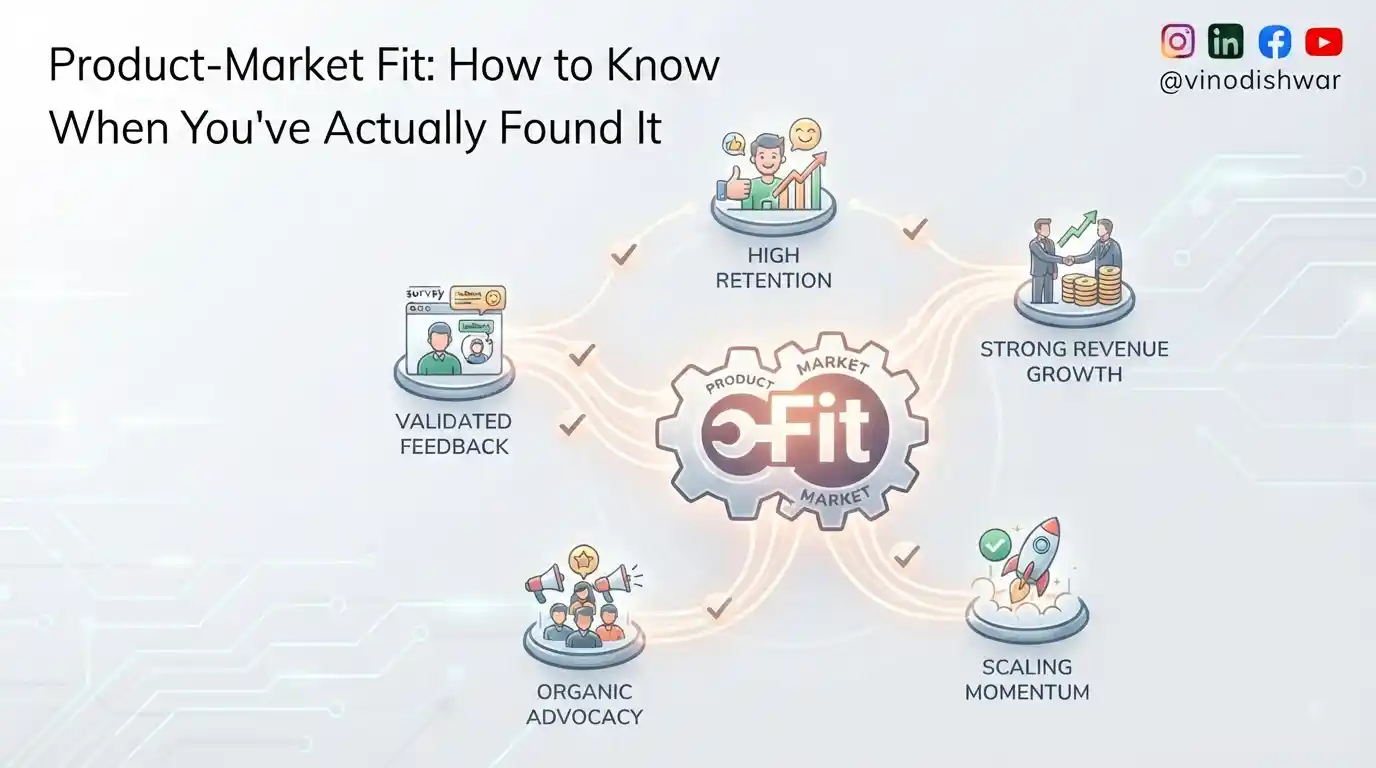
Product-Market Fit: How to Know When You’ve Actually Found It
Track retention cohorts and referral rates rigorously from an early stage, rather than relying on subjective impressions of customer enthusiasm. These specific, quantifiable signals provide a far more reliable basis for determining genuine product-market fit than anecdotal positive feedback alone.
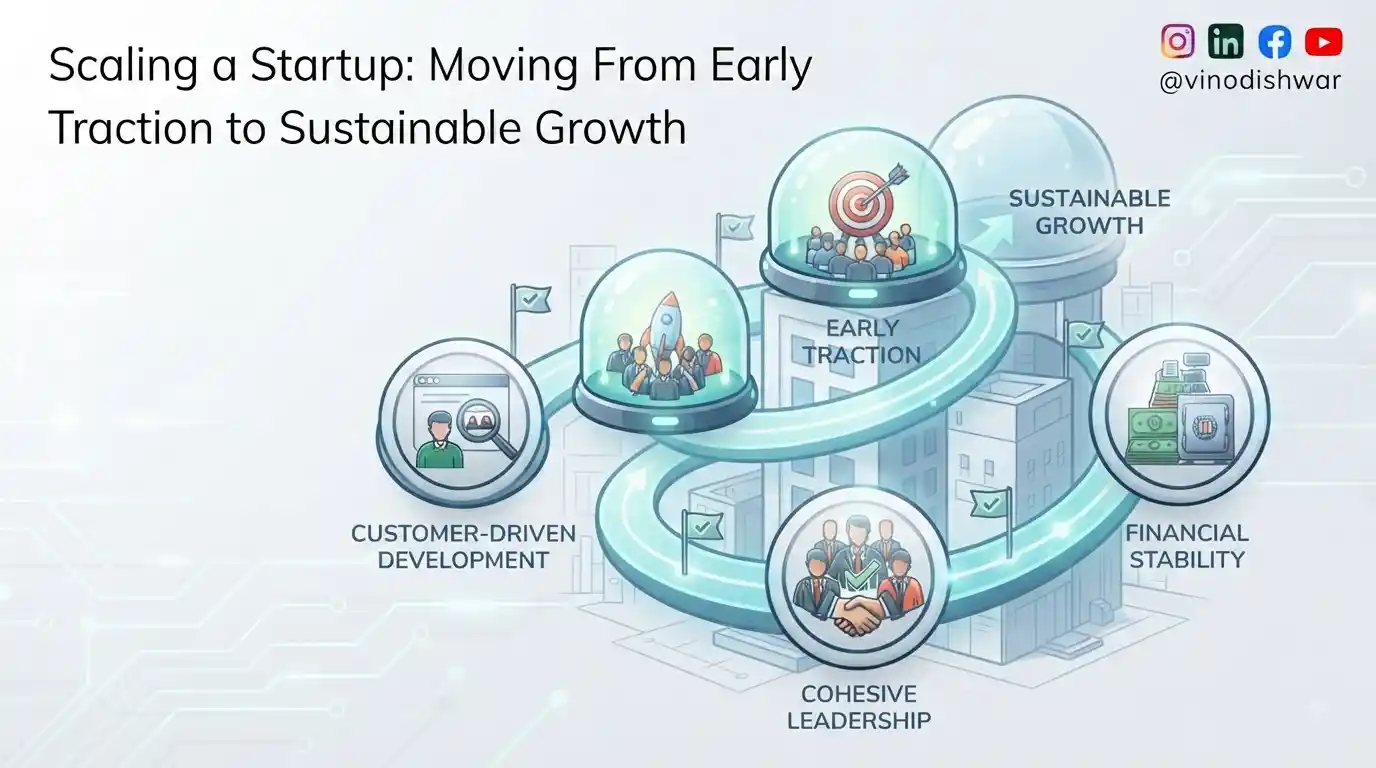
Scaling a Startup: Moving From Early Traction to Sustainable Growth
Approach scaling deliberately and in stages, building systems and management capacity slightly ahead of immediate need, rather than reactively catching up after growth has already outpaced the organization’s capability to support it.
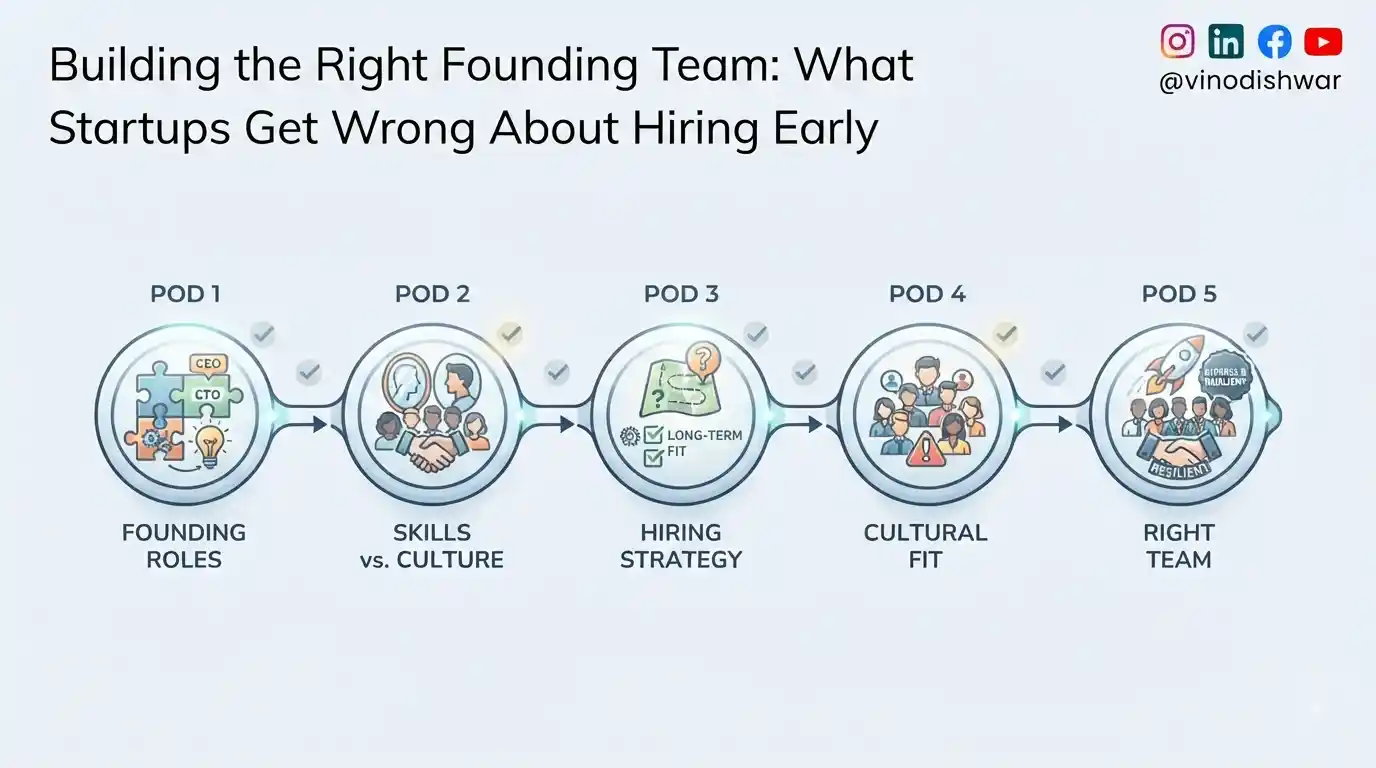
Building the Right Founding Team: What Startups Get Wrong About Hiring Early
Before making early hires, clearly define the specific problem each role is meant to solve and the outcomes you expect within the first 90 days. This clarity not only improves hiring decisions but also gives new hires a much clearer framework for understanding expectations and demonstrating early impact.
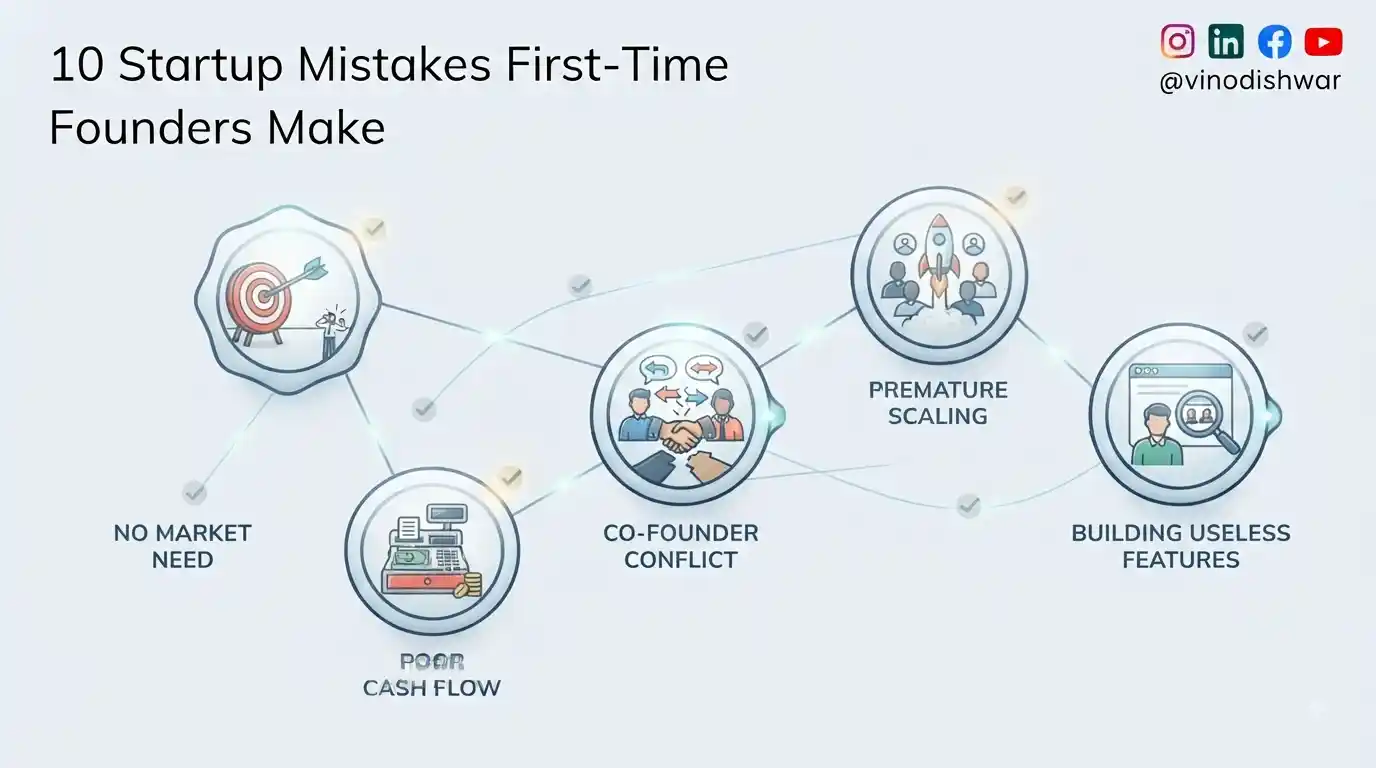
10 Startup Mistakes First-Time Founders Make
Actively seek mentorship and advisory relationships with people who have direct startup experience, ideally in your specific industry or business model. Learning to recognize these patterns from others’ experience is significantly less costly than learning them exclusively through your own mistakes.
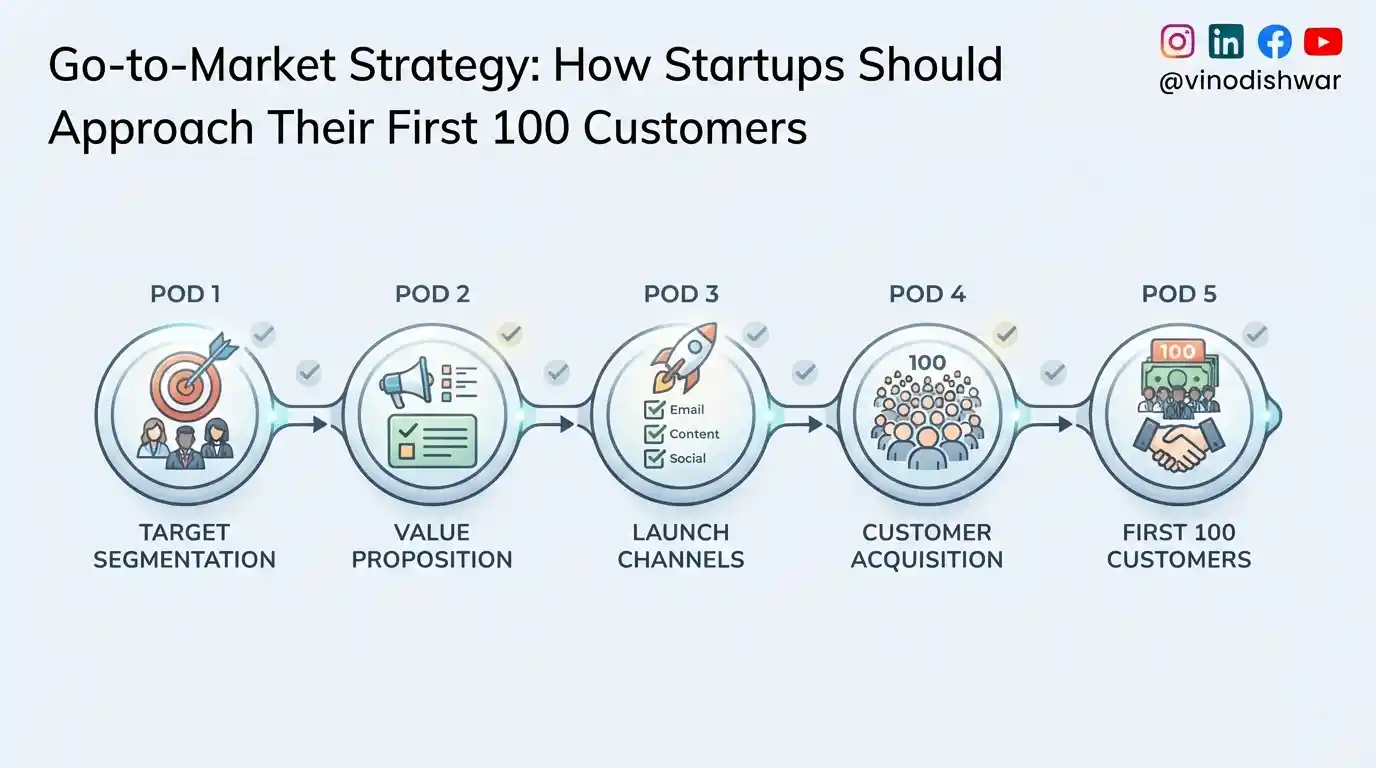
Go-to-Market Strategy: How Startups Should Approach Their First 100 Customers
Resist the pressure to look “scaled” too early. Investors and advisors are typically far more impressed by a startup with 100 deeply engaged, retained customers acquired through focused, learning-oriented effort than one with 1,000 superficially acquired customers with poor retention and unclear channel economics.
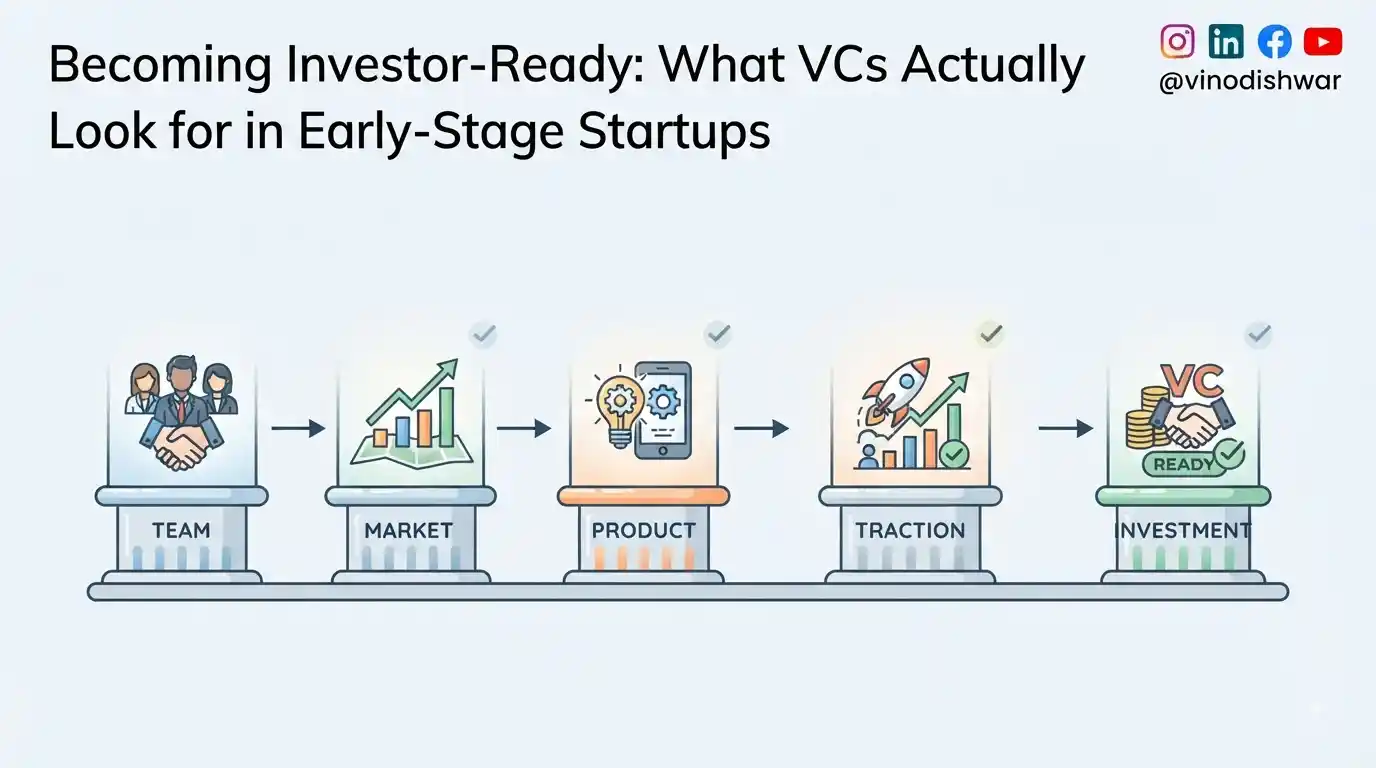
Becoming Investor-Ready: What VCs Actually Look for in Early-Stage Startups
Before actively fundraising, conduct an honest internal readiness assessment across traction, team, financials, and legal structure — ideally with an external advisor who can evaluate these areas as objectively as an investor would, identifying gaps to address before entering investor conversations.
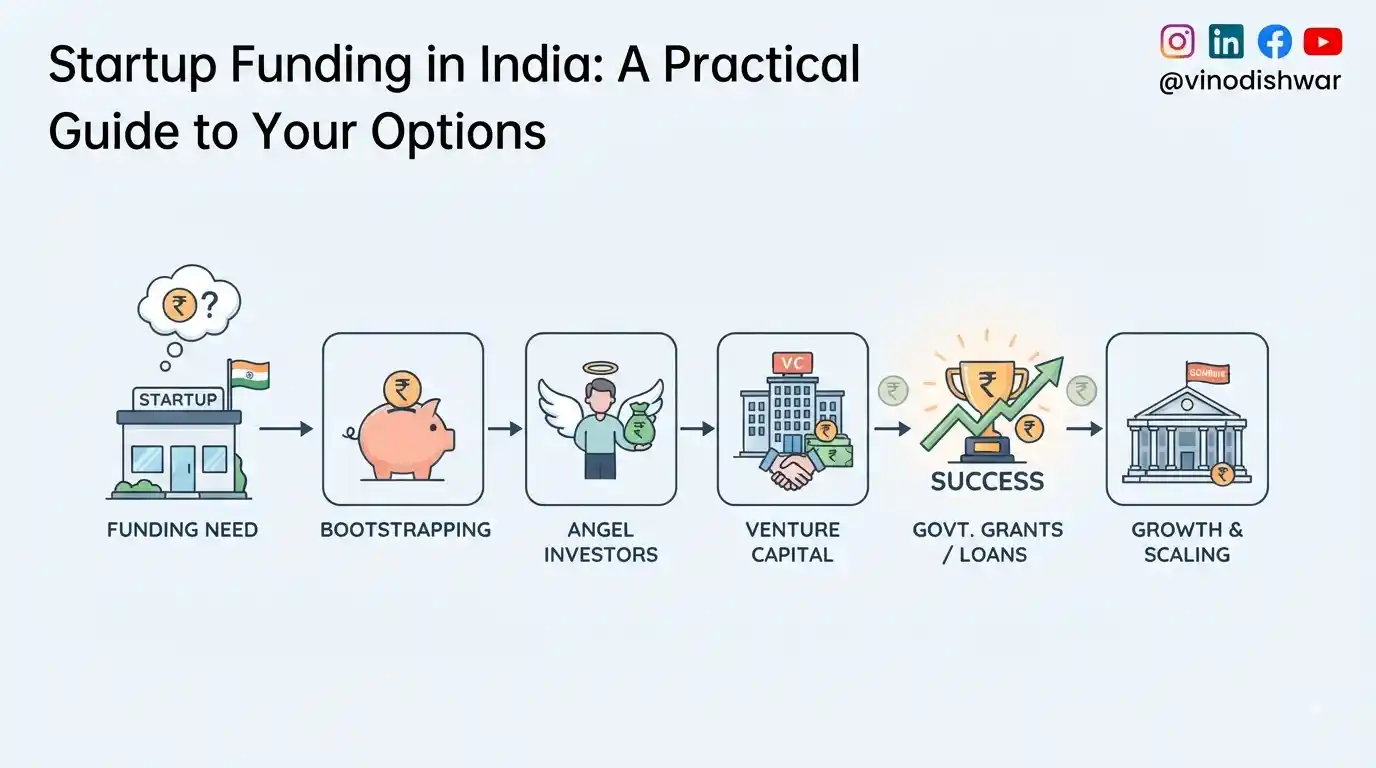
Startup Funding in India: A Practical Guide to Your Options
Before pursuing any funding path, clarify your actual capital need, your growth trajectory, and your control priorities. Many startups pursue venture capital prematurely or unnecessarily, when a combination of bootstrapping, debt financing, and strategic angel investment would better suit their specific business and preserve more founder ownership and flexibility.
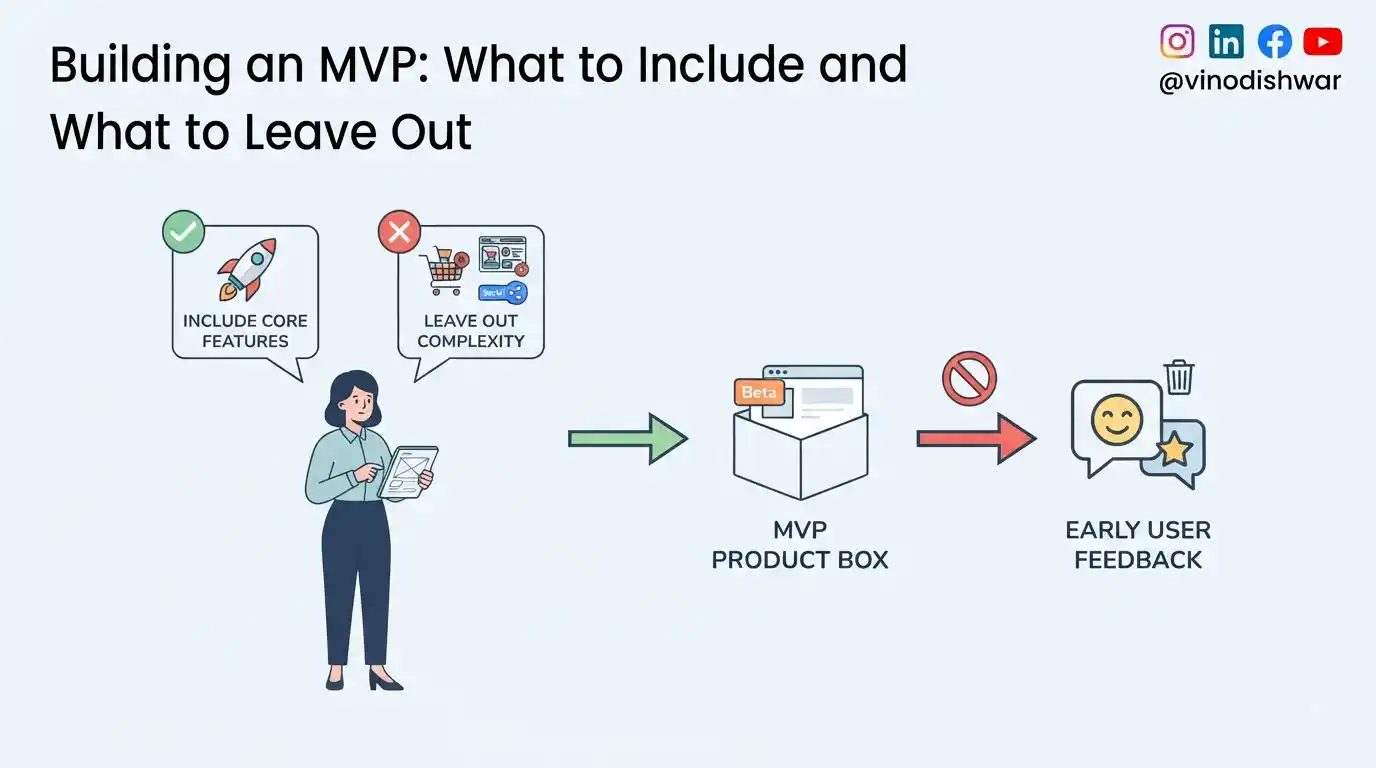
Building an MVP: What to Include and What to Leave Out
Before writing a single line of code or ordering any inventory, write down explicitly: the assumption you’re testing, the minimum feature set needed to test it, and the specific metric that will tell you whether the assumption holds. This discipline prevents scope creep and keeps the MVP genuinely focused on learning.
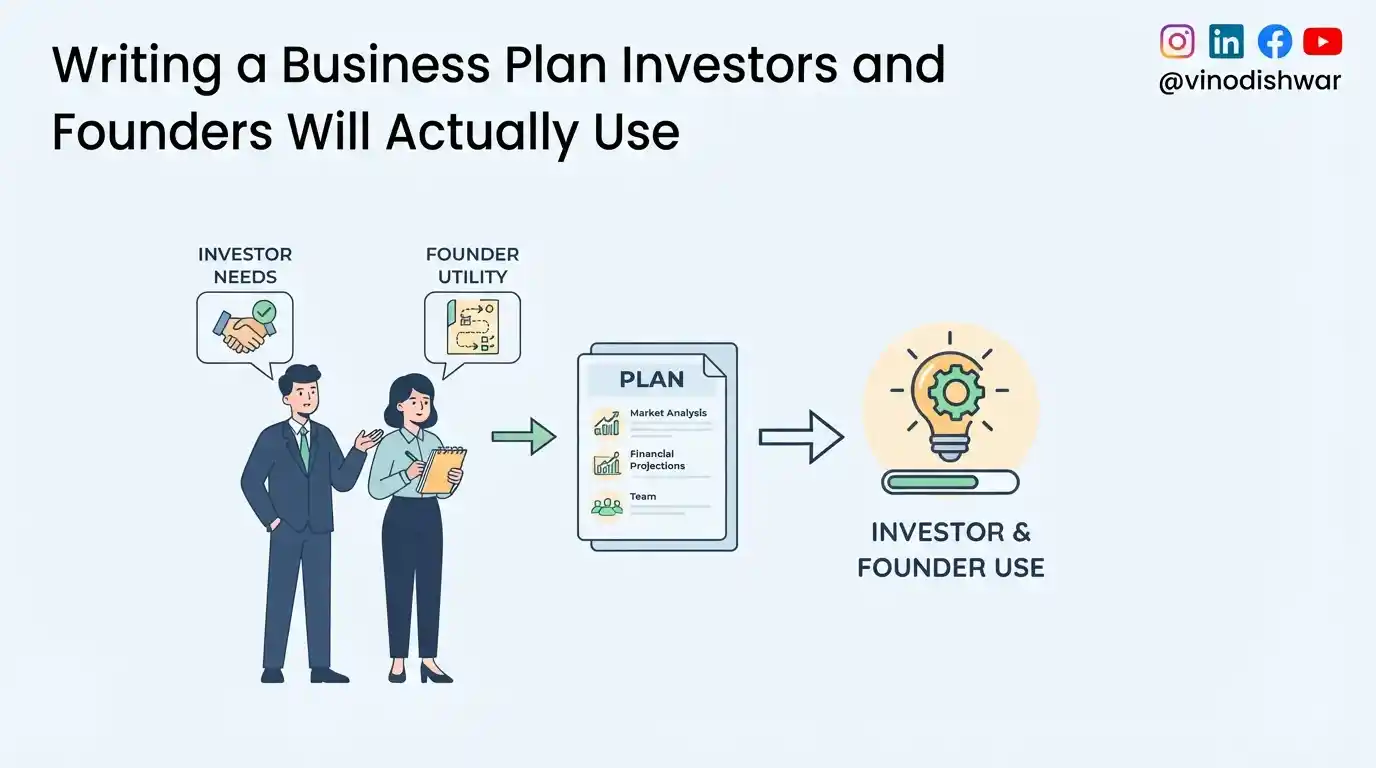
Writing a Business Plan Investors and Founders Will Actually Use
Keep your core business plan concise — ideally under 15-20 pages for the main narrative, with detailed financials as a separate supporting document — and focus on clarity and specificity over length or polish. A shorter plan that demonstrates sharp thinking is more compelling than a lengthy one padded with generic content.
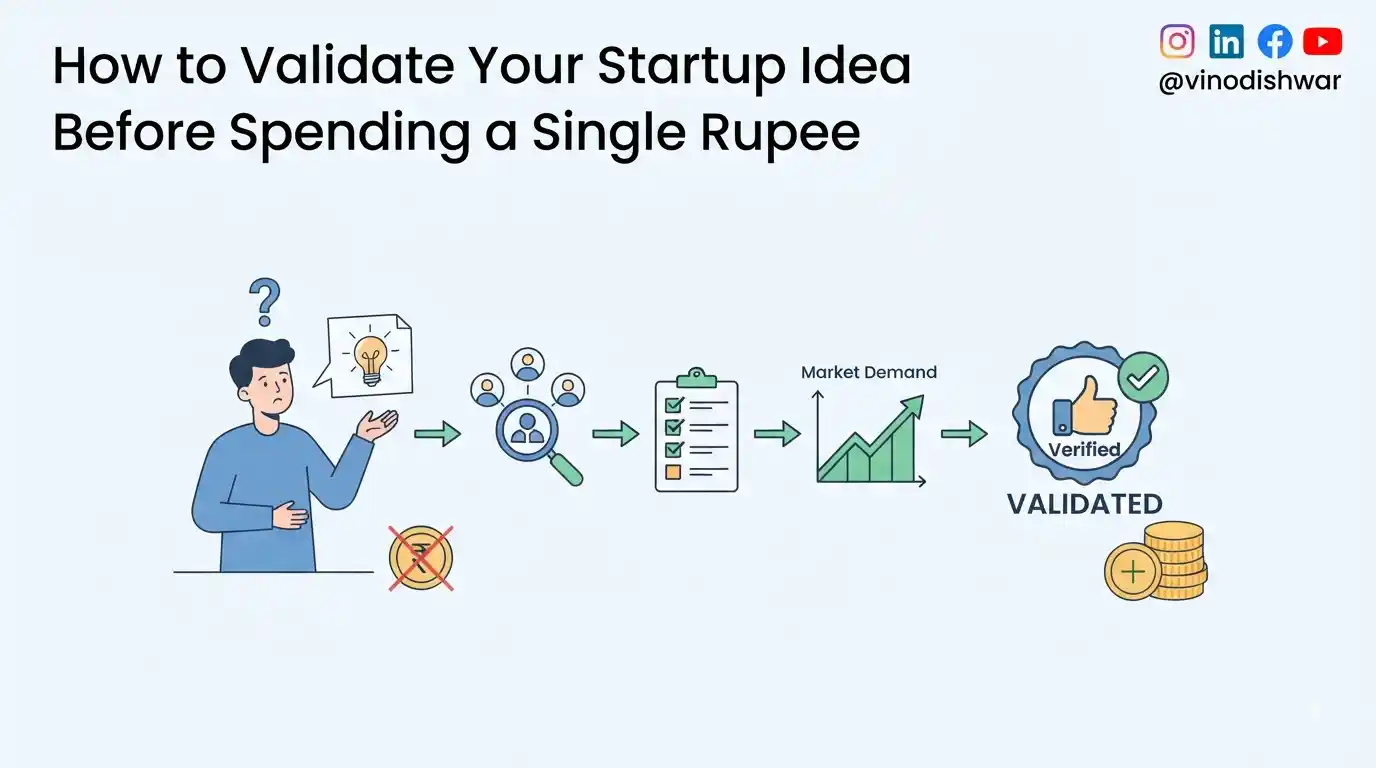
How to Validate Your Startup Idea Before Spending a Single Rupee
Set a specific, honest bar for what would constitute genuine validation before you begin — a specific number of pre-orders, a specific conversion rate, a specific number of customers willing to pay a deposit — rather than adjusting your definition of success after the fact to match whatever results you happen to get.