Building the Right Founding Team: What Startups Get Wrong About Hiring Early
Few decisions shape a startup’s trajectory as significantly as its earliest hires. In a small team, every individual disproportionately influences culture, execution speed, and the eventual capability ceiling of the organization. Yet early hiring is often treated with less rigor than later-stage hiring, driven by urgency and limited resources rather than deliberate strategy — a pattern that frequently creates lasting organizational challenges.
Why Early Hiring Deserves Extra Rigor, Not Less
In an established company, a single poor hire is a manageable, correctable problem. In a five-person startup, a single poor hire represents 20% of the organization, disproportionately shapes team dynamics, and can meaningfully slow execution during a period when speed and learning matter enormously. Early hiring mistakes are also harder to correct quickly, given the close working relationships and limited management infrastructure typical of early-stage teams.
Principles for Building the Right Early Team
1. Hire for Genuine Versatility
Early-stage roles rarely stay narrowly defined. Early hires who can comfortably operate across multiple functions, adapt as priorities shift, and take on undefined responsibilities are typically far more valuable than narrow specialists, even highly skilled ones, in the earliest stages.
2. Prioritize Founder-Level Ownership Mentality
Early employees who approach problems with genuine ownership — proactively identifying issues, taking initiative beyond their defined role, treating company success as personal success — dramatically outperform those who wait to be told exactly what to do, particularly given the ambiguity inherent in early-stage startups.
3. Evaluate Cultural Contribution, Not Just Cultural Fit
Rather than hiring people who simply “fit” an existing culture, consider what each early hire will actively contribute to shaping the culture as the organization grows — since early hires disproportionately establish norms that later, larger teams will inherit.
4. Be Deliberate About Complementary Skills
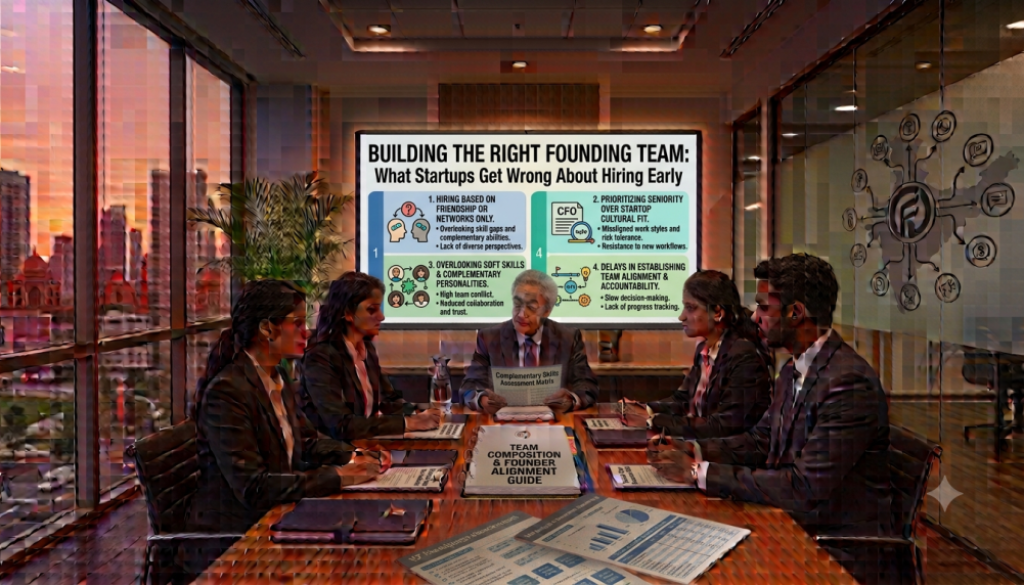
Founding teams and early hires should collectively cover the core skill areas critical to the business — technical execution, customer understanding, financial discipline, sales and marketing — rather than clustering around similar strengths and leaving critical gaps unaddressed.
5. Don’t Rush Hiring Purely to Reduce Founder Workload
While founder overwhelm is real and common, hiring reactively purely to offload work, without clear role definition or genuine need validation, often leads to poor fit and wasted resources. Hiring should be driven by validated need and strategic priority, not just relief from immediate pressure.
6. Use Structured, Consistent Evaluation Even at Small Scale
Even with a small team and informal processes elsewhere, maintaining some structure in hiring — consistent interview questions, reference checks, small paid trial projects where feasible — significantly improves hiring quality compared to purely relationship-based or instinct-driven hiring.
Common Early-Stage Hiring Mistakes
- Hiring friends or acquaintances primarily out of convenience, without adequately evaluating genuine skill and role fit.
- Rushing hiring decisions under pressure, skipping reference checks or adequate evaluation.
- Offering equity without clear vesting terms or a full understanding of long-term implications.
- Failing to define roles clearly, leading to overlapping responsibilities or unaddressed gaps.
- Avoiding difficult conversations or terminations when an early hire clearly isn’t working out, allowing problems to persist and affect team morale.
Building Culture Deliberately From the Start
Culture in a startup isn’t something to formalize later once the company is larger — it’s actively being shaped from the very first hires, through what behaviors get rewarded, how founders communicate, and what standards are consistently upheld. Founders who deliberately articulate and reinforce cultural values early build a much stronger foundation than those who assume culture will naturally take care of itself.
Key Takeaways
- Early hiring mistakes carry disproportionate impact given the small size and close dynamics of early-stage teams.
- Versatility and ownership mentality often matter more than narrow specialization in early hires.
- Complementary skills across the founding team should be deliberately assessed, not left to chance.
- Structured evaluation processes, even at small scale, significantly improve early hiring quality.
- Culture is actively shaped from the earliest hires, not something to formalize only once the company scales.
Conclusion
Building the right early team is one of the highest-leverage investments a founder can make in their startup’s long-term trajectory. Approaching early hiring with genuine rigor, rather than reactive urgency, pays dividends throughout the company’s growth.