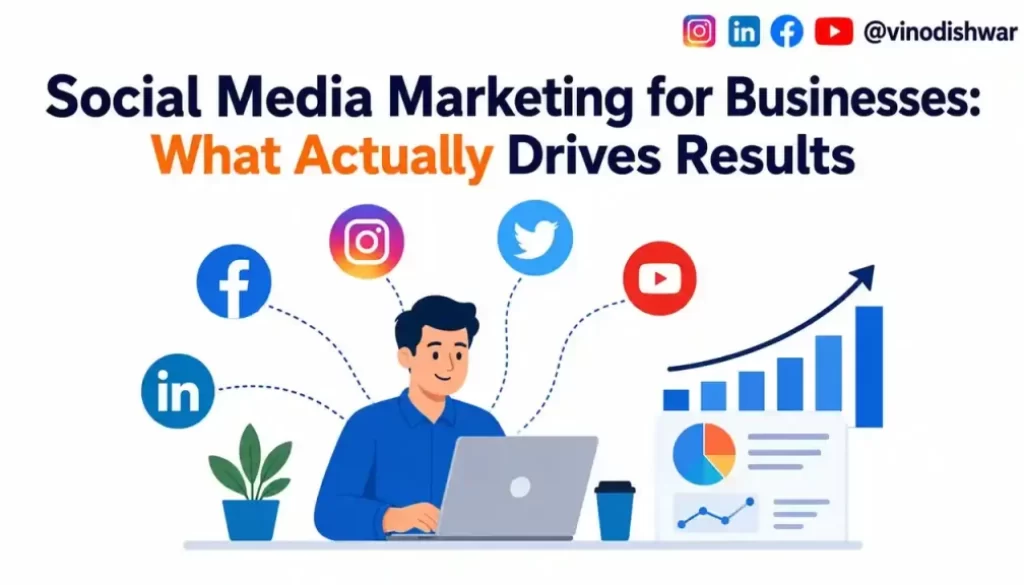
Social Media Marketing for Businesses: What Actually Drives Results
Social media marketing for businesses is one of the most effective ways to build brand awareness, generate qualified leads, and strengthen customer relationships. With the right strategy, businesses can turn social media into a consistent source of growth instead of simply posting content. A strong business website also helps convert social media visitors into customers. A well-designed website ensures the traffic generated through social media converts into real business opportunities.
Nearly every business today maintains some social media presence, but the gap between businesses that generate genuine growth from social media and those that post consistently without meaningful results is significant. The difference rarely comes down to posting frequency alone — it comes down to strategic clarity about audience, content, and what social media is actually meant to achieve for the specific business.
Why Social Media Marketing for Businesses Often Fails
Many businesses approach social media reactively — posting whatever content feels timely or convenient, without a clear strategy connecting content to specific business goals, target audience needs, or measurable outcomes. This scattergun approach rarely builds the sustained engagement and conversion that genuinely effective social media marketing requires.
Social Media Marketing for Businesses: Proven Strategies That Drive Results
1. Clarity on Platform-Audience Fit
Different platforms attract different demographics and content consumption behaviors. Rather than maintaining a weak presence across every platform, identify where your specific target audience is genuinely active and concentrate effort there.
2. Content That Provides Genuine Value
Content that entertains, educates, or solves a real problem for your audience consistently outperforms purely promotional content. The most effective business social media accounts balance value-driven content with occasional, clearly framed promotional messaging. Creating valuable content becomes easier with a well-planned content marketing strategy that builds long-term trust.
3. Consistency Over Sporadic High Effort
Regular, sustained posting — even if individually simpler — typically outperforms occasional bursts of high-effort content followed by long silences, since platform algorithms and audience habit-building both favor consistency.
4. Authentic, Distinctive Brand Voice
Content that reflects a genuine, consistent brand personality builds stronger audience connection and recognition than generic, interchangeable content that could belong to any business in the category.
5. Strategic Use of Video Content
Video content, particularly short-form video, continues to drive significantly higher engagement across most platforms compared to static images or text alone, making it worth prioritizing despite the additional production effort involved. Short-form videos created with Canva can improve engagement and make content creation faster.
6. Genuine Community Engagement
Actively responding to comments, messages, and engaging with your audience’s own content builds relationship and trust that passive posting alone cannot achieve, and often meaningfully influences platform algorithm visibility as well.
7. Clear Calls-to-Action
Content should generally guide the audience toward a specific next step — visiting a website, making a purchase, sending a message — rather than existing purely for passive engagement without a connection to actual business outcomes. Strong calls-to-action also support better lead generation by encouraging visitors to take meaningful action.
8. Data-Informed Iteration
Regularly reviewing which content types, topics, and formats genuinely drive engagement and conversion, and adjusting strategy accordingly, produces significantly better results than continuing with an unexamined, static content approach. Automation tools can simplify reporting and scheduling, allowing businesses to focus on improving their marketing strategy.
Organic vs Paid Social Media Marketing for Businesses
Organic social media builds long-term audience relationship and brand presence but often requires patience before generating significant business results. Paid social advertising can accelerate reach and conversion more immediately but requires ongoing spend and careful targeting to remain cost-effective. Most businesses benefit from a combined approach — organic content building genuine brand presence, supplemented by targeted paid campaigns for specific, measurable goals.
Common Social Media Marketing Mistakes
- Posting without a clear strategy connecting content to specific business goals.
- Spreading effort thin across too many platforms rather than concentrating where the target audience is genuinely active.
- Focusing purely on follower count rather than engagement quality and conversion.
- Neglecting community engagement, treating social media as a purely broadcast channel.
- Failing to track and adjust strategy based on actual performance data.
Key Takeaways
- Effective social media marketing requires strategic clarity, not just consistent posting frequency.
- Platform-audience fit and genuine content value matter more than presence across every available platform.
- Video content and authentic brand voice consistently drive stronger engagement across most platforms.
- Community engagement meaningfully strengthens both audience relationship and algorithmic visibility.
- A combined organic and paid strategy typically outperforms relying exclusively on either approach alone.
Conclusion
Social media marketing that genuinely drives business results requires more than showing up consistently — it requires strategic clarity about audience, content, and measurable goals, combined with genuine engagement rather than passive broadcasting. Businesses that approach social media this deliberately build far stronger, more sustainable results.
-Vinod Ishwar
FAQs
1. What is social media marketing for businesses?
Social media marketing for businesses involves using platforms like Facebook, Instagram, LinkedIn, and X to increase brand awareness, engage customers, generate leads, and grow revenue.
2. Which social media platform is best for businesses?
The best platform depends on your audience. LinkedIn works well for B2B businesses, while Facebook and Instagram are ideal for consumer-focused brands.
3. How often should businesses post on social media?
Businesses should post consistently rather than frequently. A regular posting schedule with valuable content performs better than irregular posting.
4. Can social media generate leads for small businesses?
Yes. A strong social media strategy combined with clear calls-to-action, valuable content, and a high-converting website can generate qualified leads consistently.
5. Should businesses use paid social media advertising?
Paid advertising helps businesses reach larger audiences quickly, while organic content builds long-term trust. Combining both usually delivers the best results.