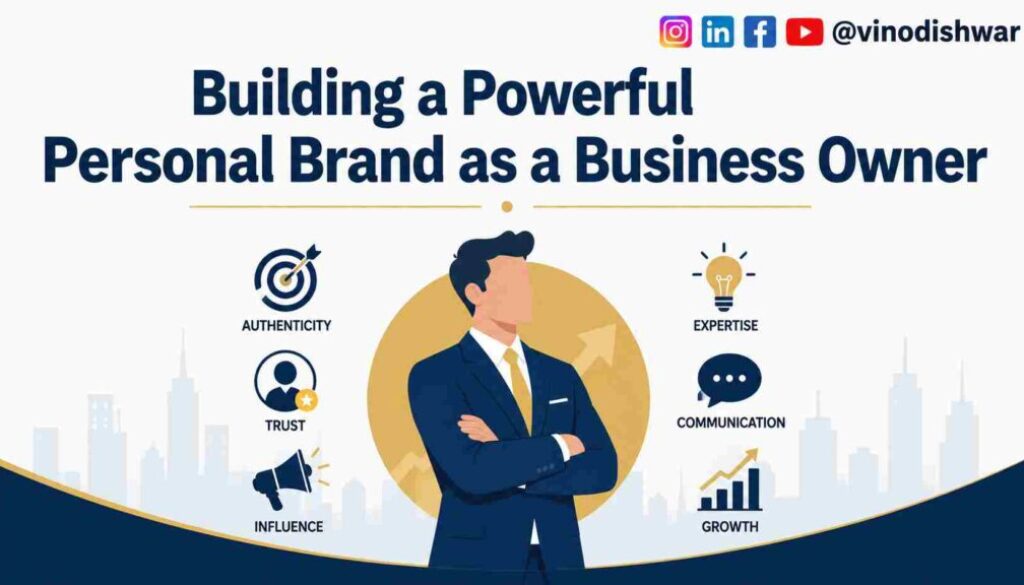
Building a Powerful Personal Brand as a Business Owner
A strong personal brand helps business owners build credibility, earn customer trust, and create lasting professional relationships. By consistently sharing expertise and authentic experiences, a personal brand can become one of the most valuable assets for long-term business growth. Developing a personal brand allows entrepreneurs to showcase their expertise, strengthen customer relationships, and stand out in competitive markets.
Increasingly, customers, partners, and even employees want to know the person behind a business, not just the business itself. A well-built personal brand for founders and business owners can become a genuine strategic asset — building trust faster than corporate marketing alone, opening doors to partnerships and opportunities, and creating a more resilient, differentiated business presence in crowded markets.
Why a Personal Brand Matters for Business Owners
People tend to trust and connect with other people more readily than with faceless corporate entities. A founder with a genuine, well-articulated professional presence can humanize their business, build credibility more quickly in new markets or categories, and create marketing reach that a company account alone often struggles to achieve.
How to Build a Strong Personal Brand
1. Clarity on Your Genuine Expertise and Perspective
Effective professional presence starts with clarity on what you genuinely know, believe, and can credibly speak to — not an attempt to appear knowledgeable about everything, which typically comes across as generic and unconvincing.
2. Consistent, Authentic Content Sharing
Regularly sharing genuine insights, experiences, and perspectives — through social media, articles, speaking engagements, or podcasts — builds recognition and credibility over time, particularly when the content reflects genuine expertise rather than generic, recycled advice. Publishing valuable content becomes even more effective when supported by a strong content marketing strategy.
3. Strategic Platform Selection
Rather than attempting a strong presence everywhere, identify where your specific target audience — customers, partners, industry peers — is genuinely active, and concentrate your branding efforts there.
effort there. A professional business website also strengthens your personal brand by showcasing your expertise and services.
4. Transparency About Challenges, Not Just Successes
Audiences increasingly respond to authentic, balanced sharing that includes genuine challenges and lessons learned, not just curated success stories, since this builds deeper trust and relatability than purely polished self-promotion.
5. Active Engagement With Your Industry and Community
Genuinely engaging with others’ content, participating in industry conversations, and building real relationships — not just broadcasting your own content — significantly strengthens personal brand credibility and network reach. Improving your digital visibility helps more people discover your expertise across search engines and online platforms. Entrepreneurs can also build professional credibility by maintaining an active presence on LinkedIn, where they can share industry insights, connect with professionals, and grow their personal brand.
6. Alignment Between Personal Brand and Business Values
Your personal brand should authentically reflect and reinforce your business’s values and positioning, creating a coherent, mutually reinforcing presence rather than a disconnected or contradictory one.
Personal Brand Strategies for Business Owners
- Share genuine business lessons, industry insights, and behind-the-scenes perspectives on LinkedIn and relevant social platforms.
- Seek opportunities to speak at industry events, webinars, or podcasts relevant to your expertise.
- Write articles or contribute guest content to publications relevant to your industry.
- Engage authentically with your professional network, rather than purely self-promotional posting.
- Be consistently visible and responsive, building genuine relationships rather than one-way broadcasting.
Balancing Your Personal Brand and Business Brand
While a strong personal brand can significantly benefit a business, over-reliance on the founder’s personal brand can create vulnerability if that individual eventually steps back or transitions out of daily involvement. Building genuine business-level brand equity alongside personal branding creates a more resilient, sustainable long-term presence.
Common Personal Brand Mistakes
- Trying to appear like an expert on everything, diluting credibility and authenticity.
- Focusing purely on self-promotion, without genuine engagement or value contribution to the broader community.
- Inconsistent presence, posting sporadically rather than building sustained recognition over time.
- Neglecting authenticity, presenting an overly polished, unrelatable image that fails to build genuine connection.
- Over-relying on personal brand without building complementary business-level brand equity.
Key Takeaways
- A well-built founder personal brand can accelerate business trust and credibility, particularly in new markets.
- Authentic, consistent content sharing aligned with genuine expertise builds stronger personal brand equity than generic self-promotion.
- Strategic platform selection allows concentrated effort where your specific target audience is genuinely active.
- Balancing personal brand with business-level brand equity creates a more resilient overall presence.
- Genuine community engagement significantly strengthens your professional credibility beyond self-promotional content alone.
Conclusion
In an increasingly relationship-driven business environment, a genuine, well-built personal brand can become one of an entrepreneur’s most valuable strategic assets — accelerating trust, opening opportunities, and humanizing the business behind it. Building this deliberately, with consistency and authenticity, pays dividends well beyond immediate marketing metrics. Reviewing and strengthening your professional image regularly helps increase visibility, credibility, and long-term business opportunities. Strong lead generation strategies can help convert the trust built through your professional image into qualified business opportunities.
-Vinod Ishwar