Scaling from 10 to 100 Franchise Units: The Complete Guide to Building a National Franchise Network (2026)
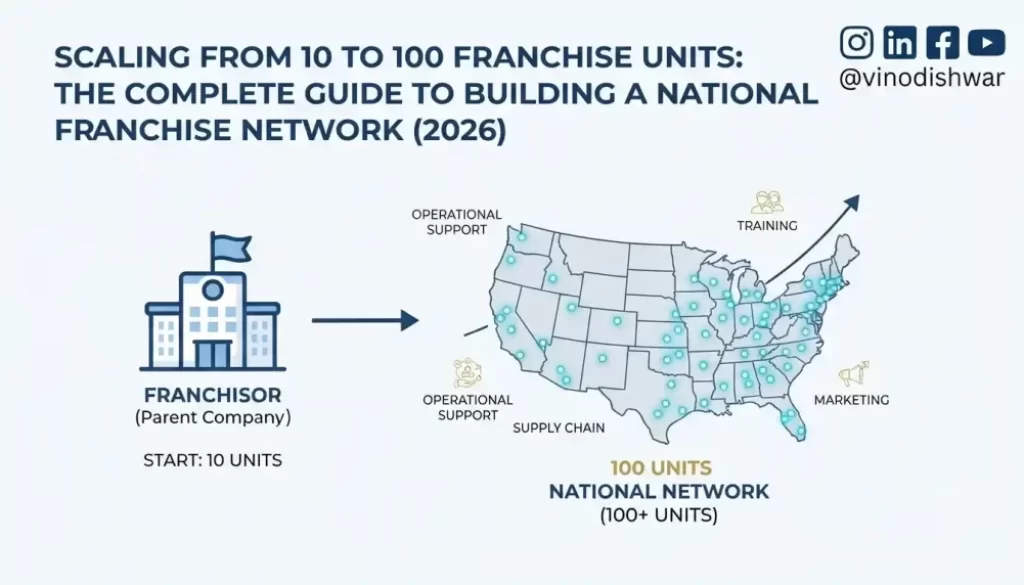
Reaching 10 franchise units proves that your business model is replicable. Scaling from 10 to 100 franchise units, however, requires an entirely different level of leadership, governance, technology, operational excellence, and strategic planning.
At this stage, franchisors are no longer managing individual franchise relationships—they are building an organization capable of supporting dozens or even hundreds of entrepreneurs while maintaining a consistent customer experience and protecting the brand.
Many franchise systems struggle during this growth phase because they continue operating like a small business. Founder dependency, inconsistent support, outdated technology, weak recruitment processes, and poor performance monitoring often limit expansion.
Whether you’re growing a restaurant chain, retail brand, salon network, preschool chain, healthcare business, fitness franchise, manufacturing company, or service business, this guide explains how to scale successfully from 10 to 100 franchise locations.
Important: Large-scale franchise expansion should comply with all applicable franchise, corporate, tax, employment, privacy, advertising, and industry-specific regulations. Work with qualified legal, tax, accounting, and compliance professionals throughout your expansion journey.
Why Scaling from 10 to 100 Franchise Units Is Different
Growing from one to ten units focuses primarily on validating systems.
Growing from ten to one hundred units focuses on:
- Organizational leadership
- Network governance
- Regional management
- Technology integration
- Franchisee success
- Brand consistency
- Data-driven decision making
- Sustainable profitability
Expansion becomes an enterprise-level challenge rather than an operational one.
Benefits of Scaling from 10 to 100 Franchise Units
A professionally managed network of 100 units can provide:
- National brand recognition
- Increased royalty revenue
- Greater purchasing power
- Stronger supplier negotiations
- Higher marketing efficiency
- Broader market coverage
- Improved investor confidence
- Better economies of scale
These benefits are realized only when operational quality is maintained as the network grows.
Scaling from 10 to 100 Franchise Units Timeline
Stage 1: Build an Enterprise Leadership Team
Founder-led decision-making is no longer sustainable.
Develop leadership roles such as:
- Chief Executive Officer
- Franchise Development Director
- Operations Director
- Marketing Director
- Technology Manager
- Training Manager
- Finance Manager
- Regional Franchise Managers
Leadership scalability drives business scalability.
Stage 2: Create Regional Support Structures
Supporting 100 franchisees from one central office is rarely practical.
Establish:
- Regional offices (where appropriate)
- Franchise Business Consultants
- Area Managers
- Training coordinators
- Field operations teams
- Regional marketing support
Regional teams improve response times and franchisee satisfaction.
Stage 3: Standardize Every Business Process
Every operational process should be documented.
Examples include:
- Operations Manual
- SOPs
- HR procedures
- Recruitment processes
- Audit systems
- Quality standards
- Crisis management procedures
- Customer service protocols
Consistency becomes your competitive advantage.
Stage 4: Strengthen Franchise Recruitment
As expansion accelerates:
- Improve franchise marketing
- Optimize SEO
- Invest in CRM automation
- Implement qualification frameworks
- Standardize Discovery Days
- Improve franchise sales processes
Recruiting high-quality franchisees remains the most important growth factor.
Stage 5: Invest in Enterprise Technology
Technology should support every department.
Examples include:
- CRM
- ERP
- POS
- Learning Management System (LMS)
- Business Intelligence (BI) dashboards
- Franchise portals
- Mobile inspection apps
- Document management systems
Technology enables centralized visibility across the network.
Stage 6: Build a Franchise Support Organization
Support should include:
- Business coaching
- Operational consulting
- Marketing assistance
- Technical support
- Financial guidance
- Refresher training
- Quarterly business reviews
Franchisee success drives network success.
Stage 7: Expand Marketing Capabilities
Marketing evolves from local campaigns to national brand management.
Key initiatives include:
- National advertising
- Regional campaigns
- Local Store Marketing (LSM)
- Public relations
- Content marketing
- Influencer partnerships (where appropriate)
- Reputation management
- Customer loyalty programs
Marketing consistency strengthens brand equity.
Stage 8: Build Governance Systems
Implement governance through:
- Franchise advisory councils
- Performance scorecards
- Operational audits
- Compliance reviews
- Annual conferences
- Franchise communication platforms
Strong governance supports long-term network stability.
Stage 9: Monitor Network Performance
Track metrics such as:
- Same-store sales growth
- Average unit revenue
- Franchisee profitability
- Customer satisfaction
- Compliance scores
- Training completion
- Marketing ROI
- Franchisee retention
- Territory performance
Network-wide analytics enable informed strategic decisions.
Infrastructure Required for Scaling from 10 to 100 Franchise Units
| Function | Responsibility |
|---|---|
| Executive Leadership | Strategic direction |
| Franchise Development | Recruitment and expansion |
| Operations | Quality and compliance |
| Marketing | National and local marketing |
| Technology | Systems and automation |
| Finance | Royalties and reporting |
| Training | Learning and development |
| Regional Teams | Franchise support |
Scaling Timeline
| Growth Phase | Priority |
|---|---|
| 10–20 Units | Leadership and systems |
| 20–40 Units | Regional expansion |
| 40–60 Units | Technology integration |
| 60–80 Units | Governance and performance optimization |
| 80–100 Units | National brand scaling and continuous improvement |
Expansion should be paced according to operational readiness rather than growth targets alone.
Infrastructure Required for 100 Units
Operations
- Comprehensive Operations Manual
- Digital SOP library
- Audit program
- Compliance framework
Technology
- CRM
- ERP
- POS
- BI dashboards
- LMS
- Franchise portal
Marketing
- National campaigns
- Local marketing support
- SEO strategy
- PR
- Brand management
Finance
- Royalty management
- Budget planning
- Financial analytics
- Forecasting
Human Resources
- Leadership development
- Recruitment
- Employee training
- Performance management
Franchise Support
- Business Consultants
- Regional Managers
- Marketing Specialists
- Training Teams
- Technical Support
Scaling Checklist
Before pursuing 100 franchise units, confirm that you have:
Systems
- Updated Operations Manual
- Digital SOPs
- Quality assurance program
- Brand standards
Recruitment
- Franchise recruitment strategy
- CRM automation
- Candidate qualification process
- Discovery framework
Technology
- Integrated CRM
- ERP
- BI dashboards
- Franchise portal
- LMS
Governance
- Advisory council
- Operational audits
- Compliance reviews
- KPI scorecards
Leadership
- Regional managers
- Functional department heads
- Succession planning
- Communication systems
Practical Example
A healthcare franchise with 12 successful locations planned national expansion.
The business implemented:
- Enterprise CRM
- Regional support teams
- Digital Operations Manual
- National marketing strategy
- KPI dashboards
- Quarterly franchise reviews
- Learning Management System
- Territory planning software
As the network expanded, standardized governance and technology helped maintain operational consistency and improve franchisee performance.
Franchise Scaling Framework
10 Franchise Units
        │
        ▼
Leadership Team
        │
        ▼
Regional Support
        │
        ▼
Enterprise Technology
        │
        ▼
Standardized Operations
        │
        ▼
Recruitment System
        │
        ▼
Marketing Expansion
        │
        ▼
Governance
        │
        ▼
Performance Management
        │
        ▼
100 Franchise Units
Common Scaling Mistakes
Avoid these common pitfalls:
- Founder dependency
- Expanding faster than support capacity
- Weak regional leadership
- Poor technology integration
- Inconsistent franchise training
- Limited operational audits
- Weak communication
- Ignoring franchisee feedback
- Lack of performance reporting
- Prioritizing rapid growth over sustainable quality
Best Practices
- Build leadership before accelerating expansion.
- Standardize every operational process.
- Invest in enterprise-grade technology.
- Recruit franchisees selectively.
- Empower regional support teams.
- Conduct regular compliance audits.
- Measure KPIs across the entire network.
- Continuously improve systems based on data and franchisee feedback.
How Franchise Development Consultants Help
Professional franchise development consultants help businesses:
- Develop national expansion strategies
- Build scalable franchise systems
- Design organizational structures
- Create Operations Manuals and SOPs
- Implement CRM and BI platforms
- Improve franchise recruitment
- Develop governance frameworks
- Coordinate documentation and compliance planning with qualified legal professionals
These capabilities help businesses scale efficiently while preserving operational excellence.
Why Choose Franchise Alpha?
At Franchise Alpha, we help businesses scale from 10 to 100 franchise units through our proprietary SOLEMN® Framework, integrating strategy, operations, governance, marketing, technology, and franchise support.
Strategy
Develop a long-term national expansion roadmap aligned with your business objectives.
Operations
Standardize systems, quality control, onboarding, audits, and franchise support.
Legal
Coordinate with qualified legal professionals to support franchise agreements, intellectual property protection, compliance, and expansion documentation.
Entrust
Implement governance systems that improve accountability, franchisee performance, and brand consistency.
Marketing
Drive qualified franchise recruitment through SEO, Google Ads, Meta Ads, content marketing, public relations, and investor education.
Nitty-Gritty
Deploy enterprise CRM platforms, ERP systems, BI dashboards, workflow automation, LMS platforms, and analytics to support large-scale franchise growth.
Frequently Asked Questions
What changes when scaling from 10 to 100 franchise units?
The focus shifts from founder-led operations to enterprise leadership, regional management, governance, technology integration, and scalable support systems.
Why is regional support important?
Regional managers and field teams provide faster assistance, improve operational consistency, strengthen franchise relationships, and support sustainable expansion.
What technology is essential for a 100-unit franchise network?
Enterprise CRM, ERP, POS, Business Intelligence dashboards, Learning Management Systems, franchise portals, and document management platforms help manage large-scale operations.
What KPIs should be monitored?
Important metrics include same-store sales growth, average unit revenue, franchisee profitability, customer satisfaction, compliance scores, royalty collection, marketing ROI, and franchisee retention.
Conclusion
Scaling from 10 to 100 franchise units is a transformational phase that requires much more than opening additional locations.
Businesses that invest in leadership, governance, technology, standardized operations, structured recruitment, and franchisee success create the foundation for sustainable national expansion.
The most successful franchise brands grow through systems, data, collaboration, and continuous improvement—not through rapid expansion alone.
Call to Action
Ready to Scale from 10 to 100 Franchise Units?
Book a Franchise Readiness Assessment with Vinod Ishwar and discover how to build the leadership, systems, and infrastructure required for national franchise expansion.
Your assessment includes:
- Franchise Scalability Audit
- Leadership & Governance Review
- Technology & Operations Assessment
- Recruitment & Support Evaluation
- Customized National Expansion Roadmap
Build a resilient, high-performing franchise network designed for long-term growth.