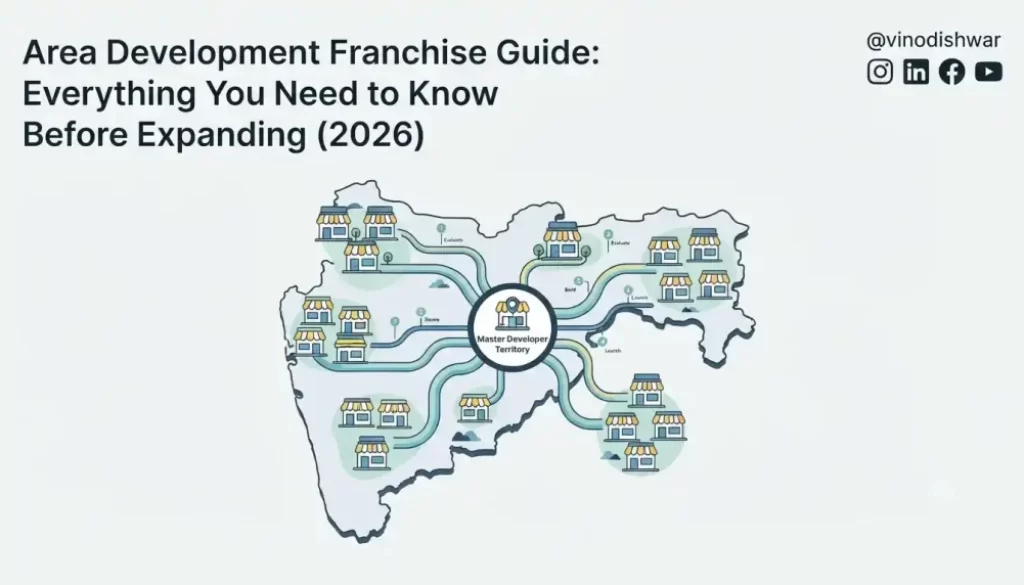
Area Development Franchise Guide: Everything You Need to Know Before Expanding (2026)
As franchise brands grow beyond individual locations, they need expansion strategies that balance speed with operational control. One of the most effective approaches is the Area Development Franchise Model.
Rather than recruiting dozens of independent franchisees, an area development strategy allows one qualified investor or business group to develop multiple franchise outlets within a defined territory over an agreed period. This approach accelerates market penetration, improves operational consistency, and strengthens regional brand presence.
This Area Development Franchise Guide explains every stage of developing an area franchise strategy, selecting developers, structuring agreements, and expanding into multiple territories successfully.
This guide explains how area development franchising works, its advantages and challenges, how agreements are structured, and how businesses can determine whether this model is right for their expansion strategy.
Area Development Franchise Guide: What is an Area Development Franchise?
An Area Development Franchise is a franchise arrangement in which a franchisee (known as the Area Developer) receives the exclusive or preferred right to open and operate multiple franchise locations within a designated geographic area according to a predetermined development schedule.
Unlike a single-unit franchise, where one outlet is operated, an area developer commits to establishing several locations over a defined timeline.
For example:
- 5 restaurants within one city over 3 years
- 10 fitness centers across a state within 5 years
- 8 retail outlets across a region within 4 years
The franchisor grants development rights based on agreed performance milestones.
Area Development Franchise Guide: How Area Development Franchising Works
The process typically follows these steps:
- Business qualifies for franchising.
- Franchisor identifies target expansion markets.
- Area Developer is selected.
- Area Development Agreement is signed.
- Development schedule is approved.
- Multiple franchise outlets are launched according to milestones.
- Ongoing operational support and performance monitoring continue throughout the agreement.
The franchisor maintains brand standards while the developer focuses on opening and operating multiple successful locations.
Why Businesses Choose Area Development Franchising
Area development offers several strategic advantages:
- Faster regional expansion
- Fewer franchisees to manage
- Stronger local market penetration
- Higher commitment from experienced investors
- Better operational consistency
- Improved economies of scale
- Increased franchise revenue
- Simplified communication and support
It is particularly effective for brands aiming for rapid growth without building every outlet themselves.
Learn more about professional franchise expansion services at Franchise Alpha.
Key Components of an Area Development Agreement
A professionally drafted Area Development Agreement generally includes:
Development Territory
Defines the geographic region where the developer has expansion rights.
Development Schedule
Specifies:
- Number of outlets
- Opening deadlines
- Performance milestones
Exclusivity
Explains whether the developer receives exclusive rights within the territory.
Investment Commitment
Details required investment for all planned locations.
Franchise Fees
Includes:
- Area development fee
- Individual franchise fees
- Royalty obligations
- Marketing contributions
Performance Requirements
Sets expectations for:
- Outlet openings
- Operational standards
- Sales performance
- Brand compliance
Renewal and Termination
Outlines renewal rights, default conditions, and agreement termination procedures.
Area Development vs Single Unit Franchising
| Feature | Single Unit | Area Development |
|---|---|---|
| Outlets | One | Multiple |
| Investment | Lower | Higher |
| Expansion Speed | Moderate | Fast |
| Territory | Limited | Defined region |
| Management | Owner-operated | Regional management |
| Revenue Potential | Moderate | High |
| Operational Complexity | Low | Medium to High |
Area Development vs Multi-Unit Franchising
Although similar, they are not identical. You may also like our detailed guide on Single Unit vs Multi Unit Franchising.
Multi-Unit Franchise
The franchisee owns multiple outlets but may not have a contractual obligation to open additional locations within a fixed timeline.
Area Development Franchise
The developer commits contractually to opening a specified number of outlets according to an agreed schedule.
Area development is therefore more structured and growth-oriented.
Benefits Explained in this Area Development Franchise Guide
Rapid Market Expansion
Opening multiple locations simultaneously increases market share and brand visibility.
Strong Regional Presence
Customers encounter the brand consistently throughout the territory, improving recognition and trust.
Operational Efficiency
Regional management teams streamline:
- Recruitment
- Training
- Marketing
- Inventory
- Quality control
Better Franchisee Commitment
Area developers invest significantly in the territory, creating long-term commitment to the brand.
Lower Support Costs
Managing one regional developer is often more efficient than supporting many independent franchisees.
Higher Revenue Potential
The franchisor benefits from:
- Development fees
- Multiple franchise fees
- Ongoing royalties
- Marketing fund contributions
- Product supply revenue
Challenges of Area Development Franchising
Businesses should also consider potential risks:
- Higher investment requirements
- Dependence on one regional developer
- Complex legal agreements
- Greater operational oversight
- Performance risk if development milestones are missed
- Larger support expectations during rollout
Proper franchise systems and careful partner selection reduce these risks.
Is Area Development Right for Your Business?
Area development is ideal if your business:
- Has proven profitability
- Operates standardized systems
- Has documented SOPs
- Offers comprehensive franchise training
- Can support multiple locations simultaneously
- Has strong brand recognition
- Plans rapid regional or national expansion
Businesses still dependent on founders or lacking operational documentation should first strengthen their franchise systems.
Practical Example
A successful premium fitness brand has 12 profitable clubs and plans expansion into western India.
Instead of recruiting 30 independent franchisees, the brand appoints one experienced Area Developer to launch:
- 8 clubs across Mumbai
- 4 clubs in Pune
- 3 clubs in Nashik
The developer commits to opening all locations within four years.
Benefits include:
- Faster market penetration
- Consistent customer experience
- Simplified franchise management
- Strong regional marketing
- Higher operational efficiency
Area Development Franchise Framework
Successful Business
        │
        ▼
Franchise Readiness Assessment
        │
        ▼
Target Market Selection
        │
        ▼
Area Developer Recruitment
        │
        ▼
Area Development Agreement
        │
        ▼
Development Schedule
        │
        ▼
Multi-Location Launch
        │
        ▼
Training & Operational Support
        │
        ▼
Performance Monitoring
        │
        ▼
Regional Market Leadership
Common Mistakes to Avoid
Avoid these common area development mistakes:
- Selecting developers based only on financial capability
- Setting unrealistic development timelines
- Offering excessively large territories
- Weak operational documentation
- Inadequate franchise training
- Poor territory planning
- Lack of performance monitoring
- Expanding before systems are fully standardized
Successful area development depends on planning, execution, and continuous support.
How Franchise Development Consultants Help
Experienced franchise consultants assist businesses by:
- Assessing franchise readiness
- Designing area development strategies
- Defining development territories
- Preparing Area Development Agreements
- Creating financial models
- Building SOPs and Operations Manuals
- Recruiting qualified area developers
- Supporting long-term expansion
Professional guidance minimizes risk while maximizing growth potential. Explore Franchise Alpha‘s franchise development solutions and area development consulting.
Why Choose Franchise Alpha?
At Franchise Alpha, we help businesses build scalable area development franchise systems using our proprietary SOLEMN® Framework.
Strategy
Design customized area development strategies aligned with your expansion goals.
Operations
Develop SOPs, Operations Manuals, and scalable operational systems.
Legal
Prepare Area Development Agreements, Franchise Agreements, and territory protection structures.
Entrust
Reduce founder dependency by implementing repeatable business systems.
Marketing
Generate qualified area developer leads through digital franchise marketing.
Nitty-Gritty
Track KPIs, monitor development milestones, and optimize regional franchise performance.
Frequently Asked Questions
What is an Area Development Franchise?
An Area Development Franchise allows one franchisee to develop multiple franchise outlets within a defined territory according to a contractual development schedule.
Before expanding through area development, learn how to prepare your business with our Franchise Development Roadmap article.
How is an Area Development Franchise different from a Multi-Unit Franchise?
A Multi-Unit Franchise permits ownership of several outlets, while an Area Development Franchise requires the franchisee to open a specified number of outlets within agreed timelines under an Area Development Agreement.
What businesses benefit from area development?
Restaurants, retail chains, healthcare providers, education institutes, fitness brands, service businesses, and other scalable concepts with standardized operations benefit most from area development franchising.
Is area development suitable for new franchisors?
Area development is generally best for businesses with mature franchise systems, documented SOPs, comprehensive training, and strong operational support capabilities.
Conclusion
Area Development Franchising is one of the most effective strategies for businesses seeking rapid yet controlled expansion.
By partnering with experienced developers, defining protected territories, and establishing clear development schedules, businesses can achieve faster market penetration, stronger regional presence, and improved operational efficiency. Area Development vs Multi-Unit Franchising
However, success depends on choosing the right partners, creating strong legal agreements, standardizing operations, and providing continuous support throughout the development journey. By following this Area Development Franchise Guide, businesses can expand faster while maintaining operational consistency, profitability, and strong regional market leadership.
Call to Action
Ready to Expand Through Area Development Franchising?
Book a Franchise Readiness Assessment with Vinod Ishwar and discover whether an Area Development Franchise strategy is right for your business.
Your assessment includes:
- Franchise Readiness Evaluation
- Area Development Strategy
- Territory Planning
- SOP & Operations Review
- Customized Expansion Roadmap
Build a scalable regional franchise network with a proven area development strategy.