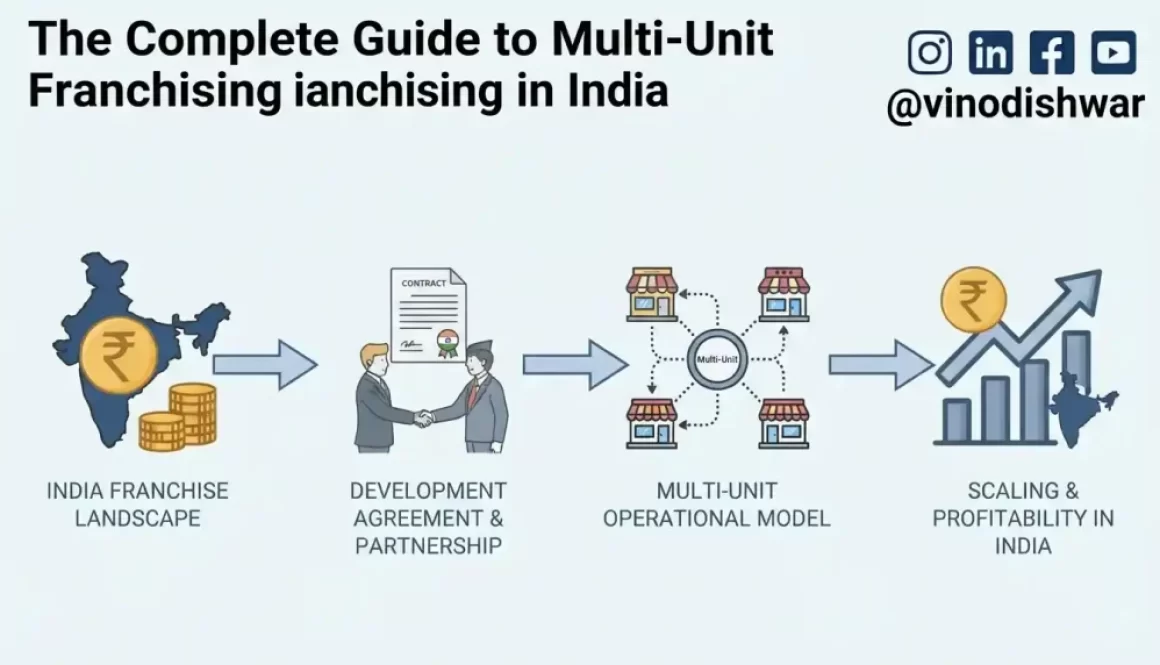
The Complete Guide to Multi-Unit Franchising in India
Multi-unit franchising in India offers experienced franchisees an opportunity to scale their business by operating multiple outlets under the same brand. For entrepreneurs who’ve already proven they can run one successful franchise outlet, multi-unit franchising is often the natural next step—a way to grow without starting a completely new business from scratch. However, moving from one outlet to several is a genuine leap in complexity that requires careful planning and strong management systems.
What Multi-Unit Franchising Really Means
Multi-unit franchising refers to an arrangement where a single franchisee owns and operates multiple outlets of the same brand, either through individual agreements for each unit or, more commonly, through a development agreement that grants rights to open a defined number of outlets within a specific territory over an agreed timeline.
This is distinct from master franchising, where a master franchisee gains rights to sub-franchise the brand to others within a territory — multi-unit franchisees operate the outlets themselves rather than recruiting further franchisees beneath them.
Why Franchisors Favor Multi-Unit Development
From a franchisor’s perspective, multi-unit franchisees offer several advantages: faster territory saturation, reduced recruitment overhead (one relationship instead of several), and often stronger operational consistency, since an experienced multi-unit operator typically brings better management systems than several inexperienced single-unit franchisees would individually.
What It Takes to Succeed as a Multi-Unit Franchisee
1. Strong Management Systems, Not Just Personal Hustle
Single-unit success often comes from hands-on founder energy — being present, solving problems personally, motivating staff directly. Multi-unit success requires building management layers: outlet managers, area supervisors, and standardized reporting systems that don’t depend on your personal presence at every location.
Businesses planning to expand your franchise network across India should first establish these management systems before opening additional outlets.
2. Significant Capital Reserves
Beyond the combined investment for multiple outlets, multi-unit franchisees need working capital reserves that can absorb slower-than-expected ramp-up periods across several locations simultaneously — a much larger financial cushion than single-unit operations require.
Understanding franchise prohttps://vinodishwar.com/franchise-profitability-guide/fitability is equally important before investing in multiple franchise units.
3. Talent Acquisition and Retention Capability
Finding and retaining capable outlet managers becomes a core competency in itself. Multi-unit franchisees who struggle to build a reliable management bench often find their growth stalling regardless of capital availability.
4. Systems for Consistency Across Locations
Standardized training, centralized procurement, and unified reporting dashboards become essential once you’re managing more than two or three locations — informal, memory-based management simply doesn’t scale.
Beyond the combined inv
5. A Long-Term Growth Mindset
Multi-unit development agreements typically commit franchisees to opening a set number of outlets within specific timelines. This requires genuine long-term commitment to the brand and category, not opportunistic short-term investment.
The Risks of Multi-Unit Franchising
- Concentrated brand risk — if the brand experiences reputational damage or category decline, the impact multiplies across every owned outlet.
- Cash flow strain if multiple outlets underperform simultaneously during ramp-up.
- Management overextension, particularly for franchisees who scale faster than their management systems can support.
- Territory saturation risk — opening too many outlets too close together can cannibalize sales rather than grow the overall market.
How Franchisors Should Structure Multi-Unit Agreements
Franchisors offering multi-unit or development agreements should include clear performance milestones (minimum number of outlets opened within specific timeframes), territory exclusivity terms, and provisions for reclaiming undeveloped territory rights if a franchisee fails to meet development commitments. This protects the brand’s overall growth trajectory while still rewarding committed multi-unit partners.
Evaluating Whether You’re Ready for Multi-Unit Expansion
Before signing a multi-unit or development agreement, honestly assess:
- Has your first outlet been consistently profitable for at least 12 months?
- Do you have a reliable manager who can run your existing outlet without your daily involvement?
- Do you have the financial reserves to support a second or third location through its own ramp-up period?
- Have you tested your ability to hire and retain quality staff beyond your immediate personal network?
- Before expanding, ensure you have a franchise-ready business with proven systems and scalable operations.
- Entrepreneurs exploring franchise expansion can also refer to the Startup India initiative for resources, business support, and information on India’s entrepreneurial ecosystem.
Key Takeaways
- Multi-unit franchising requires management systems, not just additional capital.
- It differs fundamentally from master franchising, which involves sub-franchising rights.
- Talent acquisition and retention become core competencies at scale.
- Franchisors should structure development agreements with clear performance milestones.
- Staged, proven expansion outperforms aggressive, unproven multi-unit growth.
- Businesses considering multi-unit franchising in India should build strong management systems, financial reserves, and operational processes before expanding into multiple locations.
Conclusion
Multi-unit franchising offers a genuine path to accelerated returns and business scale — but only for franchisees prepared to build the systems, teams, and financial reserves it demands. Approached thoughtfully, it can transform a single successful outlet into a substantial, resilient business.
Businesses that invest in multi-unit franchising in India should focus on strong leadership, scalable systems, and disciplined expansion to achieve long-term success.
-Vinod Ishwar