What is Franchise Consulting? A Complete Guide for Business Owners in India (2026)
What is Franchise Consulting?
Franchise Consultant vs Business Consultant is one of the most common comparisons business owners make when planning growth. While both professionals help businesses succeed, their expertise, strategies, and objectives are very different.
This is where franchise consulting plays a crucial role.
A franchise consultant helps businesses evaluate whether they are ready for franchising and develops a structured roadmap to build a scalable, legally compliant, and commercially successful franchise system.
Whether you own a restaurant, salon, retail store, healthcare clinic, education center, fitness brand, or service business, professional franchise consulting can significantly improve your chances of long-term success.
Add some images with alt attributes that include the keyphrase or synonyms
What Does a Franchise Consultant Do?
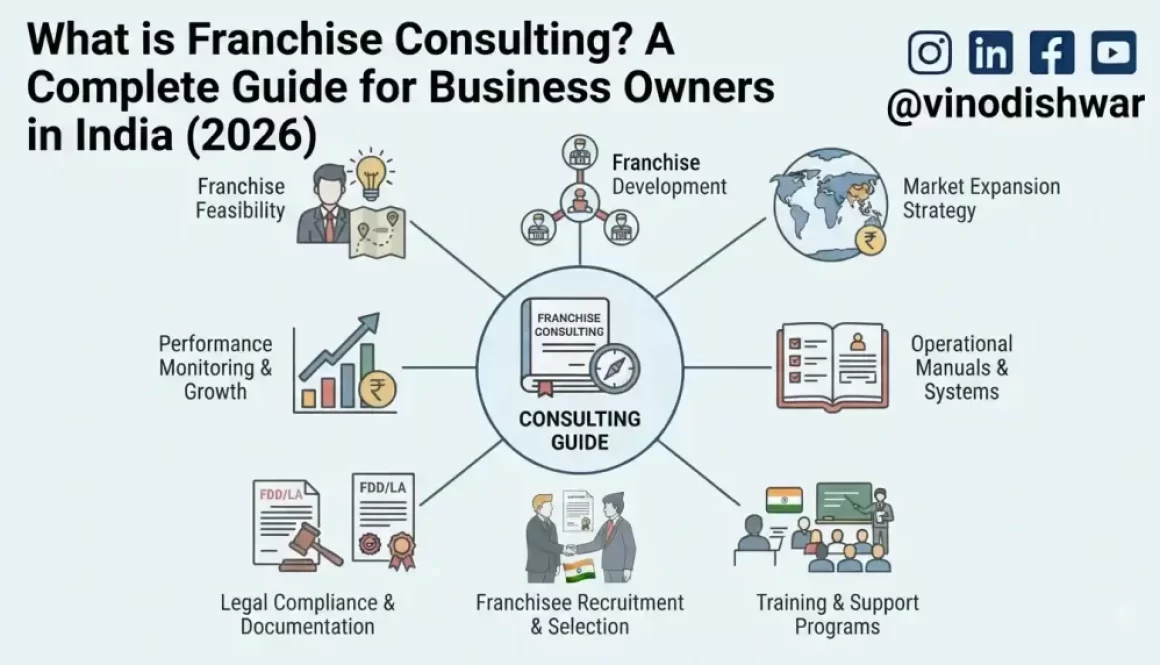
A franchise consultant works closely with business owners to transform an operating business into a franchise-ready organization. Learn more about our Franchise Consulting Services to understand how we help businesses develop scalable and profitable franchise models.
Instead of merely preparing documents, an experienced consultant develops the complete franchise ecosystem, including:
- Business evaluation
- Franchise feasibility assessment
- Franchise business model
- Franchise financial planning
- Operations manual development
- SOP creation
- Legal documentation
- Franchise agreement guidance
- Franchise marketing strategy
- Investor lead generation
- Franchise sales process
- Franchise partner selection
- Training systems
- Ongoing expansion support
The objective is not just to sell franchises but to build a franchise network capable of sustainable growth.
Why Businesses Need Franchise Consulting
Many businesses assume that because one outlet is profitable, they are ready to franchise. In reality, this is one of the most common mistakes.
Businesses often face challenges such as:
- Inconsistent customer experience
- Dependence on the founder
- Lack of documented systems
- Poor operational controls
- Undefined financial benchmarks
- Weak franchise recruitment processes
- Inadequate training materials
- Unclear legal documentation
Without addressing these issues, rapid expansion can lead to operational failures, franchisee dissatisfaction, and reputational damage.
Professional franchise consulting helps identify and resolve these challenges before expansion begins.
Is Your Business Ready for Franchising?
Before offering franchise opportunities, every business should evaluate its readiness.
Franchise Readiness Checklist
✅ Proven and profitable business model
✅ Strong brand identity
✅ Standard operating procedures
✅ Repeatable operations
✅ Training programs
✅ Scalable supply chain
✅ Franchise financial model
✅ Legal framework
✅ Expansion strategy
✅ Dedicated franchise support system
If several of these elements are missing, developing them should be the first priority before launching a franchise program. You can also take our Franchise Readiness Assessment to evaluate whether your business is prepared for successful franchise expansion.
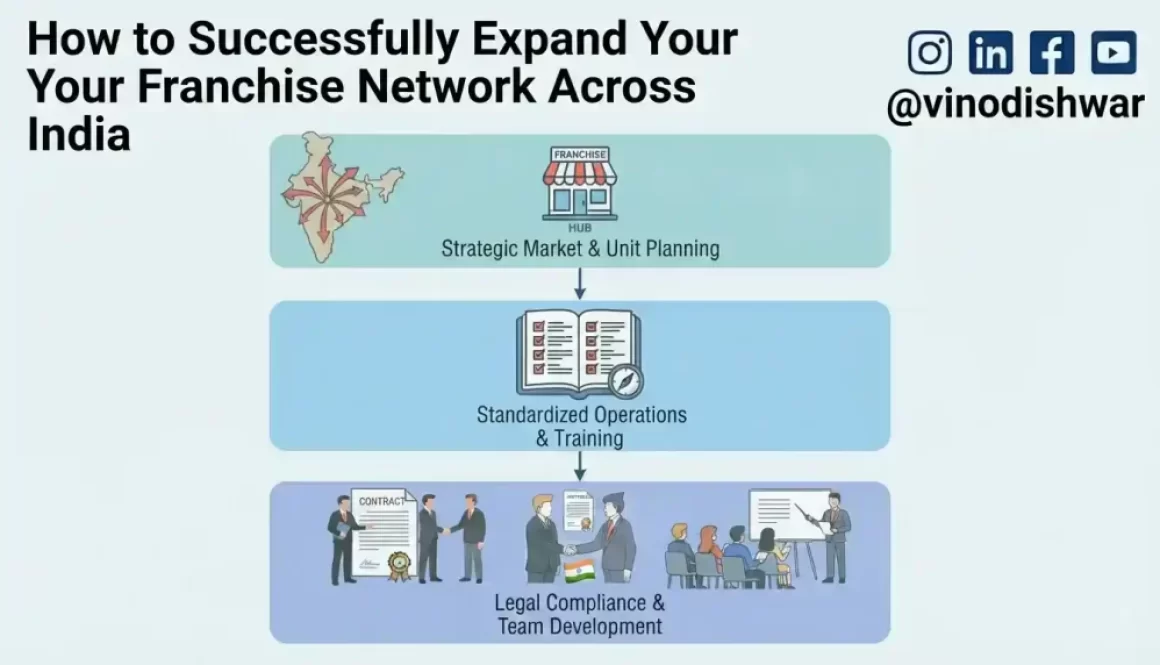
The Franchise Development Process
Professional franchise development generally follows a structured process. Our Franchise Development Services cover every stage of the franchise journey, from business assessment and documentation to franchise sales and expansion.
Step 1 – Business Assessment
The existing business is evaluated to determine:
- Profitability
- Operational maturity
- Market demand
- Competitive advantage
- Scalability
This assessment identifies strengths, risks, and areas requiring improvement.
Step 2 – Franchise Strategy
Once the business is considered suitable, the expansion strategy is designed.
Key decisions include:
- Franchise format
- Investment range
- Territory policy
- Franchise fee
- Royalty model
- Support structure
- Expansion roadmap
A well-defined strategy ensures consistency as the network grows.
Step 3 – Documentation
Comprehensive documentation forms the backbone of every successful franchise system.
Typical documents include:
- Operations Manual
- Training Manual
- Brand Guidelines
- Recruitment Process
- HR Policies
- Quality Standards
- Marketing Guidelines
- Franchise Agreement
- Financial Projections
Clear documentation enables franchisees to replicate the business model effectively.
Step 4 – Franchise Marketing
After the franchise system is established, potential franchise investors must be identified.
This typically involves:
- Franchise portals
- Digital advertising
- Social media campaigns
- Search engine optimization
- Webinars
- Investor presentations
- Discovery meetings
Generating inquiries is only the first step; qualifying and nurturing prospective franchisees is equally important.
To understand the latest franchise industry standards and business growth policies, businesses can also refer to resources published by the International Franchise Association, MSME (Government of India), and Invest India, which provide valuable insights into entrepreneurship, franchising, and business expansion.
Step 5 – Franchise Sales
The franchise sales process generally includes:
- Initial inquiry
- Qualification
- Business presentation
- Financial discussions
- Due diligence
- Site evaluation
- Agreement execution
- Training
- Store launch
A structured sales process improves conversion quality and reduces future disputes.
Common Mistakes Businesses Make
Many growing businesses rush into franchising without adequate preparation.
Some of the most common mistakes include:
- Franchising too early
- Copying another franchise model
- Charging unrealistic franchise fees
- Ignoring operational documentation
- Weak training systems
- Poor franchisee selection
- Inadequate marketing support
- Lack of ongoing monitoring
Avoiding these mistakes significantly increases the likelihood of building a successful franchise network.
Benefits of Hiring a Franchise Consultant
Working with an experienced franchise consultant provides several advantages:
Strategic Planning
Develop a scalable expansion roadmap tailored to your business.
Faster Market Entry
Reduce trial-and-error by following proven methodologies.
Professional Documentation
Create standardized systems and manuals that support consistent operations.
Better Franchise Recruitment
Attract qualified investors who align with your brand.
Operational Consistency
Maintain quality across multiple locations through documented processes.
Long-Term Growth
Build a franchise network designed for sustainable expansion rather than short-term sales.
A Structured Approach to Franchise Development
Every successful franchise system requires a repeatable process.
At Franchise Alpha, our consulting engagements are guided by the proprietary SOLEMN® Framework, which focuses on six critical pillars:
- Strategy – Defining the expansion roadmap and business model.
- Operations – Standardizing processes and operational excellence.
- Legal – Supporting documentation and governance.
- Entrust – Franchisee selection, onboarding, and relationship management.
- Marketing – Franchise recruitment and brand positioning.
- Nitty-Gritty – Performance monitoring, continuous improvement, and implementation support.
This structured methodology helps businesses move from a single successful outlet to a scalable franchise network with greater confidence.
Industries That Benefit from Franchise Consulting
Franchise consulting is suitable for many sectors, including:
- Restaurants and cafés
- Cloud kitchens
- Retail businesses
- Fashion brands
- Salons and beauty services
- Fitness studios
- Healthcare and diagnostics
- Education and training institutes
- Preschool chains
- Home services
- Automotive services
- Professional services
Any business with a repeatable and profitable operating model can potentially be franchised with the right preparation.
Frequently Asked Questions
What is franchise consulting?
Franchise consulting is a professional service that helps businesses evaluate, develop, launch, and expand franchise systems through strategic planning, documentation, financial modeling, and operational support.
When should I hire a franchise consultant?
Ideally, after establishing a profitable and repeatable business model but before marketing franchise opportunities.
How long does franchise development take?
Depending on the business, franchise development typically takes between 6 and 12 weeks for documentation and system design, followed by ongoing recruitment and expansion activities.
Can any business become a franchise?
No. A business should have consistent operations, market demand, documented systems, and financial viability before franchising.
Is franchise consulting only for large businesses?
No. Small and medium-sized businesses with a scalable model can also benefit significantly from professional franchise consulting.
Conclusion
Franchising is one of the most effective ways to expand a business, but success depends on preparation rather than speed.
Professional franchise consulting provides the strategic direction, documentation, operational systems, and implementation support required to build a sustainable franchise network.
When comparing Franchise Consultant vs Business Consultant, the right choice depends on your business goals.
Businesses that invest time in creating standardized processes, selecting the right franchise partners, and planning long-term growth are far more likely to develop successful and profitable franchise systems.
If your goal is to expand across India through franchising, the right strategy can make the difference between simply selling franchises and building a lasting brand. To learn more about the experience and expertise behind these strategies, visit the About Vinod Ishwar page.
Call to Action
Ready to find out if your business is franchise-ready?
Book a Franchise Readiness Assessment with Vinod Ishwar and receive a professional evaluation of your business model, expansion potential, operational maturity, and the next steps required to build a successful franchise system. Have questions about franchising? Visit our Contact page and speak with our franchise consulting team.