Retail Trends Shaping India’s Business Landscape and How to Prepare
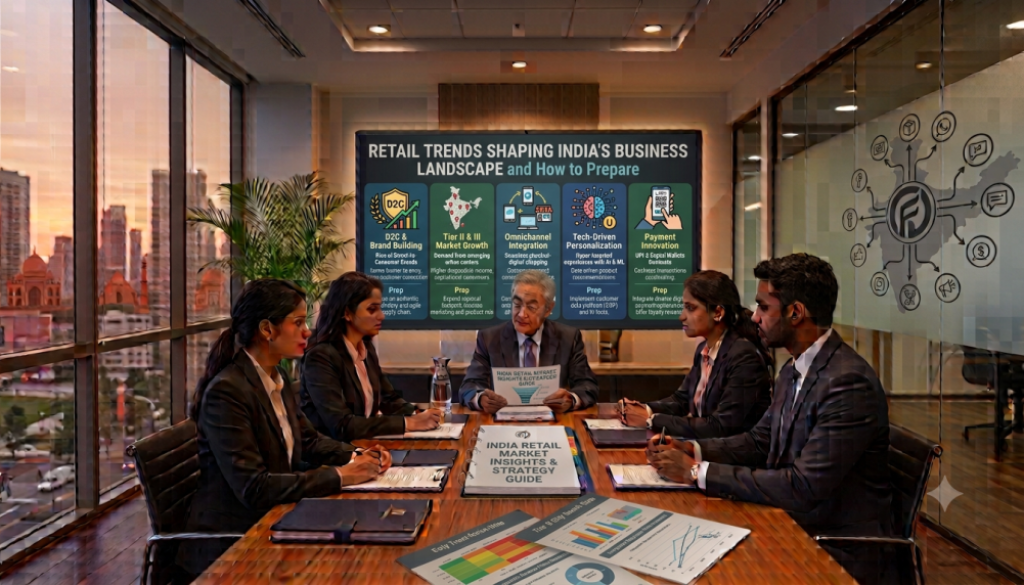
India’s retail sector has changed more in the past several years than in the previous few decades combined. Rising smartphone penetration, changing consumer expectations, and a wave of new infrastructure — logistics, payments, digital platforms — have reshaped how Indian consumers discover, evaluate, and purchase products and services. Businesses that understand and adapt to these shifts are positioning themselves for sustained growth; those that don’t risk becoming increasingly irrelevant to how customers actually shop today.
Key Retail Trends Shaping India’s Business Landscape
1. The Rise of Omnichannel Retail
Customers increasingly expect a seamless experience across online and offline touchpoints — researching online before buying in-store, or browsing in-store before purchasing online later. Retailers building integrated inventory, pricing, and customer experience across both channels are capturing more of this behavior than those treating online and offline as separate businesses.
2. Hyperlocal and Quick Commerce
The explosive growth of quick commerce platforms has shifted consumer expectations around delivery speed, particularly in metro and Tier-1 cities. Retail and FMCG businesses are increasingly evaluating hyperlocal fulfillment strategies to remain competitive on convenience.
3. Tier-2 and Tier-3 City Growth
Rising disposable incomes, improved infrastructure, and increasing digital adoption are driving significant retail growth beyond India’s traditional metro strongholds. Brands that historically focused exclusively on Tier-1 cities are increasingly finding strong opportunity in smaller cities with lower competition and rising spending power.
4. Experience-Driven Physical Retail
As online shopping handles routine, transactional purchases, physical retail is increasingly differentiating through experience — interactive displays, in-store events, personalized service — rather than competing purely on product availability.
5. Growing Demand for Sustainable and Ethical Products
A meaningful and growing segment of Indian consumers, particularly younger, urban demographics, are factoring sustainability, ethical sourcing, and brand values into purchase decisions — creating both opportunity and reputational risk for retailers.
6. Personalization Powered by Data
Retailers using customer data to personalize product recommendations, offers, and communication are seeing measurably stronger engagement and loyalty compared to generic, one-size-fits-all approaches.
7. Growth of Direct-to-Consumer (D2C) Brands
Digital-first D2C brands, unburdened by traditional retail overhead, are increasingly competing directly with established retail players — forcing traditional retailers to reconsider pricing, differentiation, and digital presence strategies.
8. Increasing Consumer Price Sensitivity Alongside Premiumization
Interestingly, India’s retail market is simultaneously seeing strong growth in value-focused and premium segments, with the middle ground facing more pressure — pushing many retailers to clarify their positioning more sharply.
How Businesses Can Prepare for These Shifts
- Invest in integrated inventory and customer data systems that support genuine omnichannel experience, not disconnected online and offline operations.
- Evaluate hyperlocal fulfillment partnerships if speed of delivery is relevant to your category.
- Assess Tier-2 and Tier-3 city expansion opportunities rather than assuming metro saturation is the only path to growth.
- Differentiate physical retail through experience, not just product availability, as online convenience continues to grow.
- Build genuine sustainability practices, not just marketing claims, if targeting environmentally conscious segments.
- Use available customer data thoughtfully to personalize offers and communication, respecting privacy expectations.
Common Mistakes in Adapting to Retail Trends
- Chasing every trend simultaneously without evaluating genuine relevance to your specific business and customers.
- Treating digital transformation as a bolt-on initiative rather than integrating it into core operations.
- Ignoring Tier-2 and Tier-3 opportunities due to outdated assumptions about smaller city spending power.
- Underestimating the operational complexity of hyperlocal delivery commitments.
- Adopting sustainability messaging without substantive practice, risking consumer trust if perceived as inauthentic.
Key Takeaways
- Omnichannel integration is increasingly expected, not optional, across most retail categories.
- Tier-2 and Tier-3 cities represent significant, often underexplored growth opportunity.
- Physical retail is differentiating through experience as online shopping absorbs routine transactions.
- Sustainability and personalization are increasingly influential in Indian consumer decision-making.
- Trend adoption should be evaluated for genuine relevance, not pursued indiscriminately.
Conclusion
India’s retail landscape will continue evolving rapidly, shaped by technology, changing consumer expectations, and expanding market geography. Businesses that thoughtfully adapt — rather than either ignoring these shifts or chasing every trend indiscriminately — will be best positioned for sustained growth.