International Franchise Expansion: The Complete Guide to Taking Your Brand Global (2026)
Introduction
International Franchise Expansion is one of the most effective ways to transform a successful domestic franchise into a globally recognized brand. Building a successful franchise network in your home country is a remarkable achievement, but expanding internationally unlocks new markets, increases revenue, and creates long-term growth opportunities.
Building a successful franchise network in your home country is a remarkable achievement.
Expanding internationally transforms your business into a truly global brand.
International Franchise Expansion allows businesses to enter new markets, increase revenue, diversify risk, enhance brand recognition, and unlock long-term growth opportunities. However, global expansion also introduces unique challenges, including legal compliance, cultural differences, currency fluctuations, operational complexity, intellectual property protection, and international partner selection.
Many brands fail overseas because they replicate their domestic strategy without adapting to local markets.
Successful international expansion requires careful planning, strong business systems, experienced leadership, and a scalable franchise model developed through Franchise Development.
This guide explains how businesses can successfully expand their franchise network across international markets while maintaining brand consistency, operational excellence, and profitability.
What Is International Franchise Expansion?
International Franchise Expansion is the process of granting franchise rights to entrepreneurs or organizations in foreign countries while maintaining consistent brand standards, operational systems, and customer experience.
Common international expansion models include:
- Master Franchise
- Area Development Agreements
- Regional Franchise Development
- Joint Ventures
- Company-Owned International Branches
- Strategic Licensing Partnerships
The objective is to grow globally while protecting the brand and ensuring sustainable expansion.
Why Expand Internationally?
Global franchise expansion offers several advantages:
- Access to larger markets
- Increased brand recognition
- Diversified revenue streams
- Reduced dependence on one economy
- Higher business valuation
- International investment opportunities
- Stronger competitive positioning
- Economies of scale
- Global supply chain efficiencies
- Long-term business sustainability
International growth creates global business opportunities. Learn more about international franchise consulting at https://franchisealpha.com/
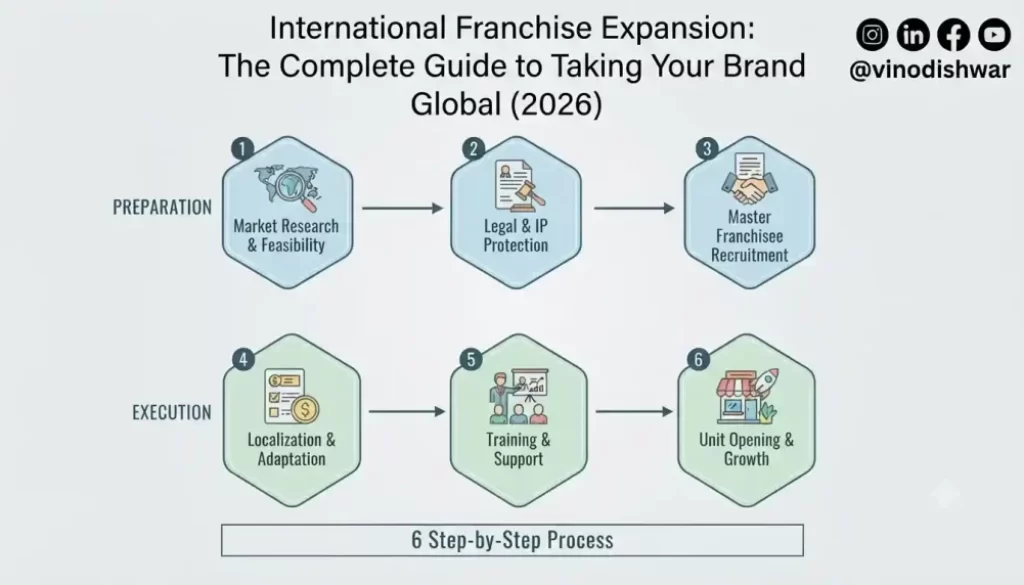
The 15-Step International Franchise Expansion Framework
Step 1. Assess Franchise Readiness
Before entering international markets, ensure your business has:
- Proven profitability
- Standardized SOPs
- Operations Manual
- Strong franchise systems
- Scalable leadership
Strong foundations support successful global expansion.
Step 2. Identify Target Countries
Evaluate markets based on:
- Population
- Economic growth
- Consumer demand
- Franchise acceptance
- Political stability
- Ease of doing business
- Competitive landscape
Market selection is critical.
Step 3. Conduct International Market Research
Study:
- Customer preferences
- Cultural expectations
- Local competition
- Industry regulations
- Pricing strategies
- Consumer behavior
Every country requires localized planning.
Step 4. Choose the Right Expansion Model
International expansion options include:
- Master Franchise
- Area Development
- Joint Venture
- Company-Owned Expansion
- Strategic Partnerships
The right model depends on investment capacity and long-term objectives. Businesses often work with a Franchise Expansion Consultant to choose the most suitable international expansion model.
Step 5. Protect Intellectual Property
Register:
- Trademarks
- Logos
- Brand names
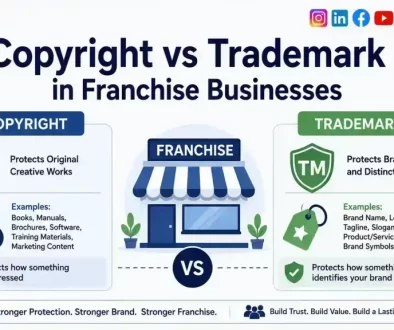
- Copyrights
- Domain names
IP protection is essential before market entry.
Step 6. Develop International Franchise Documentation
Prepare:
- International Franchise Agreement
- Disclosure Documents
- Operations Manual
- Brand Guidelines
- Compliance Framework
Documentation reduces legal and operational risks.
Step 7. Localize Business Operations
Adapt:
- Products
- Pricing
- Marketing
- Packaging
- Customer experience
- Training
Localization improves market acceptance.
Step 8. Build Global Supply Chain Systems
Develop:
- International sourcing
- Logistics
- Distribution
- Vendor management
- Inventory planning
Reliable supply chains support operational consistency.
Step 9. Recruit the Right Master Franchise Partner
Evaluate candidates based on:
- Financial capability
- Business experience
- Local market knowledge
- Leadership skills
- Expansion capability
The right partner determines long-term success.
Step 10. Develop International Training Systems
Provide:
- Online training
- Operations workshops
- Leadership development
- Certification programs
- Continuous learning
Training ensures global consistency.
Step 11. Implement Global Technology
Adopt:
- ERP
- CRM
- Franchise Management Software
- Business Intelligence
- Financial Reporting
- Communication Platforms
Technology enables centralized management across countries.
Step 12. Maintain Brand Consistency
Standardize:
- Store design
- Customer service
- Product quality
- Brand messaging
- Marketing standards
Customers should recognize the brand anywhere in the world.
Step 13. Monitor Global Performance
Track:
- Revenue
- Profitability
- Franchise performance
- Customer satisfaction
- Compliance
- Expansion milestones
Enterprise dashboards improve visibility.
Step 14. Strengthen International Governance
Establish:
- Audit systems
- Performance reviews
- Compliance checks
- Legal oversight
- Quality assurance
Governance protects the global brand.
Step 15. Build a Long-Term Global Expansion Roadmap
Plan for:
- Regional headquarters
- Additional countries
- Global leadership
- Innovation
- International partnerships
Think beyond one market.
Essential Systems for International Expansion
Before entering global markets, businesses should have:
- Franchise Operations Manual
- SOP Library
- Franchise Agreement
- Trademark Protection
- ERP Platform
- CRM System
- LMS Training Platform
- Global Audit Framework
- Business Intelligence Dashboard
- International Support System
Strong systems support international scalability.
Common International Expansion Mistakes
Avoid these common pitfalls:
- Expanding without research
- Ignoring cultural differences
- Weak legal documentation
- Poor franchise partner selection
- Inadequate training
- Weak operational systems
- Lack of IP protection
- Founder dependency
International success requires disciplined planning.
How Franchise Expansion Consultants Help
Experienced consultants assist businesses by:
- Evaluating international readiness
- Identifying target markets
- Designing global franchise strategies
- Preparing legal documentation
- Developing franchise systems
- Standardizing operations
- Recruiting master franchise partners
- Supporting international growth
Professional guidance reduces risk and accelerates global expansion. Explore our global franchise consulting services at https://franchisealpha.com/franchise-consulting/
The SOLEMN® Framework
At Franchise Alpha, international expansion strategies are developed using the proprietary SOLEMN® Framework.
Strategy
Identify global opportunities, prioritize international markets, and develop long-term expansion roadmaps.
Operations
Standardize SOPs, Operations Manuals, technology systems, training programs, and quality management across international markets.
Legal
Protect intellectual property, develop international franchise agreements, ensure compliance, and strengthen governance.
Entrust
Build leadership capability, develop master franchise partnerships, strengthen organizational culture, and support regional management.
Marketing
Expand globally through international branding, digital marketing, franchise recruitment, investor engagement, and localized campaigns.
Nitty-Gritty
Measure KPIs, optimize operational performance, improve profitability, and continuously refine international expansion systems.
This framework enables businesses to grow globally while maintaining consistency, quality, and long-term sustainability.
Frequently Asked Questions
What is International Franchise Expansion?
International Franchise Expansion is the process of growing a franchise business into foreign markets through structured franchise agreements, standardized systems, and local franchise partners.
What is the best international expansion model?
Master Franchising is one of the most widely used international expansion models because it allows rapid growth through experienced local partners.
What should businesses prepare before expanding internationally?
Businesses should develop SOPs, Operations Manuals, Franchise Agreements, trademark protection, technology systems, leadership teams, and scalable business processes.
Why hire an International Franchise Consultant?
A consultant helps businesses identify suitable markets, reduce legal risks, develop franchise systems, recruit international partners, and accelerate global expansion.
Conclusion
International Franchise Expansion represents one of the most exciting growth opportunities for ambitious businesses.
Success depends on far more than finding franchisees—it requires strong systems, strategic planning, legal protection, cultural understanding, operational excellence, and world-class leadership.
Businesses that invest in scalable infrastructure and disciplined expansion strategies build brands capable of competing on a global stage.
The goal is not simply to operate in more countries—it is to build a globally respected, consistently managed, and highly profitable franchise network.
Call to Action
Expand Your Franchise Globally
Book an International Franchise Expansion Strategy Session with Vinod Ishwar to evaluate your global readiness, identify target markets, build international franchise systems, develop legal frameworks, and create a customized roadmap for worldwide expansion.
Receive a strategic blueprint designed to help your brand grow confidently across international markets.