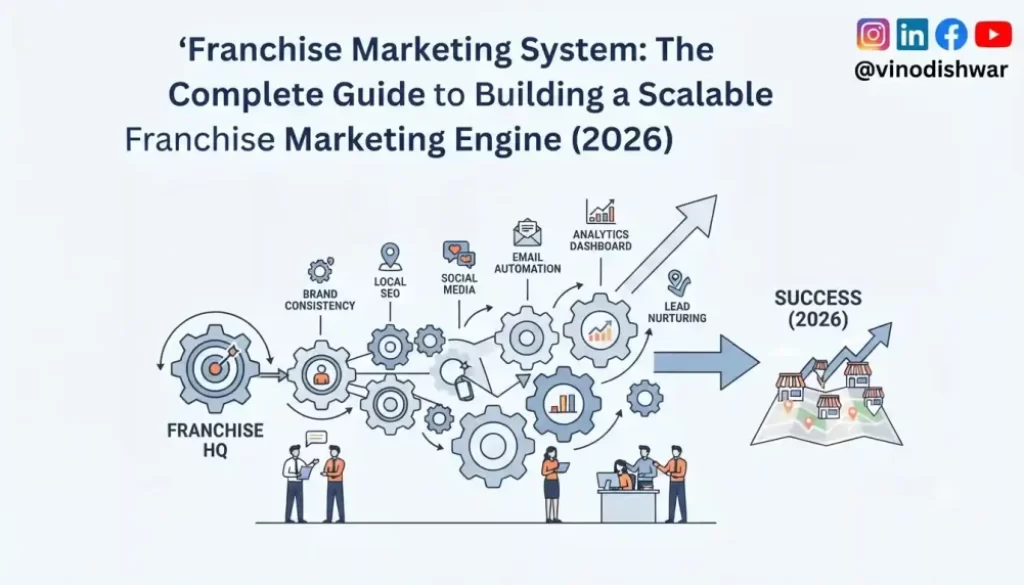
Franchise Marketing System: The Complete Guide to Building a Scalable Franchise Marketing Engine (2026)
A successful franchise is built on more than great products or services—it depends on a consistent, scalable, and measurable marketing system that helps every franchise location attract customers while strengthening the overall brand.
As a franchise network grows, marketing becomes increasingly complex. Each location has unique local market needs, but customers expect the same brand experience wherever they interact with the business. Without standardized marketing systems, franchise networks often face inconsistent branding, inefficient spending, and uneven business performance.
A franchise marketing system provides the structure, processes, tools, and governance needed to support national campaigns while empowering franchisees with effective local marketing.
Whether you’re expanding a restaurant, café, retail chain, salon, preschool, healthcare business, fitness center, manufacturing company, or service brand, a well-designed franchise marketing system is essential for sustainable growth.
This guide explains how to build, implement, and optimize a franchise marketing system that drives brand awareness, customer acquisition, and long-term franchise success.
What Is a Franchise Marketing System?
A franchise marketing system is a standardized framework that enables franchisors and franchisees to execute consistent, effective, and measurable marketing activities across all locations.
It typically includes:
- Brand guidelines
- National marketing campaigns
- Local marketing programs
- Digital marketing
- Social media management
- SEO
- Paid advertising
- Content marketing
- Marketing automation
- Performance analytics
The goal is to maintain brand consistency while allowing franchisees to reach customers in their local markets.
Why a Franchise Marketing System Matters
An effective marketing system helps businesses:
- Build brand awareness
- Generate customer leads
- Increase sales
- Improve customer retention
- Maintain brand consistency
- Support franchisee success
- Optimize marketing budgets
- Scale marketing efficiently
Strong marketing systems also improve franchisee confidence by providing proven promotional strategies.
Businesses looking to build a scalable marketing engine should first establish a solid Franchise Consulting Services framework that aligns marketing strategies with operational goals before expanding across multiple locations.
Core Components of a Successful Franchise Marketing System
1. Brand Guidelines
Every franchise should have comprehensive brand guidelines covering:
- Logo usage
- Brand colors
- Typography
- Photography style
- Messaging
- Tone of voice
- Social media standards
- Advertising guidelines
Consistent branding strengthens customer trust.
2. National Marketing Strategy
National campaigns focus on building overall brand awareness.
Typical activities include:
- Television advertising
- Digital advertising
- Public relations
- National SEO
- Corporate social media
- Influencer partnerships
- Brand campaigns
These campaigns benefit the entire franchise network.
3. Local Store Marketing (LSM)
Franchisees should also execute localized marketing activities such as:
- Community events
- School partnerships
- Local sponsorships
- Referral programs
- Neighborhood promotions
- Google Business Profile optimization
- Local SEO
- Local social media campaigns
Local marketing increases community engagement and customer acquisition.
4. Digital Marketing
Modern franchise systems rely heavily on digital marketing, including:
- Search Engine Optimization (SEO)
- Google Ads
- Meta Ads
- LinkedIn campaigns
- YouTube marketing
- Email marketing
- SMS campaigns
- Display advertising
- Remarketing
Digital channels provide measurable results and scalable growth.
5. Content Marketing
Educational content helps build authority and attract customers.
Examples include:
- Blog articles
- Videos
- Customer success stories
- Case studies
- FAQs
- Industry insights
- Podcasts
- Downloadable guides
Content supports both customer acquisition and franchise recruitment.
6. Social Media Management
Develop standardized social media systems for:
- Content calendars
- Brand templates
- Approved messaging
- Campaign scheduling
- Community management
- Performance reporting
Consistency across locations strengthens the brand.
7. Marketing Automation
Automation improves efficiency by managing:
- Email campaigns
- Lead nurturing
- Customer follow-ups
- Review requests
- Loyalty programs
- Appointment reminders
- Campaign reporting
Automation saves time while improving customer engagement.
8. CRM Integration
A Customer Relationship Management (CRM) system helps:
- Capture leads
- Track customer interactions
- Segment audiences
- Personalize campaigns
- Measure marketing performance
CRM data enables more effective marketing decisions.
9. Marketing Performance Analytics
Track KPIs such as:
- Website traffic
- Organic rankings
- Cost per lead
- Conversion rate
- Customer acquisition cost (CAC)
- Return on ad spend (ROAS)
- Customer lifetime value (CLV)
- Email open rates
- Social media engagement
Data-driven decisions improve marketing effectiveness.
10. Franchise Marketing Governance
Governance ensures:
- Brand compliance
- Campaign consistency
- Marketing fund management
- Asset approval
- Performance reviews
- Continuous improvement
A governance framework protects the brand while supporting franchisees.
Step-by-Step Franchise Marketing System Implementation
Step 1: Develop Brand Standards
Document every aspect of the brand identity.
Step 2: Build a Marketing Strategy
Create national and local marketing plans. An effective marketing strategy should also integrate a structured Franchise Development Process to ensure marketing activities remain aligned with franchise expansion objectives and long-term business growth.
Step 3: Produce Marketing Assets
Develop:
- Templates
- Videos
- Brochures
- Social media graphics
- Landing pages
- Advertising creatives
Step 4: Create Local Marketing Toolkits
Provide franchisees with ready-to-use resources for local campaigns.
Step 5: Launch Multi-Channel Campaigns
Coordinate:
- SEO
- Google Ads
- Meta Ads
- Email marketing
- Social media
- PR
- Local promotions
Step 6: Implement Automation
Use automation tools for:
- Email sequences
- Customer nurturing
- Review generation
- Loyalty campaigns
Step 7: Measure Results
Review KPIs regularly and optimize campaigns based on data.
Step 8: Improve Continuously
Update campaigns, assets, and marketing systems based on customer insights and market trends.
Franchise Marketing System Checklist for Business Owners
Before launching your marketing system, ensure you have:
Brand Assets
- Brand Guidelines
- Logo files
- Templates
- Marketing videos
- Photography library
Digital Assets
- Franchise website
- Landing pages
- SEO strategy
- Blog
- Google Business Profiles
Marketing Systems
- CRM
- Email marketing platform
- Marketing automation
- Social media scheduler
- Analytics dashboard
Franchise Support
- Local Marketing Toolkit
- Campaign calendar
- Training materials
- Marketing approval process
- Reporting templates
Practical Example
A multi-location retail brand wanted to improve marketing consistency across its franchise network.
The company implemented:
- Comprehensive brand guidelines
- National digital advertising campaigns
- Local Store Marketing (LSM) toolkits
- SEO-optimized location pages
- Google Business Profile management
- Social media templates
- CRM integration
- Marketing automation
- Monthly performance dashboards
The standardized marketing system improved brand consistency, increased local customer acquisition, and enabled franchisees to execute campaigns more effectively.
Franchise Marketing Framework
Brand Strategy
        │
        ▼
Brand Guidelines
        │
        ▼
Marketing Assets
        │
        ▼
National Campaigns
        │
        ▼
Local Marketing
        │
        ▼
Digital Marketing
        │
        ▼
Marketing Automation
        │
        ▼
CRM & Analytics
        │
        ▼
Continuous Optimization
Common Franchise Marketing System Mistakes to Avoid
Avoid these common mistakes:
- Inconsistent branding across locations
- Weak local marketing support
- No SEO strategy
- Poor campaign tracking
- Limited franchisee training
- No marketing automation
- Lack of CRM integration
- Ignoring customer feedback
- Measuring activity instead of results
A structured marketing system helps avoid these challenges.
Best Practices
- Standardize brand assets and messaging.
- Balance national branding with local flexibility.
- Invest in SEO for long-term growth.
- Use marketing automation to improve efficiency.
- Track KPIs and optimize campaigns continuously.
- Train franchisees on approved marketing practices.
- Regularly refresh creative assets and campaign strategies.
- Businesses can further strengthen their digital strategy by following a comprehensive Franchise Lead Generation Guide to attract qualified franchise investors through SEO, content marketing, and digital campaigns.
How Franchise Development Consultants Help
Experienced franchise development consultants assist businesses by:
- Creating franchise marketing strategies
- Developing brand guidelines
- Building marketing systems
- Implementing SEO and digital campaigns
- Designing Local Store Marketing (LSM) programs
- Setting up CRM and automation
- Training franchisees
- Measuring marketing performance
Their expertise helps businesses create repeatable marketing systems that support network-wide growth.
Why Choose Franchise Alpha?
At Franchise Alpha, we help businesses build scalable franchise marketing systems through our proprietary SOLEMN® Framework, integrating strategy, branding, digital marketing, automation, and performance measurement.
Strategy
Develop a customized franchise marketing roadmap aligned with your expansion objectives.
Operations
Standardize marketing processes, assets, and support systems across your franchise network.
Legal
Coordinate with qualified legal professionals to ensure marketing materials and advertising practices align with applicable laws and brand protection requirements.
Entrust
Implement governance systems that ensure consistent execution and brand compliance.
Marketing
Generate customer and franchise leads through SEO, Google Ads, Meta Ads, content marketing, email automation, and Local Store Marketing initiatives.
Nitty-Gritty
Deploy CRM platforms, automation workflows, KPI dashboards, and marketing analytics to continuously improve campaign performance.
Frequently Asked Questions
What is a franchise marketing system?
A franchise marketing system is a structured framework that standardizes brand management, national campaigns, local marketing, digital marketing, automation, and performance measurement across a franchise network.
Why is Local Store Marketing important?
Local Store Marketing (LSM) helps franchisees connect with customers in their communities through targeted promotions, partnerships, local SEO, and community engagement while supporting the overall brand.
How does digital marketing support franchise growth?
Digital marketing increases brand visibility, attracts new customers, generates franchise inquiries, improves engagement, and provides measurable performance data through channels such as SEO, paid advertising, email marketing, and social media.
What KPIs should a franchise marketing system track?
Key metrics include website traffic, search rankings, cost per lead, conversion rates, customer acquisition cost, return on ad spend, customer lifetime value, email engagement, and social media performance.
Conclusion
A franchise marketing system provides the foundation for consistent brand growth across every franchise location.
By combining standardized branding, national and local campaigns, digital marketing, automation, CRM integration, and data-driven optimization, businesses can create a scalable marketing engine that benefits both franchisors and franchisees.
Investing in a structured marketing system today strengthens brand consistency, improves customer acquisition, and supports sustainable franchise expansion.
Call to Action
Ready to Build a Scalable Franchise Marketing System?
Book a Franchise Readiness Assessment with Vinod Ishwar and discover how to develop a marketing system that drives customer growth and supports franchise expansion.
Your assessment includes:
- Franchise Marketing Audit
- Brand Consistency Review
- Digital Marketing Strategy Assessment
- CRM & Automation Evaluation
- Customized Franchise Marketing Roadmap
Build a stronger brand, empower your franchisees, and accelerate sustainable growth.