Franchise Development Mistakes to Avoid: The Complete Guide to Preventing Costly Franchise Expansion Errors (2026)
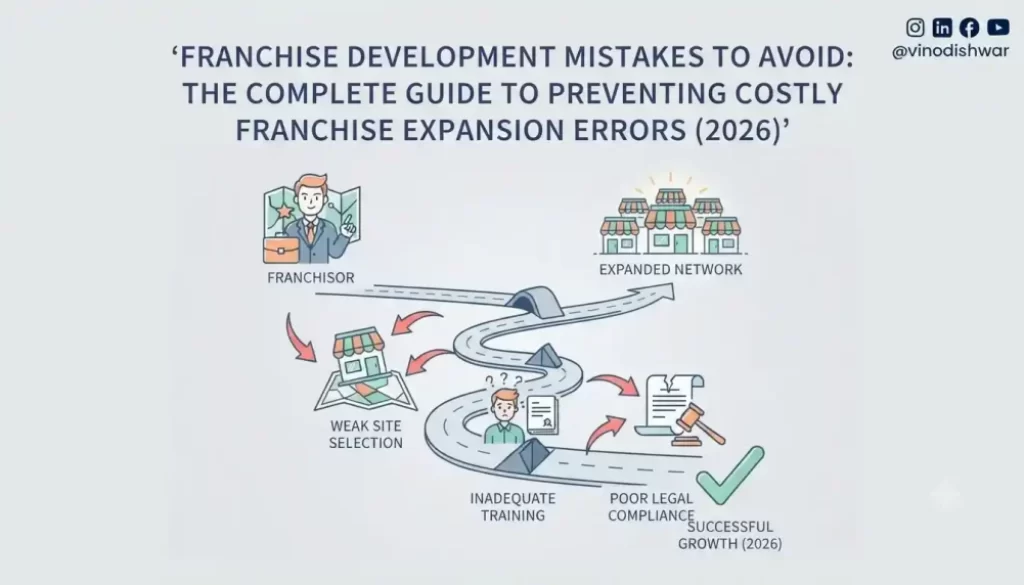
Franchise Development Mistakes to Avoid are one of the biggest reasons businesses struggle during franchise expansion. While franchising offers tremendous growth opportunities, expanding without proper planning, standardized systems, legal preparation, and franchise support can lead to costly operational problems. This guide explains the most common franchise development mistakes to avoid and practical strategies to build a scalable, sustainable franchise network.
Franchise development offers businesses an effective path to scale without opening every location themselves. However, while franchising can accelerate growth, it also introduces new operational, legal, financial, and management challenges. Many businesses fail to achieve sustainable franchise success—not because their products or services are weak, but because they expand before building the right systems.
The most successful franchise brands invest significant time in preparation before recruiting franchisees. They develop standardized operations, document repeatable systems, protect their intellectual property, establish comprehensive training programs, implement technology, and build strong franchise support structures.
Businesses that skip these foundational steps often face inconsistent customer experiences, franchisee dissatisfaction, operational inefficiencies, legal disputes, and damaged brand reputation.
This guide explains the most common franchise development mistakes to avoid, along with practical strategies that help businesses build scalable, sustainable franchise systems.
Important: Franchise businesses must comply with applicable franchise, contract, intellectual property, employment, taxation, consumer protection, advertising, and industry-specific regulations. Work with qualified legal, tax, and compliance professionals before launching or expanding a franchise system.
Why Franchise Development Mistakes to Avoid Matter Before Expansion
Many founders assume that because their business is successful, it is automatically ready to franchise.
In reality, running one profitable location and managing a franchise network require different capabilities.
Successful franchise development requires:
- Standardized operations
- Repeatable business systems
- Leadership structure
- Technology
- Documentation
- Training
- Ongoing franchisee support
Without these foundations, rapid expansion can create more problems than growth. Businesses planning to scale should first evaluate their franchise readiness through professional Franchise Development Services.
Franchise Development Mistakes to Avoid Every Business Should Know
Mistake 1: Franchising Too Early
One of the most common mistakes is expanding before proving the business model.
Warning signs include:
- Unstable revenue
- Limited profitability
- Founder-dependent operations
- Constant process changes
- Inconsistent customer experience
Franchise only after your business consistently delivers repeatable results.
Mistake 2: Lack of Standardized Systems
Franchisees cannot replicate a business that exists only in the founder’s mind.
Every franchise should have documented:
- Operations Manual
- SOPs
- Customer service standards
- Sales processes
- Quality control procedures
- Training programs
Systemization creates consistency across every location. Many businesses work with experienced Franchise Consulting Services providers to develop Operations Manuals, SOPs, and scalable franchise systems.
Mistake 3: Weak Franchise Recruitment
Selling franchises to the wrong people often creates long-term operational problems.
Common recruitment mistakes include:
- Prioritizing investment over capability
- Weak qualification processes
- Limited due diligence
- Poor expectation management
- Inadequate onboarding
The right franchise partner contributes far more than financial investment. A structured Franchise Recruitment Solutions process helps identify qualified franchise partners who align with the brand’s long-term vision.
Mistake 4: Ignoring Market Research
Expanding into unsuitable markets can reduce profitability.
Before opening new locations, evaluate:
- Customer demand
- Competition
- Demographics
- Commercial real estate
- Workforce availability
- Local regulations
Data-driven decisions reduce expansion risk.
Mistake 5: Poor Territory Planning
Undefined territories often result in:
- Internal competition
- Franchise disputes
- Customer confusion
- Slower growth
Territories should be carefully planned before franchise sales begin.
Mistake 6: Weak Training Programs
Initial training alone is rarely enough.
Franchise systems require:
- Onboarding
- Operational training
- Product education
- Leadership development
- Continuous learning
- Refresher programs
Well-trained franchisees perform more consistently.
Mistake 7: Founder Dependency
If every decision requires founder approval, scaling becomes difficult.
Businesses should gradually transfer operational knowledge into:
- Documentation
- Technology
- Leadership teams
- Support systems
The goal is to create a business that operates independently of one individual.
Mistake 8: Inadequate Technology
Manual spreadsheets eventually become difficult to manage.
Growing franchise systems benefit from:
- CRM
- ERP
- POS
- Learning Management Systems
- Franchise portals
- Business Intelligence dashboards
Technology supports consistency and visibility across the network.
Mistake 9: Weak Franchisee Support
Franchisees require ongoing assistance after launch.
Support should include:
- Business coaching
- Marketing guidance
- Operational reviews
- Performance analysis
- Technical assistance
- Continuous communication
Strong support improves franchisee success and retention.
Mistake 10: Neglecting Brand Protection
Your brand is your most valuable franchise asset.
Businesses should protect:
- Trademarks
- Logos
- Brand guidelines
- Marketing materials
- Proprietary systems
- Confidential information
Intellectual property protection should be addressed before expansion.
Mistake 11: Expanding Too Fast
Rapid expansion without adequate infrastructure often results in:
- Operational inconsistencies
- Franchisee dissatisfaction
- Quality issues
- Cash flow pressure
- Leadership overload
Sustainable growth is usually more valuable than aggressive expansion.
Mistake 12: Measuring Only Unit Growth
Opening more locations does not automatically indicate success.
Track KPIs such as:
- Franchisee profitability
- Customer satisfaction
- Royalty collection
- Compliance scores
- Same-store sales
- Franchise renewals
- Training completion
- Operational consistency
Quality growth matters more than quantity.
Signs Your Business Is Ready to Franchise
A business is generally better prepared for franchise development when it has:
- Consistent profitability
- Repeatable operations
- Strong customer demand
- Documented SOPs
- Operations Manual
- Leadership team
- Technology infrastructure
- Training systems
- Brand recognition
- Financial stability
Franchise Development Risk Assessment Checklist
Before expanding, verify:
Business Readiness
- Proven business model
- Stable financial performance
- Operational consistency
- Clear growth strategy
Operational Readiness
- Operations Manual completed
- SOPs documented
- Quality standards established
- Technology implemented
Legal Readiness
- Trademark protection
- Franchise documentation
- Compliance planning
- Qualified legal review
Recruitment Readiness
- Franchise marketing strategy
- Qualification framework
- Discovery process
- Onboarding program
Support Readiness
- Training platform
- Regional support
- Performance reporting
- Communication systems
Practical Example
A successful café expanded rapidly by selling multiple franchise territories before documenting its operational processes.
Within two years, the company experienced:
- Inconsistent customer experiences
- Franchisee complaints
- Inventory issues
- Poor reporting
- Brand inconsistency
The franchisor paused expansion and focused on:
- Creating Operations Manuals
- Standardizing SOPs
- Implementing CRM and POS systems
- Developing franchise training
- Building support teams
- Introducing KPI dashboards
Once these systems were established, the business resumed expansion with significantly improved operational consistency.
Franchise Development Success Framework
Validate Business Model
          │
          ▼
Document Systems
          │
          ▼
Protect Brand
          │
          ▼
Develop Training
          │
          ▼
Recruit Carefully
          │
          ▼
Implement Technology
          │
          ▼
Support Franchisees
          │
          ▼
Measure Performance
          │
          ▼
Sustainable Franchise Growth
Common Warning Signs
Watch for these early indicators:
- Franchisees asking the same operational questions repeatedly
- High employee turnover
- Inconsistent customer reviews
- Declining profitability
- Founder handling every issue
- Poor communication
- Weak reporting
- Slow decision-making
- Frequent operational exceptions
Addressing these issues early prevents larger challenges later.
Best Practices for Avoiding Franchise Development Mistakes
- Validate your business model before franchising.
- Document every critical business process.
- Build comprehensive Operations Manuals and SOPs.
- Invest in franchisee training and ongoing support.
- Recruit franchisees carefully.
- Protect your intellectual property.
- Implement scalable technology.
- Expand gradually based on operational readiness.
- Monitor KPIs consistently.
- Continuously improve systems as the network grows. Franchise Consulting Services
How Franchise Development Services Help Avoid Costly Mistakes
Professional franchise development consultants help businesses:
- Assess franchise readiness
- Identify operational gaps
- Build scalable franchise systems
- Develop Operations Manuals and SOPs
- Improve franchise recruitment
- Implement CRM and reporting technology
- Strengthen governance frameworks
- Coordinate documentation and compliance planning with qualified legal professionals
These services help businesses reduce expansion risk while creating stronger franchise networks. Franchise Development Services
Why Choose Franchise Alpha?
At Franchise Alpha, we help businesses avoid costly franchise development mistakes through our proprietary SOLEMN® Framework, combining strategy, operations, governance, marketing, technology, and franchise support.
Strategy
Evaluate franchise readiness and develop a structured expansion roadmap.
Operations
Create standardized Operations Manuals, SOPs, quality assurance systems, onboarding programs, and franchise support processes.
Legal
Coordinate with qualified legal professionals to support franchise agreements, trademark protection, documentation, and regulatory compliance.
Entrust
Develop governance systems that improve accountability, operational consistency, and franchisee success.
Marketing
Generate qualified franchise leads using SEO, Google Ads, Meta Ads, CRM automation, content marketing, and investor education.
Nitty-Gritty
Deploy CRM platforms, ERP systems, POS software, BI dashboards, workflow automation, LMS platforms, and reporting systems that support sustainable franchise growth.
Frequently Asked Questions
What is the biggest franchise development mistake?
The most common mistake is franchising before the business model is fully standardized. Without documented systems, consistent operations, and strong support, rapid expansion often leads to operational challenges.
Why do franchise systems fail?
Franchise systems may struggle due to poor recruitment, inadequate training, weak operational systems, insufficient support, limited technology, inconsistent quality, or expanding faster than the business can effectively manage.
When is a business ready to franchise?
A business is generally ready after demonstrating consistent profitability, documented operations, strong customer demand, repeatable systems, leadership capability, and adequate support infrastructure.
How can businesses reduce franchise development risks?
Businesses can reduce risk by validating their business model, documenting processes, investing in technology, protecting intellectual property, training franchisees, monitoring KPIs, and seeking professional guidance.
Conclusion
Franchise development creates tremendous growth opportunities, but success depends on preparation rather than speed.
Businesses that validate their business model, standardize operations, recruit carefully, invest in technology, protect their brand, and provide ongoing franchisee support build stronger, more sustainable franchise networks.
Avoiding common franchise development mistakes helps create consistent customer experiences, stronger franchise relationships, and long-term business value.
Call to Action
Ready to Build a Franchise System Without Costly Mistakes?
Book a Franchise Readiness Assessment with Vinod Ishwar and identify the gaps that could affect your franchise expansion before you grow.
Your assessment includes:
- Franchise Readiness Audit
- Operations & Systems Review
- Documentation Assessment
- Recruitment & Support Evaluation
- Customized Franchise Growth Roadmap
Build a stronger franchise network by avoiding the mistakes that limit long-term growth.