Franchise Closing Process: The Complete Guide to Converting Franchise Prospects into Successful Partners (2026)
Introduction
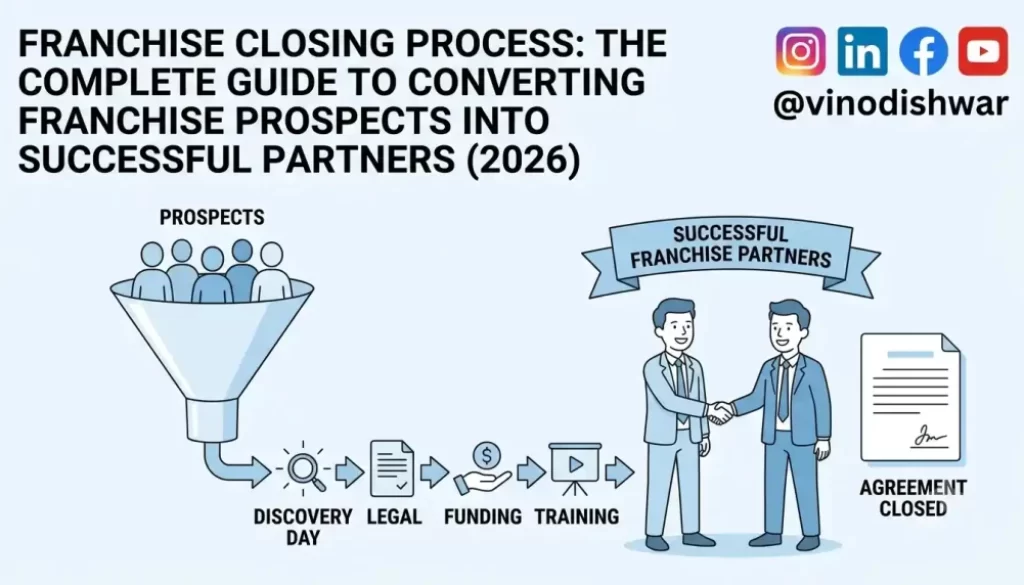
The Franchise Closing Process is the most critical stage of franchise recruitment because it transforms qualified franchise prospects into long-term business partners through trust, transparency, and structured decision-making.
Closing a franchise sale is not about convincing someone to invest—it is about helping the right investor make a confident business decision. Before reaching the final stage, businesses should build a structured Franchise Sales Funnel that guides investors through every stage of the recruitment journey.
By the time a prospect reaches the closing stage, they have likely explored your website, downloaded your franchise brochure, attended discovery calls, reviewed financial information, participated in a Discovery Day, and evaluated your business model.
The final stage is about eliminating uncertainty, answering remaining questions, and creating a seamless transition from prospect to franchise partner.
A structured Franchise Closing Process helps franchisors improve conversion rates, reduce delays, strengthen investor confidence, and build long-term franchise relationships.
This guide explains every step of a professional franchise closing process and how to create an ethical, transparent, and scalable system.
What Is the Franchise Closing Process?
The Franchise Closing Process is the final stage of franchise recruitment where qualified franchise prospects complete due diligence, finalize agreements, make investments, and officially become franchise partners.
This process typically includes:
- Final qualification
- Objection handling
- Financial confirmation
- Legal documentation
- Franchise Agreement
- Territory allocation
- Payment processing
- Franchise onboarding
The objective is to ensure both the franchisor and franchisee enter the partnership with complete confidence.
Why the Franchise Closing Process Matters
A professional closing process helps businesses:
- Increase franchise conversions
- Reduce decision delays
- Build investor trust
- Improve legal compliance
- Standardize recruitment
- Eliminate confusion
- Protect the franchise brand
- Improve onboarding
- Reduce future disputes
- Accelerate business expansion
The best franchise closings are based on clarity—not pressure.
The 15-Step Franchise Closing Process
Step 1. Confirm Lead Qualification
Review:
- Financial readiness
- Business experience
- Leadership capability
- Territory preference
- Cultural fit
Only qualified investors should enter the closing stage.
Step 2. Review Discovery Day Feedback
Evaluate:
- Investor engagement
- Questions asked
- Operational understanding
- Leadership interactions
Discovery Day insights help validate mutual suitability.
Step 3. Address Remaining Questions
Discuss topics such as:
- Investment
- Profitability
- Support
- Training
- Operations
- Growth expectations
Transparency builds long-term confidence.
Step 4. Handle Objections Professionally
Common concerns include:
- Return on investment
- Market competition
- Time commitment
- Operational support
- Territory availability
Listen first, educate second.
Step 5. Reconfirm Investment Details
Clearly explain:
- Franchise fee
- Setup costs
- Equipment investment
- Working capital
- Royalty model
- Marketing contribution
Avoid surprises at the final stage.
Step 6. Review the Franchise Agreement
Walk investors through:
- Rights and responsibilities
- Brand standards
- Operational obligations
- Territory terms
- Renewal conditions
- Exit provisions
Legal clarity protects both parties. Preparing a professional Franchise Investor Presentation helps answer investor questions before the agreement stage.
Step 7. Verify Documentation
Collect and verify:
- Identity proof
- Business information
- Financial documents
- Company registration (if applicable)
- Compliance records
Proper documentation reduces future risks.
Step 8. Final Territory Allocation
Confirm:
- Geographic territory
- Exclusivity terms
- Expansion rights
- Site selection support
Territory clarity prevents future conflicts.
Step 9. Obtain Internal Approval
Review the application internally with:
- Franchise development team
- Leadership
- Operations
- Legal advisors
Every franchise partner should meet established selection standards.
Step 10. Execute the Agreement
Complete:
- Franchise Agreement signing
- Required disclosures
- Legal acknowledgements
- Supporting documentation
Formal execution marks the beginning of the partnership.
Step 11. Collect Initial Payments
Receive:
- Franchise fee
- Security deposits
- Initial technology fees
- Training charges (if applicable)
Provide transparent payment documentation.
Step 12. Welcome the Franchisee
Celebrate the partnership with:
- Welcome communication
- Franchise handbook
- Onboarding schedule
- Introduction to support teams
A positive beginning strengthens relationships.
Step 13. Begin Onboarding
Launch:
- Franchise training
- Operations Manual access
- SOP implementation
- Technology setup
- Site development
Effective onboarding prepares franchisees for success.
Step 14. Assign Support Resources
Connect the new franchisee with:
- Operations manager
- Marketing team
- Training specialists
- CRM support
- Business coach
Continuous support creates long-term success.
Step 15. Monitor Early Performance
Track:
- Store setup progress
- Training completion
- Marketing readiness
- Launch milestones
- Performance indicators
Closing the sale is the start of a long-term partnership.
Franchise Closing Process Best Practices
Successful franchisors:
- Focus on education rather than persuasion
- Maintain complete transparency
- Document every stage
- Respond quickly to questions
- Keep communication consistent
- Use CRM reminders
- Personalize the investor journey
- Follow ethical sales practices
Trust closes more franchise sales than pressure.
Common Closing Mistakes
Avoid these common errors:
- Rushing the investor
- Overpromising financial returns
- Weak follow-up
- Incomplete documentation
- Ignoring objections
- Poor communication
- Lack of onboarding preparation
- Inconsistent closing process
A structured system creates predictable results.
How Franchise Consultants Help
Experienced franchise consultants help businesses by:
- Designing closing processes
- Improving sales workflows
- Handling investor objections
- Structuring legal documentation
- Developing onboarding systems
- Optimizing CRM automation
- Training franchise sales teams
- Increasing conversion rates
Professional guidance strengthens every stage of franchise recruitment.
The SOLEMN® Framework
At Franchise Alpha, Franchise Closing Systems are developed using the proprietary SOLEMN® Framework.
Strategy
Define closing objectives, investor qualification standards, and expansion goals.
Operations
Develop structured workflows for sales, approvals, onboarding, and franchise launch.
Legal
Ensure compliant agreements, disclosure documentation, payment procedures, and regulatory requirements.
Entrust
Strengthen confidence through transparent communication, education, and long-term relationship building.
Marketing
Support closing through investor presentations, case studies, testimonials, and brand credibility.
Nitty-Gritty
Monitor KPIs, optimize closing ratios, improve onboarding, and continuously refine the franchise recruitment process.
This framework helps businesses convert qualified franchise prospects into long-term franchise partners.
Frequently Asked Questions
What is the Franchise Closing Process?
The Franchise Closing Process is the final stage of franchise recruitment where qualified investors complete due diligence, sign legal agreements, make investments, and begin franchise onboarding.
Why is the closing process important?
A structured closing process builds trust, improves conversions, ensures legal compliance, and creates a smooth transition from prospect to franchise partner.
What happens after signing the Franchise Agreement?
After signing, the franchisee typically begins onboarding, training, site selection, operational setup, and business launch with ongoing support from the franchisor.
Should franchisors pressure investors to close?
No. Ethical franchise sales focus on education, transparency, and helping qualified investors make informed decisions.
Conclusion
The Franchise Closing Process is one of the most important stages in franchise development.
Rather than treating it as a sales event, successful franchisors view it as the beginning of a long-term business partnership.
By combining transparent communication, structured workflows, legal compliance, professional onboarding, and ongoing support, businesses can improve franchise conversions while building stronger and more successful franchise networks.
The most successful franchise brands don’t simply close deals—they create lasting partnerships.
Call to Action
Build a Professional Franchise Closing System
Book a Franchise Sales & Closing Strategy Session with Vinod Ishwar to develop a customized franchise closing process, legal workflow, CRM automation, onboarding roadmap, and investor conversion system.
Receive a complete franchise closing framework designed to improve conversions and support sustainable franchise expansion.