Franchise Development Process Explained Step-by-Step (2026)
Expanding a successful business through franchising is one of the fastest ways to achieve national and even international growth. However, successful franchise brands are not created by simply selling franchise rights—they are built through a structured franchise development process.
Whether you own a restaurant, retail store, salon, education institute, healthcare business, manufacturing company, or service brand, franchising requires planning, documentation, legal frameworks, operational systems, training, and ongoing support.
Many businesses fail because they skip essential steps like standardizing operations, documenting SOPs, or creating a strong franchise business model.
This comprehensive guide explains the Franchise Development Process step by step, helping business owners understand how to transform a successful company into a scalable and profitable franchise system.
What is the Franchise Development Process?
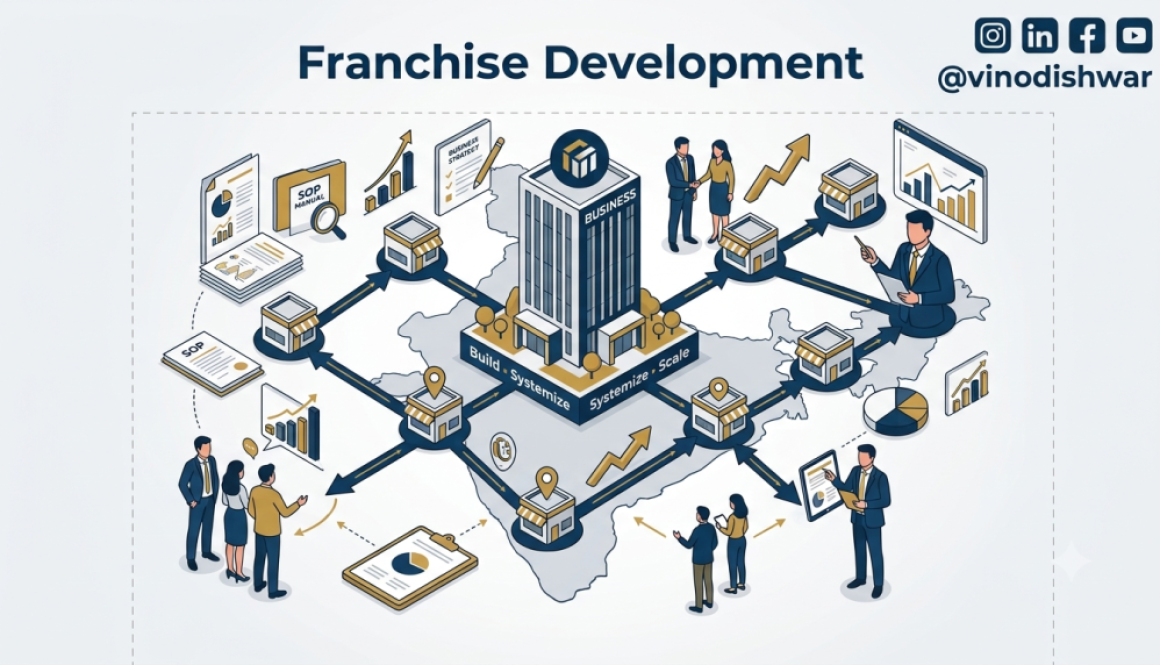
The franchise development process is the structured methodology of converting an existing business into a franchise model that can be replicated consistently across multiple locations.
The objective is to ensure that every franchise outlet delivers the same products, services, customer experience, and profitability while operating under a unified brand.
A successful franchise development process combines:
- Business strategy
- Operational standardization
- Legal documentation
- Franchise training
- Marketing systems
- Technology integration
- Ongoing franchise support
Why a Structured Franchise Development Process Matters
Without a defined process, businesses often face:
- Inconsistent customer experience
- Founder dependency
- Operational confusion
- Poor franchisee performance
- Weak brand control
- Slower expansion
- Higher operational risks
A structured development process creates repeatable systems that enable sustainable growth.
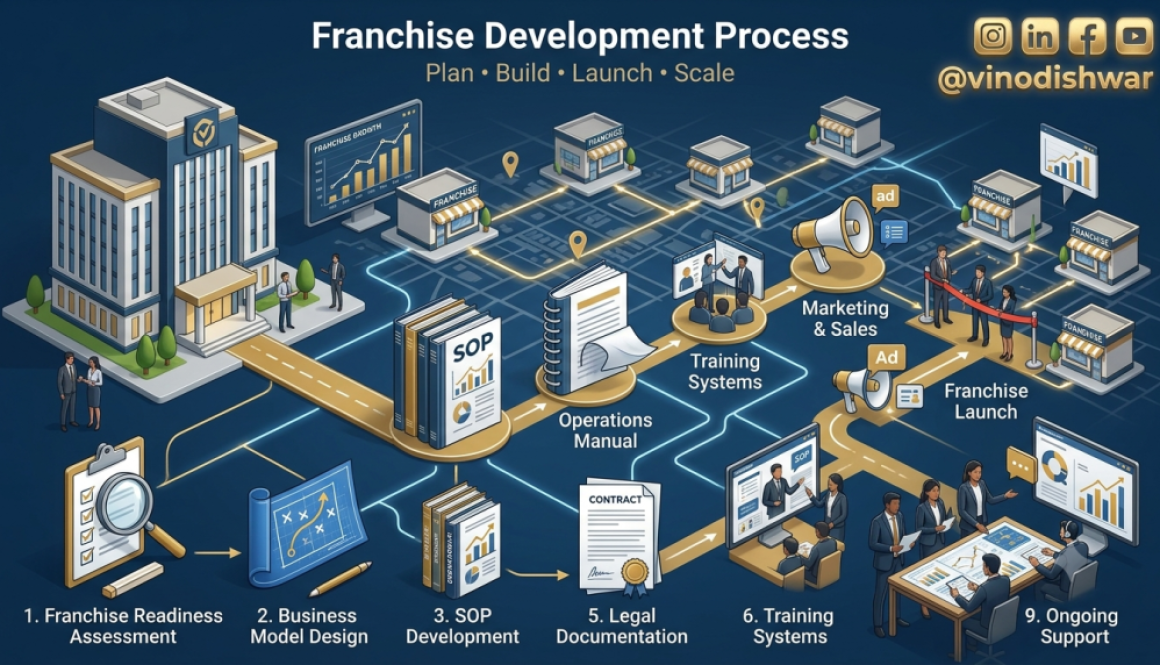
The 12-Step Franchise Development Process Explained
Step 1: Conduct a Franchise Readiness Assessment
Before franchising, evaluate whether your business is truly ready for expansion.
Assess:
- Profitability
- Brand reputation
- Customer demand
- Operational consistency
- Financial stability
- Leadership capability
- Scalability
Practical Example
A profitable café with three successful locations and standardized recipes is generally more franchise-ready than a newly launched restaurant with one outlet.
Step 2: Define Your Franchise Vision and Strategy
Establish a clear roadmap by answering questions such as:
- What markets will you target?
- What industries offer the best opportunities?
- Will you expand city-wise, state-wise, or nationally?
- What growth timeline is realistic?
A well-defined strategy aligns every future decision.
Step 3: Build the Franchise Business Model
Design a commercially viable franchise model covering:
- Franchise fee
- Royalty structure
- Initial investment
- Profitability projections
- Territory allocation
- Support commitments
- Target franchisee profile
The business model must be attractive for both franchisor and franchisee.
Step 4: Standardize Business Operations
Every successful franchise depends on operational consistency.
Document processes for:
- Customer service
- Sales
- Inventory
- Procurement
- Finance
- Human resources
- Quality assurance
- Reporting
Standardization minimizes operational variation.
Step 5: Develop Standard Operating Procedures (SOPs)
SOPs provide detailed instructions for daily operations.
Typical SOPs include:
- Opening procedures
- Closing procedures
- Staff onboarding
- Product preparation
- Complaint handling
- Cash management
- Equipment maintenance
- Hygiene and safety
SOPs ensure every outlet follows the same operational standards.
Step 6: Create the Franchise Operations Manual
The Operations Manual becomes the franchisee’s operational guide.
Include:
- Brand standards
- Daily workflows
- Operational policies
- Marketing guidelines
- Technology instructions
- HR procedures
- Quality control
- Compliance requirements
This document enables consistent execution across every location.
Step 7: Prepare Legal Documentation
Protect the business with comprehensive legal documentation.
Key documents include:
- Franchise Agreement
- Trademark Registration
- Brand Usage Guidelines
- Non-Disclosure Agreement (NDA)
- Franchise Disclosure Document (where applicable)
Proper legal documentation safeguards both parties.
Step 8: Design Franchise Training Systems
Training prepares franchisees to replicate your business successfully.
Training modules should cover:
- Business operations
- Customer experience
- Sales
- Technology
- Financial management
- HR
- Marketing
- Brand standards
Continuous learning improves long-term performance.
Step 9: Build Franchise Marketing and Sales Systems
Attract qualified franchise investors through:
- Franchise website
- Investor presentations
- Digital marketing
- Social media
- Discovery Day events
- Lead nurturing
- CRM automation
A structured sales process increases franchise conversions. Professional franchise development services help businesses create structured marketing strategies and attract qualified franchise investors.
Step 10: Recruit and Qualify Franchise Partners
Selecting the right franchisees is critical.
Evaluate candidates based on:
- Financial capability
- Business experience
- Leadership skills
- Commitment
- Cultural fit
- Long-term vision
The right partners strengthen the franchise network.
Step 11: Launch the Franchise
Support the franchisee during the launch by providing:
- Site selection guidance
- Outlet design support
- Staff recruitment assistance
- Initial inventory planning
- Marketing launch campaigns
- Opening day support
A successful launch creates momentum.
Step 12: Provide Ongoing Support and Continuous Improvement
Franchise development does not end after launch.
Successful franchisors provide:
- Operational audits
- Business reviews
- Marketing support
- Refresher training
- Technology updates
- Performance dashboards
- Growth planning
Continuous support strengthens franchise relationships and improves profitability.
Franchise Development Process Flow
Successful Business
        │
        ▼
Franchise Readiness Assessment
        │
        ▼
Franchise Strategy
        │
        ▼
Business Model Design
        │
        ▼
Operational Standardization
        │
        ▼
SOP Development
        │
        ▼
Operations Manual
        │
        ▼
Legal Documentation
        │
        ▼
Training Systems
        │
        ▼
Marketing & Lead Generation
        │
        ▼
Franchise Recruitment
        │
        ▼
Franchise Launch
        │
        ▼
Support & Growth
Franchise Development Checklist
Before launching your franchise, confirm that you have:
✅ Profitable flagship business
✅ Franchise strategy
✅ Business model
✅ Standard Operating Procedures (SOPs)
✅ Operations Manual
✅ Franchise Agreement
✅ Trademark protection
✅ Training systems
✅ Marketing toolkit
✅ CRM and technology
✅ Franchise sales process
✅ Ongoing support framework
Common Mistakes in the Franchise Development Process
Avoid these pitfalls:
- Franchising before the business is profitable
- Poor documentation
- Weak operational systems
- Founder dependency
- Inadequate franchisee training
- Choosing franchisees based only on investment
- Lack of ongoing support
- Ignoring technology
These mistakes often lead to inconsistent operations and slower growth.
Practical Example
Imagine a successful fitness studio planning national expansion.
Without a structured franchise development process:
- Trainers use different methods.
- Pricing varies across locations.
- Customer experience becomes inconsistent.
- Brand reputation suffers.
With a structured process:
- SOPs standardize workouts.
- Operations Manuals define procedures.
- Training ensures consistency.
- CRM tracks performance.
- Franchise support improves quality.
The business evolves into a scalable national fitness brand.
How Franchise Development Consultants Help
Professional franchise consultants support businesses by:
- Assessing franchise readiness
- Designing franchise business models
- Developing SOPs
- Creating Operations Manuals
- Preparing legal documentation
- Building training programs
- Developing franchise marketing strategies
- Supporting franchise recruitment
- Creating scalable systems
Expert guidance helps businesses expand with confidence. Franchise Readiness Assessment
Why Choose Franchise Alpha?
At Franchise Alpha, we help businesses build scalable franchise systems using our proprietary SOLEMN® Framework.
Strategy
Create expansion roadmaps, business models, pricing strategies, and growth plans.
Operations
Develop SOPs, Operations Manuals, workflows, and standardized systems.
Legal
Prepare Franchise Agreements, protect trademarks, and ensure compliance.
Entrust
Reduce founder dependency and build leadership capability.
Marketing
Generate qualified franchise leads through branding and digital marketing.
Nitty-Gritty
Monitor KPIs, optimize operations, and continuously improve franchise performance.
Frequently Asked Questions
What is the franchise development process?
The franchise development process is the structured approach to transforming a successful business into a scalable franchise system through standardized operations, legal documentation, training, and support.
How long does franchise development take?
Most businesses complete the process within 3–6 months, depending on business complexity and documentation requirements.
Why are SOPs important in franchise development?
SOPs ensure that every franchise location follows identical processes, maintaining consistency in quality, service, and customer experience.
Do I need a franchise consultant?
Yes. A franchise consultant helps businesses design scalable systems, avoid common mistakes, and accelerate successful expansion.
Conclusion
The franchise development process is the foundation of every successful franchise brand.
Businesses that invest in strategy, documentation, legal protection, operational excellence, training, and ongoing support create franchise systems capable of sustainable long-term growth.
Franchising is not about opening more outlets—it is about building a repeatable business system that others can successfully operate.
Call to Action
Ready to Build Your Franchise System?
Take the first step toward scalable business growth with a Franchise Readiness Assessment by Vinod Ishwar.
Start your expansion journey with expert guidance and a structured franchise development strategy.
You’ll receive:
- Franchise Readiness Evaluation
- Business Model Assessment
- SOP & Operations Review
- Franchise Development Roadmap
- Customized Expansion Strategy
Book your Franchise Readiness Assessment today and build a franchise designed for long-term success.