Trademark Protection for Franchise Businesses
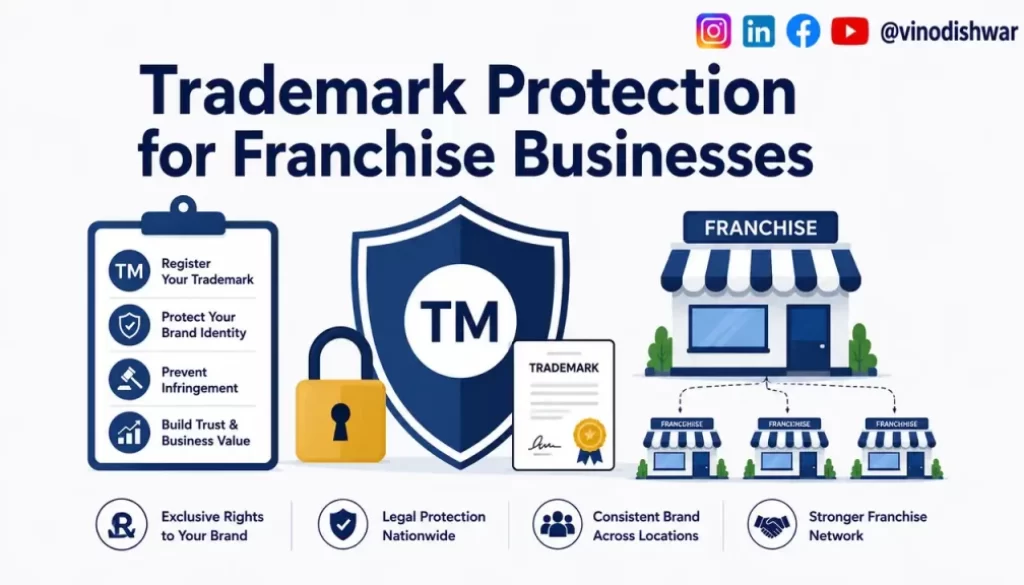
Trademark Protection for Franchise Businesses is essential for protecting one of the most valuable assets of a growing franchise: its brand. As franchise networks expand across multiple locations, protecting brand names, logos, taglines and other intellectual property becomes increasingly important. Effective franchise trademark protection helps maintain brand consistency, prevent unauthorized use and protect the long-term value of the franchise.
That is why trademark protection for franchise businesses is essential.
When a business expands through franchising, multiple independent franchisees may use the same brand identity across different locations. Without appropriate trademark protection and clear usage rules, unauthorized use, brand dilution and disputes can threaten the consistency and value of the entire franchise network.
For franchisors, trademarks should therefore be treated as a strategic business asset—not simply a logo or registration certificate.
Trademark protection should be considered as part of the wider franchise development process, especially before a brand begins recruiting franchisees.
What Is a Trademark in Franchising?
A trademark is a distinctive sign that identifies and distinguishes the goods or services of one business from those of others.
For a franchise, trademarks may include:
- Brand names
- Logos
- Taglines
- Product names
- Service names
- Symbols
- Distinctive brand elements
These assets help customers identify a particular franchise network.
For example, when customers see a familiar franchise name or logo, they expect a consistent experience regardless of which location they visit.
That recognition is part of the brand’s commercial value. A strong franchise model should combine brand protection with clearly defined systems, processes and commercial structures. Learn more about the key areas of franchise analysis before expanding.
Why Trademark Protection Matters for Franchises
Franchising involves replicating a brand across multiple independently operated locations.
This creates both an opportunity and a risk.
A franchisor can expand brand recognition rapidly, but improper use by even one franchisee can affect the perception of the wider network.
Trademark protection can help a franchisor:
- Establish ownership rights
- Control brand usage
- Reduce unauthorized use
- Protect brand identity
- Support franchise expansion
- Strengthen enforcement
- Maintain consistency
A well-protected trademark portfolio can also increase the overall value of a franchise business.
1. Register Important Brand Assets
Before scaling through franchising, businesses should identify the trademarks that are commercially important.
These may include:
- Primary brand name
- Logo
- Tagline
- Product names
- Sub-brands
- Service names
In India, trademark registration is primarily governed by the Trade Marks Act, 1999.
Trademark protection is generally connected to specific goods or services and relevant classifications, making appropriate filing strategy important.
Emerging franchisors should consider trademark protection early rather than waiting until the franchise network has expanded.
2. Conduct a Trademark Search
Before adopting or registering a brand name, conduct appropriate trademark searches.
A search can help identify potentially conflicting marks.
This is particularly important before investing heavily in:
- Signage
- Packaging
- Advertising
- Websites
- Franchise marketing
- Store development
Discovering a serious trademark conflict after franchise expansion can be expensive and disruptive.
A qualified trademark professional can help assess search results and potential risks.
3. Protect the Brand Before Franchise Expansion
One of the most important franchise planning steps is ensuring that the franchisor has appropriate rights to the brand it intends to license.
Imagine a business spends years developing a successful franchise model and then discovers that its primary brand name has a significant trademark conflict.
The consequences could include:
- Rebranding costs
- Franchisee disputes
- Marketing disruption
- Customer confusion
- Legal expenses
- Loss of brand equity
Trademark strategy should therefore be considered before large-scale franchise recruitment.
4. Clearly License Trademark Usage
A franchisee normally receives permission to use the franchisor’s trademarks under the franchise relationship.
The franchise agreement should clearly address:
- Which trademarks may be used
- Permitted locations
- Approved business activities
- Duration of use
- Brand standards
- Approval requirements
- Restrictions
- Consequences of unauthorized use
The franchisee should understand that permission to use a trademark does not automatically mean ownership is transferred.
5. Create Clear Brand Guidelines
Trademark protection is not only about legal registration.
It is also about controlling how the brand appears in the marketplace.
Brand guidelines can establish rules for:
- Logo placement
- Logo proportions
- Colours
- Fonts
- Signage
- Packaging
- Advertising
- Social media
- Website usage
- Promotional materials
Consistent implementation helps protect the distinctiveness and professional appearance of the franchise.
6. Monitor Franchisee Trademark Usage
As the franchise network grows, franchisors should monitor how trademarks are being used.
Potential problems include:
- Altered logos
- Unapproved taglines
- Incorrect colours
- Unauthorized promotional material
- Unapproved social media designs
- Modified signage
- Use of the trademark for unrelated products
Regular brand audits can help identify problems before they become larger issues.
7. Control Third-Party Trademark Use
Franchisees may work with:
- Advertising agencies
- Printers
- Designers
- Influencers
- Digital marketing agencies
- Local vendors
The franchisor should establish appropriate processes for third-party use of brand assets.
A franchisee should not assume that an external vendor can freely modify or reproduce trademarked materials.
Centralized approval systems can make brand control easier across large franchise networks.
8. Protect Trademarks Across Digital Channels
Trademark misuse is no longer limited to physical stores.
Franchise brands also need to consider:
- Websites
- Domain names
- Social media handles
- Online marketplaces
- Digital advertisements
- Mobile applications
- Google Business Profiles
- E-commerce platforms
A franchisee creating an unauthorized page using the brand name can create customer confusion.
Clear digital brand policies should therefore form part of the franchise system.
9. Address Trademark Infringement
A franchisor may encounter infringement from:
- Competitors
- Former franchisees
- Unauthorized businesses
- Counterfeiters
- Online sellers
- Unapproved distributors
The response should be based on the circumstances and applicable law.
Possible actions may include:
- Investigation
- Cease-and-desist communication
- Platform complaints
- Negotiation
- Administrative proceedings
- Civil enforcement
- Other appropriate legal remedies
Trademark enforcement strategies should be developed with qualified legal professionals.
10. Plan for Franchise Termination
Trademark protection must continue after a franchise relationship ends.
A terminated franchisee may need to:
- Stop using the brand name
- Remove signage
- Remove logos
- Stop using branded packaging
- Deactivate branded digital assets
- Remove trademarked advertising
- Return or destroy certain branded materials
- Stop representing itself as an authorized franchisee
These requirements should be clearly established in the franchise agreement.
Common Trademark Mistakes in Franchising
Franchisors should avoid:
- Waiting too long to protect the brand
- Failing to conduct trademark searches
- Registering only a logo while overlooking important names
- Giving franchisees vague trademark permissions
- Allowing inconsistent brand usage
- Ignoring digital trademark misuse
- Failing to monitor infringement
- Neglecting former franchisees’ continued use of the brand
- Using third-party intellectual property without appropriate rights
A proactive trademark strategy is generally easier and less expensive than fixing brand ownership problems later.
Franchise Trademark Protection Checklist
Before expanding your franchise, review:
- Brand name search completed
- Important trademarks identified
- Appropriate trademark applications considered
- Relevant classes evaluated
- Trademark ownership documented
- Franchise trademark licence defined
- Brand guidelines created
- Franchisee usage rules established
- Digital brand usage controlled
- Monitoring process established
- Infringement response procedure defined
- Former franchisee obligations addressed
- Third-party usage controlled
How Franchise Alpha Can Help
Trademark protection should form part of the wider franchise development strategy.
Franchise Alpha helps businesses build scalable franchise systems covering:
- Franchise strategy
- Franchise model development
- Franchise documentation
- Brand implementation
- Franchise marketing
- Lead generation
- Franchise sales
- Operations manuals
- Franchisee training
- Ongoing support
Trademark registration, legal opinions, licensing clauses and infringement matters should be handled or reviewed by qualified intellectual property professionals.
Frequently Asked Questions
Why is trademark protection important for a franchise?
A franchise depends heavily on consistent brand recognition. Trademark protection helps establish and protect the brand identity that franchisees are authorized to use.
Should a franchise brand be trademarked before franchising?
Businesses should consider protecting important trademarks before significant franchise expansion. Early planning can reduce the risk of costly branding and ownership problems later.
Does a franchisee own the franchisor’s trademark?
Generally, no. A franchisee typically receives contractual permission to use the franchisor’s trademark subject to defined conditions.
Can franchisees modify the trademark?
They should generally follow the franchisor’s brand standards and any restrictions in the franchise agreement. Unauthorized modifications can create brand and legal issues.
What happens to trademark rights after franchise termination?
The former franchisee will generally be required to stop representing itself as part of the franchise network and stop using the franchisor’s trademarks, subject to the terms of the agreement and applicable law.
Conclusion
Trademark protection is a fundamental part of building a scalable franchise brand.
As a franchise network grows, the brand becomes increasingly visible across locations, digital platforms, advertising channels and customer interactions. Visit Franchise Alpha and Webs Alpha
Protecting that brand requires more than registering a name or logo. Franchisors need a coordinated system covering ownership, licensing, usage guidelines, monitoring, enforcement and post-termination controls.
When trademark protection is built into the franchise model from the beginning, franchisors can protect brand equity while giving franchisees clear rules for using one of the network’s most valuable assets.
Protect Your Brand Before You Scale
Franchise Alpha helps businesses develop structured franchise models, documentation, marketing, operations and growth systems designed for sustainable expansion.
Protect the brand. Standardize the system. Scale with confidence.