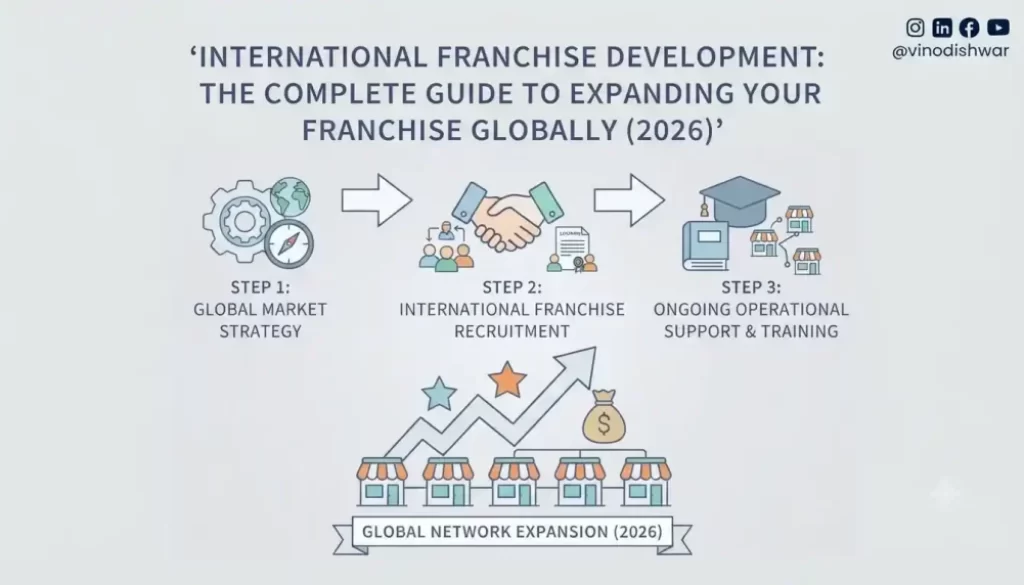
International Franchise Development: The Complete Guide to Expanding Your Franchise Globally (2026)
Expanding a franchise beyond domestic borders is one of the most ambitious milestones a business can achieve. International franchise development allows brands to access new markets, diversify revenue, strengthen global recognition, and accelerate long-term growth.
However, international expansion is significantly more complex than domestic franchising. Businesses must navigate different legal systems, cultural expectations, consumer preferences, supply chains, currencies, languages, taxation, intellectual property protection, and regulatory requirements.
Successful global franchise brands don’t simply replicate their domestic operations—they build scalable systems while thoughtfully adapting to local market conditions.
Whether you operate a restaurant, café, retail chain, education brand, preschool, healthcare business, fitness company, manufacturing business, or service franchise, this guide explains how to successfully develop and expand your franchise internationally.
Important: International franchise laws, disclosure obligations, taxation, employment regulations, intellectual property protections, foreign investment rules, and commercial practices differ significantly by country. Engage qualified legal, tax, accounting, and international business advisors before entering any new market.
What Is International Franchise Development?
International franchise development is the structured process of expanding a franchise business into foreign countries using scalable business systems, standardized operating procedures, strategic market selection, and localized execution.
Depending on the target market, international expansion may involve:
- Direct franchising
- Master franchising
- Area development agreements
- Joint ventures
- Licensing arrangements
- Company-owned expansion
- Hybrid expansion models
The appropriate model depends on the country’s legal framework, market maturity, investment capacity, and long-term strategic objectives.
Why Expand Internationally?
International franchise development offers numerous advantages:
- Access to larger customer markets
- Increased royalty revenue
- Stronger global brand recognition
- Geographic revenue diversification
- Higher business valuation
- Economies of scale
- Increased investor confidence
- Long-term competitive advantage
Global expansion also reduces dependence on a single domestic market.
Step-by-Step International Franchise Development Process
Step 1: Evaluate International Readiness
Before expanding globally, ensure your franchise system has:
- A proven domestic franchise model
- Consistent profitability
- Documented Operations Manual
- Standardized SOPs
- Strong franchisee support systems
- Scalable technology
- Established leadership structure
- Protected intellectual property
International growth should begin only after domestic systems are mature and repeatable.
Step 2: Select the Right Countries
Evaluate potential markets based on:
- Population size
- Economic stability
- Consumer purchasing power
- Industry demand
- Competitive landscape
- Political stability
- Ease of doing business
- Cultural compatibility
- Infrastructure
- Availability of qualified franchise partners
Market selection is one of the most important decisions in international expansion.
Step 3: Choose the Appropriate Expansion Model
Common international expansion models include:
Direct Franchising
The franchisor works directly with franchisees in the target country. Learn how to create a scalable expansion strategy in our guide on Franchise Development Process.
Best suited for:
- Nearby markets
- Smaller expansion programs
- Strong internal support capabilities
Master Franchising
A master franchisee receives rights to develop and support an entire country or defined territory.
Best suited for:
- Large international markets
- Rapid expansion
- Markets requiring local expertise
Area Development
An area developer commits to opening multiple locations within a defined territory.
Suitable for brands seeking controlled regional expansion.
Joint Venture
The franchisor partners with a local company to share investment, expertise, and operational responsibilities.
Often appropriate where local market knowledge is critical.
Company-Owned Expansion
The franchisor opens and operates locations directly before franchising.
This approach can provide valuable market insights but generally requires greater capital investment and management resources.
Step 4: Protect Intellectual Property
Before entering any country:
- Register trademarks
- Protect logos
- Secure copyrights where applicable
- Review domain names
- Protect proprietary systems
- Safeguard confidential business information
Intellectual property protection is fundamental to long-term franchise success.
Step 5: Localize the Business Model
While maintaining brand consistency, adapt to local conditions where appropriate:
- Product offerings
- Menu items
- Pricing
- Marketing messages
- Packaging
- Customer service practices
- Payment methods
- Language
- Store design (when necessary)
Localization should support customer relevance without weakening brand identity.
Step 6: Build International Support Systems
Support global franchisees through:
- Digital training
- Virtual onboarding
- Regional support teams
- Learning Management Systems (LMS)
- Franchise portals
- Knowledge bases
- Performance coaching
Strong support improves consistency across countries. Strong support systems begin with an effective Franchise Recruitment System.
Step 7: Develop Global Supply Chains
International expansion often requires:
- Approved suppliers
- Regional distribution centers
- Import/export planning
- Inventory controls
- Vendor qualification
- Logistics management
- Quality assurance
Supply chain resilience directly affects customer experience.
Step 8: Implement Enterprise Technology
Technology should provide centralized oversight across all international markets.
Common platforms include:
- CRM
- ERP
- POS
- Business Intelligence dashboards
- Franchise portals
- LMS
- Inventory systems
- Financial reporting platforms
Technology enables data-driven decision-making across multiple countries. Businesses expanding globally should also understand Multi-State Franchise Development before entering international markets.
Step 9: Build Global Brand Marketing
Develop marketing strategies that balance global consistency with local relevance.
Key initiatives include:
- Global brand guidelines
- Local language campaigns
- Regional social media strategies
- SEO
- Public relations
- Influencer collaborations (where appropriate)
- Local partnerships
- Reputation management
A unified brand with localized execution creates stronger customer engagement.
Step 10: Monitor International Performance
Track KPIs such as:
- Revenue by country
- Same-store sales growth
- Franchisee profitability
- Customer satisfaction
- Operational compliance
- Marketing ROI
- Franchisee retention
- Territory performance
- Training completion
Regular performance reviews help optimize global expansion.
International Expansion Timeline
| Phase | Primary Focus |
|---|---|
| Country 1 | Validate international operations |
| Countries 2–3 | Standardize global systems |
| Countries 4–6 | Build regional support |
| Countries 7–10 | Strengthen governance and technology |
| Ongoing | Optimize global performance and strategic expansion |
Growth should prioritize operational readiness over rapid geographic expansion.
Infrastructure Required for International Development
Operations
- Global Operations Manual
- Standardized SOPs
- Compliance framework
- Quality assurance program
Technology
- CRM
- ERP
- POS
- Business Intelligence dashboards
- Franchise portal
- LMS
Marketing
- Global brand guidelines
- Localized campaigns
- SEO
- Public relations
- Reputation management
Finance
- Royalty management
- International financial reporting
- Forecasting
- Performance analytics
Support
- Regional Directors
- International Franchise Consultants
- Marketing teams
- Technical support
- Training specialists
International Franchise Development Checklist
Before entering a new country, ensure you have:
Strategic Readiness
- Market research completed
- Country selection finalized
- Entry strategy defined
- Expansion roadmap approved
Legal Readiness
- Trademark protection initiated
- Franchise documentation reviewed
- Regulatory requirements assessed
- Tax planning completed with qualified advisors
Operational Readiness
- Operations Manual updated
- SOPs standardized
- Supply chain established
- Support systems operational
Recruitment Readiness
- International recruitment strategy
- Candidate qualification framework
- Discovery process
- Onboarding program
Technology Readiness
- CRM integrated
- ERP operational
- Reporting dashboards active
- Franchise portal configured
Practical Example
A premium café franchise successfully expanded from India into Southeast Asia and the Middle East.
Before launching internationally, the company:
- Registered trademarks in target countries
- Standardized Operations Manuals
- Developed multilingual training programs
- Implemented enterprise CRM
- Created master franchise frameworks
- Built regional supplier networks
- Introduced global KPI dashboards
- Established regional support teams
By following a phased international expansion strategy, the brand maintained consistent customer experiences while adapting to local market needs.
International Franchise Development Framework
Domestic Success
        │
        ▼
International Readiness
        │
        ▼
Country Selection
        │
        ▼
Expansion Model
        │
        ▼
Intellectual Property Protection
        │
        ▼
Localization
        │
        ▼
Franchise Recruitment
        │
        ▼
Technology & Support
        │
        ▼
Performance Management
        │
        ▼
Global Franchise Network
Common International Expansion Mistakes
Avoid these common challenges:
- Expanding before domestic systems are mature
- Choosing markets based only on size
- Underestimating cultural differences
- Weak intellectual property protection
- Insufficient franchisee support
- Poor supply chain planning
- Limited localization
- Weak communication with overseas partners
- Inadequate performance monitoring
Best Practices
- Validate your domestic franchise model first.
- Select markets using objective research.
- Choose the appropriate international expansion model.
- Protect intellectual property before market entry.
- Balance brand consistency with local adaptation.
- Invest in enterprise technology.
- Build strong regional support teams.
- Continuously measure and improve international performance.
How Franchise Development Consultants Help
Professional franchise development consultants help businesses:
- Develop international expansion strategies
- Assess global market opportunities
- Design master franchise frameworks
- Build scalable Operations Manuals and SOPs
- Develop franchise recruitment systems
- Implement enterprise technology
- Build governance structures
- Coordinate documentation and compliance planning with qualified legal professionals in relevant jurisdictions
These capabilities help businesses reduce expansion risk while building sustainable international franchise networks.
Why Choose Franchise Alpha?
At Franchise Alpha, we help businesses expand internationally through our proprietary SOLEMN® Framework, integrating strategy, operations, governance, marketing, technology, and franchise support.
Strategy
Develop customized international franchise expansion roadmaps based on market research and long-term business objectives.
Operations
Standardize Operations Manuals, SOPs, quality assurance, onboarding, and support systems for global scalability.
Legal
Coordinate with qualified legal professionals to support international franchise agreements, trademark protection, intellectual property strategy, and country-specific compliance. Businesses should also review guidance from the International Franchise Association
Entrust
Implement governance systems that strengthen accountability, consistency, and franchisee success across international markets.
Marketing
Generate qualified international franchise leads through SEO, digital marketing, investor outreach, content marketing, and global brand positioning.
Nitty-Gritty
Deploy enterprise CRM platforms, ERP systems, Business Intelligence dashboards, workflow automation, LMS platforms, and reporting tools to support international franchise operations.
Frequently Asked Questions
What is international franchise development?
International franchise development is the strategic expansion of a franchise business into foreign countries using standardized systems, market research, localized execution, and scalable franchise support.
Which international expansion model is most common?
Master franchising is widely used for international expansion because it allows an experienced local partner to develop and support the franchise network within a defined territory. The best model depends on your objectives, resources, and target market.
Why is localization important?
Localization helps businesses meet local customer expectations while maintaining overall brand consistency. It may include adapting products, marketing, language, or customer service practices.
What should businesses do before entering a new country?
Businesses should validate their domestic franchise model, research the target market, protect intellectual property, understand applicable legal and regulatory requirements, build operational infrastructure, and establish appropriate support systems.
Conclusion
International franchise development represents one of the greatest growth opportunities for ambitious franchise brands.
Businesses that combine strong domestic systems, careful market selection, appropriate expansion models, intellectual property protection, localized execution, enterprise technology, and ongoing franchise support create the foundation for sustainable global success.
The strongest international franchise networks are built through disciplined planning, continuous learning, and a long-term commitment to operational excellence.
Call to Action
Ready to Take Your Franchise Global?
Book a Franchise Readiness Assessment with Vinod Ishwar and discover how to build a structured international franchise development strategy for sustainable global expansion.
Your assessment includes:
- International Expansion Audit
- Global Market Opportunity Assessment
- Expansion Model Evaluation
- Operations & Technology Review
- Customized International Franchise Growth Roadmap
Build a scalable global franchise network with confidence and long-term strategic support.