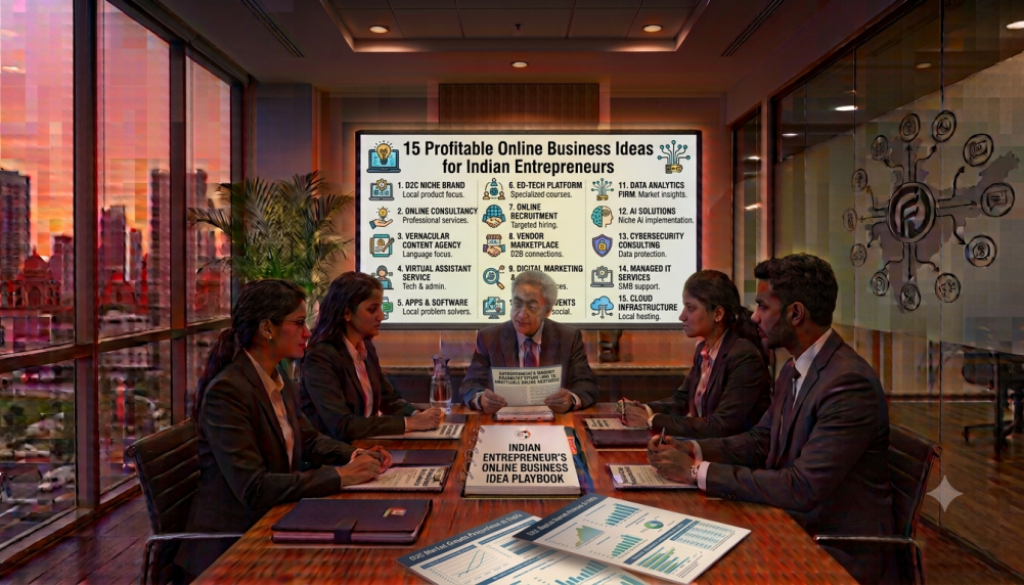
15 Profitable Online Business Ideas for Indian Entrepreneurs
India’s growing internet penetration, rising digital payment adoption, and increasingly online-savvy consumer base have created genuine opportunity for entrepreneurs across a wide range of online business models — many requiring far lower upfront investment than traditional brick-and-mortar businesses. The right idea for you depends on your skills, available capital, and the amount of time you can realistically dedicate.
1. Niche E-Commerce Store
Selling a focused product category — through your own website, marketplaces, or both — remains one of the most accessible online business models, particularly when built around genuine product differentiation or an underserved niche.
2. Dropshipping
A lower-capital entry into e-commerce, where you sell products without holding inventory yourself, fulfilling orders through a third-party supplier. This model suits entrepreneurs wanting to test product-market fit before committing to inventory investment.
3. Print-on-Demand Products
Custom-designed apparel, home decor, and accessories produced only when ordered, eliminating inventory risk while allowing creative differentiation through unique designs.
4. Digital Products and Courses
Creating and selling e-books, templates, or online courses based on your expertise offers high margins once created, since the same digital product can be sold repeatedly without additional production cost.
5. Freelance Services
Offering specialized skills — writing, design, development, marketing, consulting — through freelance platforms or direct client relationships, with minimal upfront investment beyond your own expertise and time.
6. Content Creation and Influencer Marketing
Building an audience around a specific niche through blogging, YouTube, or social media, and monetizing through sponsorships, affiliate marketing, or your own products, requires patience but can build significant long-term value.
7. Subscription Box Services
Curated product subscriptions delivered regularly — around food, beauty, books, or hobbies — build recurring revenue and strong customer relationships when curated thoughtfully for a specific audience.
8. Online Coaching and Consulting
Leveraging professional expertise to offer paid coaching, mentorship, or consulting services online, often with lower overhead than a traditional consulting practice.
9. Affiliate Marketing
Earning commissions by promoting other companies’ products through content, reviews, or social media, requiring an engaged audience and genuine product knowledge to build trust and conversion.
10. Handmade or Artisan Product Sales
Selling handcrafted products — jewelry, home decor, food products — through platforms like Etsy-equivalents, social media, or your own store, appealing to customers seeking unique, non-mass-produced items.
11. Virtual Assistant Services
Providing administrative, scheduling, or operational support to businesses remotely, requiring strong organizational skills and minimal upfront investment.
12. Online Tutoring and Test Preparation
Offering academic tutoring or exam preparation services through video calls or dedicated platforms, addressing consistent demand across India’s education-focused market.
13. Software as a Service (SaaS)
Building software tools solving specific business problems, offered through subscription pricing — a higher-effort, higher-reward model typically requiring technical capability or a technical co-founder.
14. Digital Marketing Agency
Offering SEO, social media management, or paid advertising services to businesses, leveraging specialized digital marketing skills into a service-based business.
15. Online Marketplace for a Specific Niche
Building a platform connecting buyers and sellers within a specific, underserved category — requiring more significant investment and technical development, but offering strong scalability once established.
How to Choose the Right Idea for You
- Assess your available capital: Digital services and freelancing require minimal upfront investment, while inventory-based e-commerce and SaaS typically require more significant capital.
- Evaluate your existing skills and expertise: Choose a model that leverages what you already know, rather than starting from zero in a completely unfamiliar area.
- Consider your available time: Content creation and audience-building models typically take longer to generate meaningful revenue compared to direct service or product sales.
- Research genuine market demand: Validate that your specific idea addresses a real, sufficiently large need before committing significant resources.
Common Mistakes When Starting an Online Business
- Choosing an idea based purely on perceived trendiness, without evaluating personal fit or genuine market demand.
- Underestimating the marketing effort required, even for genuinely good products or services.
- Spreading focus across multiple business ideas simultaneously, rather than building genuine traction in one.
- Ignoring the importance of customer acquisition cost relative to realistic margins and pricing.
Key Takeaways
- Online business ideas span a wide range of capital requirements, from freelancing to full e-commerce operations.
- Choosing an idea aligned with existing skills and available time improves the odds of sustained effort and success.
- Market demand validation remains essential regardless of which online business model you choose.
- Digital products and SaaS offer strong margin potential once built, though often require more upfront development effort.
- Focus on one validated idea typically outperforms spreading effort across multiple simultaneous ventures.
Conclusion
India’s digital economy offers genuine opportunity across a wide spectrum of online business models. Choosing the right idea — one aligned with your skills, resources, and validated market demand — sets the foundation for building a sustainable, profitable online business.