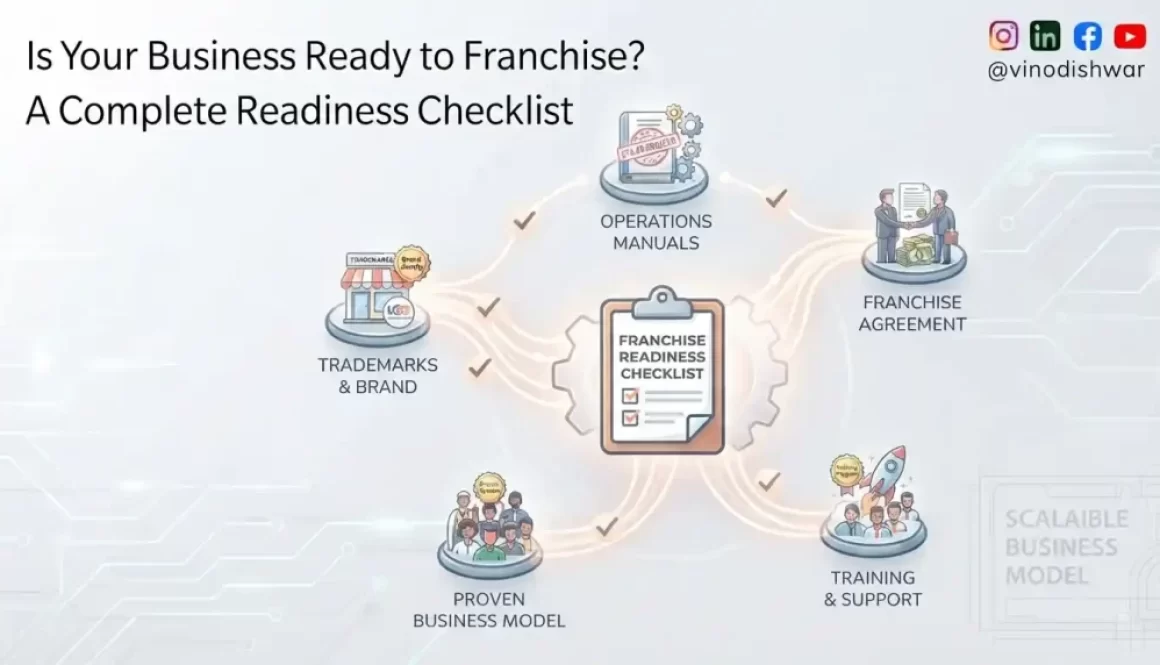
Is Your Business Ready to Franchise? A Complete Readiness Checklist
A Franchise Readiness Checklist is one of the most valuable tools for business owners planning to expand through franchising. Before inviting franchise partners to invest in your brand, you need to determine whether your business has the systems, profitability, operational consistency, and legal foundation required for sustainable expansion. This Franchise Readiness Checklist will help you evaluate whether your business is truly prepared to franchise.
Many entrepreneurs believe that opening two or three successful outlets automatically makes their business franchise-ready. In reality, franchising is an entirely different business model. Instead of simply selling products or services, you are providing other entrepreneurs with a proven business system they can replicate successfully.
The most important question every business owner should ask is:
Can someone else successfully operate my business using only my documented systems and support?
If the answer is yes, you’re much closer to franchise readiness than you might think.
Before beginning your expansion journey, it’s also important to understand what makes a brand franchise-ready, because scalable systems and operational consistency form the backbone of every successful franchise network.
Why Franchise Readiness Matters
A single business location can often succeed because the owner is personally involved in every important decision.
A franchise network cannot depend on one person’s daily supervision.
As your business expands across different cities and franchise partners, consistency becomes your greatest asset. Every customer should receive the same experience regardless of which outlet they visit.
Following a Franchise Readiness Checklist helps businesses identify operational gaps before expanding into new markets.
Without proper preparation, businesses often face:
- Operational confusion
- Poor customer experience
- Inconsistent quality standards
- Franchisee dissatisfaction
- Reduced profitability
- Damage to brand reputation
Preparing your business before franchising reduces these risks and creates a stronger foundation for long-term growth.
1. Proven and Repeatable Profitability
One profitable outlet is encouraging.
Consistent profitability over time is what attracts quality franchise partners.
Before offering franchises, your business should demonstrate:
- Stable financial performance for at least 12–18 months
- Predictable monthly revenue
- Healthy operating margins
- Strong customer demand
- Positive cash flow
- Sustainable business operations
Potential franchisees invest significant capital and expect evidence that the business model has already been proven.
Remember:
Franchisees invest in proven business models—not business ideas.
2. Document Every Business Process
One of the biggest differences between a successful business and a successful franchise is documentation.
If your business depends entirely on the founder’s knowledge, expansion becomes difficult.
Every important process should be documented, including:
- Standard Operating Procedures (SOPs)
- Employee onboarding
- Staff training manuals
- Inventory management
- Customer service standards
- Vendor management
- Daily opening and closing procedures
- Quality control systems
- Marketing guidelines
Good documentation allows every franchise location to operate consistently, even when the owner is not present.
3. Strong Unit Economics
A franchise opportunity should be profitable for both the franchisor and the franchisee.
Healthy unit economics include:
- Affordable startup investment
- Realistic operating expenses
- Sustainable gross margins
- Practical break-even period
- Attractive return on investment
Remember that franchisees must also pay royalties, marketing contributions, salaries, rent, and other operating expenses.
If the numbers don’t work for them, the franchise model won’t be sustainable.
4. Build a Brand Customers Remember
Strong brands expand faster.
Before franchising, ask yourself:
Why should customers choose your business instead of a competitor?
Your competitive advantage may include:
- Superior customer experience
- Innovative products
- Faster service
- Premium quality
- Better pricing
- Trusted reputation
- Strong community presence
Customers don’t buy franchises.
They buy trusted brands.
The stronger your brand positioning, the easier franchise expansion becomes.
5. Legal Preparation Before Expansion
Many businesses underestimate the legal side of franchising.
A strong legal foundation protects both the franchisor and future franchise partners.
Before expanding, your business should have:
- A registered trademark
- Professionally drafted franchise agreement
- Clearly defined territory rights
- Intellectual property protection
- Brand usage guidelines
- Legal compliance documentation
Businesses that invest in legal preparation early avoid costly disputes later.
6. Develop Scalable Operating Systems
As your franchise network grows, manually supervising every outlet becomes impossible.
Instead, businesses need systems that allow franchisees to operate independently while maintaining consistent standards.
These systems include:
- Performance dashboards
- Reporting structures
- Audit processes
- Technology platforms
- CRM systems
- Inventory tracking
- Financial reporting
- Customer feedback systems
Scalable systems make expansion smoother and improve operational efficiency across every location.ficantly increases long-term franchise success.
7. Adopt the Right Founder Mindset
One of the biggest changes in franchising is the shift from being an operator to becoming a leader.
Many business owners are deeply involved in daily operations, making every important decision themselves. While this approach may work for a single outlet, it becomes a major obstacle when expanding through franchising.
Successful franchisors focus on building systems rather than depending on personal supervision.
Instead of asking:
“How can I do this better?”
Start asking:
“How can someone else do this successfully using my systems?”
Franchising requires coaching, mentoring, and supporting franchise partners rather than managing every operational detail yourself.
Franchise Readiness Self-Assessment Checklist
Before launching your franchise model, honestly evaluate your business by answering the following questions.
✔ Has the business remained consistently profitable for at least 12 months?
✔ Are all major operating procedures documented?
✔ Can the business operate successfully without your daily involvement?
✔ Do you have structured employee training programs?
✔ Is your trademark legally registered?
✔ Have you prepared a professionally drafted franchise agreement?
✔ Can you provide ongoing operational and marketing support to franchisees?
✔ Do you have sufficient financial resources to support franchise expansion?
✔ Are your systems scalable across multiple locations?
✔ Are you prepared to build long-term partnerships with franchisees?
If you answered “No” to two or more of these questions, your business may benefit from additional preparation before beginning franchise expansion.
The good news is that every one of these gaps can be addressed with proper planning and expert guidance.
Common Franchise Readiness Mistakes
Many businesses delay successful expansion because they overlook important preparation steps.
Expanding Too Early
Some businesses start franchising after one successful year without validating whether the business model is consistently repeatable.
Depending Too Much on the Founder
If every important decision depends on the owner, franchisees will struggle to operate independently.
Poor Documentation
Verbal training is not enough.
Successful franchise systems rely on detailed operating manuals, checklists, and documented procedures.
Weak Legal Preparation
Ignoring trademarks, franchise agreements, or intellectual property protection creates unnecessary legal risks during expansion.
Choosing the Wrong Franchise Partners
Selecting investors based only on available capital rather than operational capability often leads to long-term performance issues.
Growing Faster Than Systems Can Support
Rapid expansion without scalable systems usually creates inconsistent customer experiences and operational challenges.
Businesses that avoid these mistakes are better positioned for sustainable franchise growth.
Why Professional Franchise Consulting Matters
Building a successful franchise network involves much more than selling franchise rights.
Experienced Franchise Consulting professionals help businesses evaluate franchise readiness, develop scalable operating systems, prepare legal documentation, define territory strategies, recruit suitable franchise partners, and establish long-term growth plans.
Businesses should also understand why most expansions fail before they scale, as many expansion challenges can be avoided through proper preparation and structured planning.
Entrepreneurs planning to expand can also refer to Startup India for valuable business resources, intellectual property guidance, and information on government support initiatives for growing businesses.
Key Takeaways
- Franchise readiness is about building systems that others can successfully replicate.
- Consistent profitability is essential before offering franchise opportunities.
- Standard Operating Procedures (SOPs) help maintain quality across every location.
- Strong legal documentation protects both franchisors and franchisees.
- Scalable systems allow businesses to expand without relying on the founder.
- Choosing the right franchise partners is just as important as choosing the right expansion strategy.
- Investing in franchise readiness before expansion significantly improves long-term success.
- Completing a Franchise Readiness Checklist before launching your franchise significantly improves long-term business success and franchisee satisfaction.
Conclusion
Franchising remains one of the most effective ways to expand a successful business, but sustainable growth begins long before the first franchise agreement is signed.
Businesses that invest time in documenting systems, strengthening operations, protecting their brand legally, and developing scalable processes create a much stronger foundation for expansion. Franchise partners are more likely to succeed when they receive a proven business model supported by consistent training, operational guidance, and ongoing support.
Before offering franchise opportunities, take the time to evaluate your business using this franchise readiness checklist. Address any gaps, strengthen your systems, and seek professional guidance where necessary.
A business that is truly franchise-ready doesn’t just open more outlets—it builds a reliable, profitable, and scalable franchise network capable of long-term success.
— Vinod Ishwar
Frequently Asked Questions (FAQs)
1. What does franchise readiness mean?
Franchise readiness refers to how well a business is prepared to expand through franchising. It includes having proven profitability, documented systems, legal protection, operational consistency, and the ability to support franchise partners successfully.
2. How do I know if my business is ready to franchise?
A business is generally ready to franchise if it has consistent profits, standardized operating procedures, a strong brand, scalable systems, and can operate successfully without the founder’s daily involvement.
3. How many successful outlets should I have before franchising?
There is no fixed number, but most experts recommend having at least one or more consistently profitable outlets with proven systems before expanding through franchising.
4. Why are Standard Operating Procedures (SOPs) important in franchising?
SOPs ensure every franchise location follows the same processes, maintains quality standards, and delivers a consistent customer experience across all outlets.
5. Should I register my trademark before franchising?
Yes. Registering your trademark protects your brand identity and provides legal protection before offering franchise opportunities to investors.
6. What are the biggest mistakes businesses make before franchising?
Common mistakes include franchising too early, lacking documented systems, weak legal preparation, choosing unsuitable franchise partners, and expanding faster than internal operations can support.