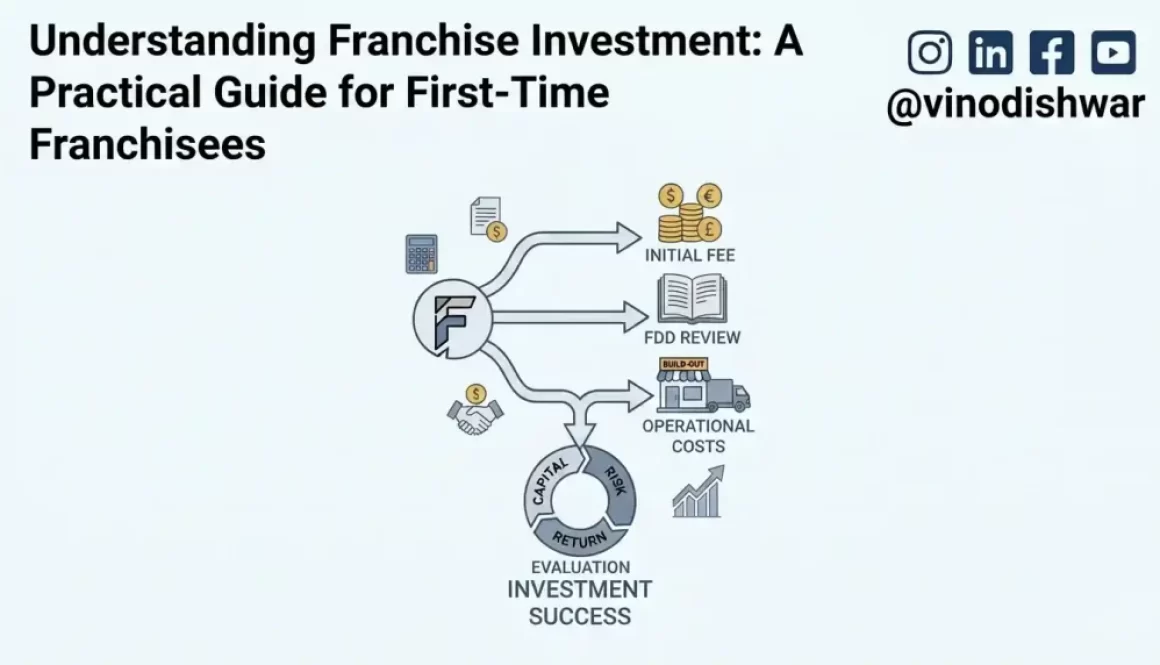
Understanding Franchise Investment: A Practical Guide for First-Time Franchisees
Franchise Investment India is becoming one of the most popular ways for aspiring entrepreneurs to start a business with an established brand. For most first-time franchisees, the franchise fee is the number that grabs attention first. However, the franchise fee is only one part of the overall investment required to build a successful franchise business.
Before making any franchise investment, it’s equally important to understand what makes a brand franchise-ready, as strong franchise systems provide better long-term growth opportunities for investors.
Understanding Franchise Investment Costs
1. Franchise Fee
This is the upfront, one-time payment for the right to use the brand’s name, systems, and support. It typically ranges widely depending on the industry, brand recognition, and category — from a few lakhs for smaller emerging brands to significantly higher amounts for established national or international names.
2. Setup and Infrastructure Costs
This includes interior design, equipment, signage, furniture, and technology systems required to bring the outlet up to brand standards. These costs are often underestimated, particularly in food and retail categories where equipment and interiors form a significant share of total investment.
3. Real Estate Costs
Rent deposits, lease advances, and property-related costs vary enormously by city and location quality. High-footfall locations command premium rents — a cost that must be weighed against the revenue potential they generate.
4. Working Capital
This is arguably the most underestimated cost category. Working capital covers salaries, inventory, utilities, and operating expenses during the initial months before the outlet becomes self-sustaining. Franchisees who invest every available rupee into the fee and setup, leaving nothing for working capital, frequently face cash flow crises in month two or three.
Proper financial planning is essential for Franchise Investment India, as adequate working capital helps franchisees manage day-to-day operations during the initial months.
5. Training and Onboarding Costs
Some franchisors include training in the franchise fee; others charge separately for travel, accommodation, and extended training programs for staff.
6. Ongoing Royalty and Marketing Fund Contributions
Beyond the upfront investment, franchisees typically pay an ongoing royalty (commonly 4–10% of revenue, depending on the brand) and contribute to a shared marketing fund. These recurring costs directly affect long-term profitability and should be factored into ROI calculations from day one.
Calculating Franchise Investment ROI
A common mistake is evaluating a franchise opportunity purely on the size of the upfront investment, without modeling the full return timeline. A thorough ROI evaluation should include:
- Expected monthly revenue based on comparable existing outlets (not projections from an unproven concept)
- Fixed costs (rent, salaries, utilities) versus variable costs (raw materials, packaging, consumables)
- Break-even timeline — realistically, most well-run franchises break even within 12–24 months, depending on category
- Net margins after royalty and marketing fund deductions, not gross revenue alone
- A successful franchise investment also depends on having a clear expansion strategy. Learn why most expansions fail before they scale to avoid common growth mistakes.
Financial Red Flags to Watch For
- Franchisors who cannot or will not share actual performance data from existing outlets.
- Unusually high franchise fees relative to brand recognition without a clear justification.
- Vague or missing information on ongoing royalty structures.
- Pressure to sign quickly with limited time for financial due diligence.
- No clarity on what’s included in the franchise fee versus what counts as additional setup cost.
- Franchisors unwilling to provide references from existing franchisees.
Financing Your Franchise Investment in India
Many Indian franchisees combine personal savings with business loans, and several banks and NBFCs now offer franchise-specific financing schemes for recognized brands. Before committing capital, it’s worth exploring:
- Franchise financing tie-ups the franchisor may already have with lending institutions
- MSME loan schemes applicable to franchise businesses
- Realistic personal contingency funds, separate from business working capital, to cover at least 6 months of personal expenses during the ramp-up period
- Entrepreneurs can also explore Startup India, a government initiative that provides guidance and support for new businesses and startups.
Key Takeaways
- Franchise investment extends well beyond the upfront franchise fee.
- Working capital is the most commonly underestimated cost and the most common cause of early financial stress.
- Realistic ROI modeling should be based on actual outlet performance, not projections.
- Ongoing royalty and marketing fund contributions directly affect long-term profitability.
- Financial red flags — vague data, pressure to sign, missing references — deserve serious scrutiny.
Conclusion
A franchise investment decision made with complete financial clarity is far more likely to succeed than one made on excitement and brand appeal alone. Understanding the full cost picture upfront protects both your capital and your confidence as a new business owner.
If you’re planning a franchise investment, explore our Franchise Consulting services to receive expert guidance on selecting and growing the right franchise business.