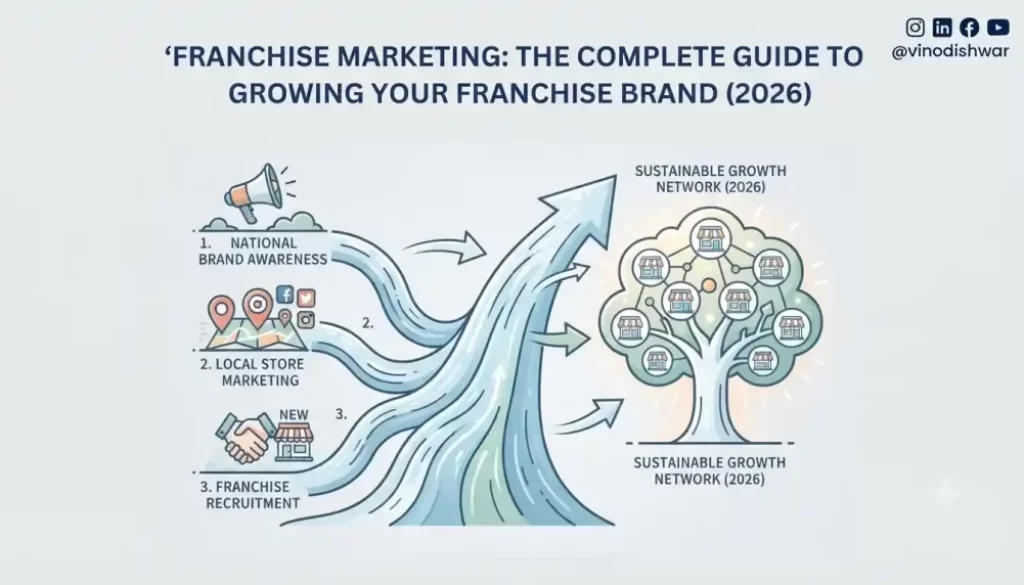
Franchise Marketing: The Complete Guide to Growing Your Franchise Brand (2026)
Franchise marketing is one of the most important drivers of long-term franchise success. A strong business model alone is not enough—customers need to discover your brand, and potential franchisees need confidence that your business offers a scalable, profitable opportunity.
Successful franchise marketing goes beyond advertising. It combines branding, digital marketing, local marketing, lead generation, public relations, customer engagement, and franchise recruitment into a unified strategy. It ensures that every franchise location delivers a consistent brand experience while allowing local franchisees to connect with their communities.
In today’s competitive market, franchise brands must balance national brand-building with local execution. They must leverage SEO, paid advertising, social media, content marketing, CRM systems, marketing automation, artificial intelligence (AI), and analytics to reach the right audiences efficiently.
Whether you’re launching your first franchise or managing a network of hundreds of locations, this guide explains the complete franchise marketing framework, best practices, common mistakes, emerging trends, and practical steps to grow your franchise brand.
Important: Franchise marketing should comply with applicable advertising, consumer protection, privacy, competition, and intellectual property laws. Businesses should also ensure that marketing claims are accurate, substantiated, and consistent with brand standards.
What Is Franchise Marketing and Why Is It Important?
Franchise marketing is the process of promoting both the franchise brand and its individual locations to achieve two primary goals:
- Customer Marketing – Attract customers to franchise outlets.
- Franchise Recruitment Marketing – Attract qualified investors who want to become franchise partners.
Unlike traditional marketing, franchise marketing operates on two levels:
- National marketing, managed by the franchisor to build overall brand awareness.
- Local marketing, managed by franchisees to attract customers within their territories.
A successful franchise marketing strategy aligns both efforts under one consistent brand identity. Before promoting your business, understand the complete Franchise Development Process for building a scalable franchise system.
Why a Franchise Marketing Strategy Matters
Effective franchise marketing helps businesses:
- Increase brand awareness
- Generate qualified franchise enquiries
- Drive customer acquisition
- Strengthen brand trust
- Improve franchisee profitability
- Maintain brand consistency
- Support expansion into new markets
- Build long-term customer loyalty
Without a structured marketing strategy, even strong franchise systems may struggle to attract customers or quality franchise partners. A successful marketing strategy begins with evaluating your business using our Franchise Readiness Checklist.
Two Pillars of a Successful Franchise Marketing Strategy
1. Consumer Marketing
Consumer marketing focuses on increasing sales at franchise locations.
Common channels include:
- Search engine optimization (SEO)
- Google Business Profile
- Social media
- Paid advertising
- Email marketing
- Content marketing
- Referral programs
- Local events
The objective is to drive customer traffic and repeat business. Professional Franchise Consulting Services help optimize paid advertising campaigns for franchise recruitment.
2. Franchise Recruitment Marketing
Recruitment marketing focuses on attracting entrepreneurs and investors interested in owning a franchise.
Typical activities include:
- Franchise landing pages
- Franchise websites
- Investor webinars
- Discovery Days
- LinkedIn outreach
- Google Ads
- Franchise portals
- Educational content
- Email nurturing
The goal is to generate qualified franchise leads rather than simply increasing enquiry volume.
Franchise Marketing Strategy Framework
Successful franchise marketing can be organized into the following framework:
Step 1: Brand Strategy
Develop:
- Brand positioning
- Brand messaging
- Value proposition
- Visual identity
- Brand voice
Step 2: Digital Presence
Create a professional online presence through:
- Website optimization
- SEO
- Local SEO
- Mobile-friendly design
- Google Business Profile
- Online reputation management
Step 3: Content Marketing
Publish educational content such as:
- Blogs
- Videos
- Case studies
- Success stories
- Guides
- Industry insights
High-quality content builds authority and supports SEO. Learn how Franchise Development Consultants Help Businesses Scale Faster through strategic content and brand positioning.
Step 4: Lead Generation
Generate leads using:
- Google Ads
- Meta Ads
- LinkedIn campaigns
- Organic SEO
- Landing pages
- Referral programs
- CRM integration
- Businesses can improve lead generation through professional Franchise Marketing Services.
Step 5: Lead Nurturing
Guide prospects through:
- Email sequences
- Discovery calls
- Webinars
- Investor presentations
- Educational resources
- Follow-up automation
Step 6: Conversion
Support conversions through:
- Discovery meetings
- Territory discussions
- Financial evaluation
- Franchise presentations
- Due diligence
- Franchise agreements
Step 7: Local Marketing
Empower franchisees with:
- Local advertising templates
- Social media assets
- Event marketing
- Promotional campaigns
- Community partnerships
- Reputation management
Step 8: Performance Optimization
Measure:
- Website traffic
- Lead quality
- Conversion rates
- Customer acquisition cost
- Return on ad spend (ROAS)
- Franchise sales
- Customer lifetime value
Use data to refine campaigns continuously.
Essential Franchise Marketing Channels
Search Engine Optimization (SEO)
SEO helps franchise brands attract organic traffic through:
- Keyword optimization
- Local SEO
- Technical SEO
- Content marketing
- Internal linking
- Structured data
SEO supports both customer acquisition and franchise recruitment. Strong SEO performs even better when supported by documented systems. Read Why SOPs Matter Before Franchising.
Google Business Profile
Each franchise location should maintain an optimized profile with:
- Accurate business information
- Photos
- Customer reviews
- Business updates
- Service details
This improves local search visibility.
Social Media Marketing
Popular platforms include:
- YouTube
- X (Twitter)
Content may include:
- Customer testimonials
- Educational videos
- Franchise success stories
- Promotions
- Behind-the-scenes updates
Content Marketing
Publish valuable resources such as:
- Industry blogs
- Franchise guides
- Checklists
- Whitepapers
- Videos
- FAQs
Educational content builds trust with both customers and investors.
Email Marketing
Email campaigns can support:
- Customer retention
- Promotional offers
- Franchise lead nurturing
- Event invitations
- Educational content
Automation improves consistency.
Paid Advertising
Popular advertising platforms include:
- Google Ads
- Meta Ads
- LinkedIn Ads
- YouTube Ads
Paid campaigns should be supported by optimized landing pages and CRM tracking.
Local Marketing for Franchise Locations
Every franchisee should implement local initiatives such as:
- Community sponsorships
- Local partnerships
- School or business events
- Charity initiatives
- Referral campaigns
- Customer loyalty programs
These activities strengthen community relationships and brand visibility.
Technology Stack for Franchise Marketing
A modern franchise marketing system often includes:
- CRM software
- Marketing automation platform
- SEO tools
- Email marketing platform
- Social media scheduling tools
- Analytics dashboards
- AI-powered content tools
- Customer feedback systems
Technology helps maintain consistency across multiple locations.
Measuring Franchise Marketing Success
Track KPIs such as:
- Website visitors
- Organic traffic
- Search rankings
- Franchise enquiries
- Customer leads
- Conversion rate
- Cost per lead
- Customer acquisition cost
- Return on ad spend
- Franchise sales
- Customer retention
- Online review ratings
Data-driven decision-making supports continuous improvement.
Franchise Brand Marketing Checklist
Branding
- Brand guidelines documented
- Consistent messaging
- Professional visual identity
Website
- Mobile responsive
- Fast loading
- SEO optimized
- Franchise landing pages
- Lead capture forms
SEO
- Keyword strategy
- Local SEO
- Technical optimization
- Structured data
- Internal linking
Social Media
- Platform strategy
- Content calendar
- Community engagement
- Paid campaigns
Lead Generation
- CRM integration
- Landing pages
- Email automation
- Lead qualification process
Analytics
- KPI dashboard
- Monthly reporting
- Campaign optimization
- ROI measurement
Practical Example
A growing restaurant franchise wanted to increase both customer traffic and franchise enquiries.
The business implemented:
- SEO-optimized website content
- Google Business Profile optimization for each outlet
- Educational franchise blogs
- Meta and Google Ads
- Email lead nurturing
- CRM automation
- Social media content calendar
- Local community marketing campaigns
Over time, the integrated marketing approach improved online visibility, generated more qualified enquiries, and strengthened brand recognition across multiple markets.
Franchise Growth Marketing Framework
Brand Strategy
      │
      ▼
Website & SEO
      │
      ▼
Content Marketing
      │
      ▼
Lead Generation
      │
      ▼
CRM & Lead Nurturing
      │
      ▼
Franchise Sales
      │
      ▼
Local Marketing
      │
      ▼
Analytics & Optimization
      │
      ▼
Sustainable Franchise Growth
Common Franchise Branding and Marketing Mistakes
Avoid these common errors:
- Inconsistent branding
- Poor local SEO
- Weak franchise landing pages
- Ignoring customer reviews
- Not using CRM systems
- Low-quality content
- Lack of marketing analytics
- Weak follow-up with franchise leads
- No local marketing support for franchisees
- Measuring only lead quantity instead of lead quality
Franchise Marketing Best Practices
- Develop clear brand guidelines.
- Invest in SEO and content marketing.
- Standardize marketing assets across locations.
- Empower franchisees with local marketing tools.
- Use CRM systems for lead management.
- Monitor KPIs regularly.
- Balance national branding with local execution.
- Continuously test and improve campaigns.
- Use AI responsibly to improve efficiency while maintaining human oversight.
How Franchise Marketing Services Help Businesses Grow
Professional franchise marketing consultants help businesses:
- Build marketing strategies
- Improve brand positioning
- Generate qualified franchise leads
- Optimize SEO and local SEO
- Develop paid advertising campaigns
- Implement CRM systems
- Create marketing automation workflows
- Improve analytics and reporting
- Train franchisees in local marketing
These services help franchise brands increase visibility, improve conversions, and support sustainable expansion.
Explore comprehensive Franchise Development Services for marketing, technology, and expansion planning.
Why Choose Franchise Alpha?
At Franchise Alpha, we provide end-to-end franchise marketing solutions using our proprietary SOLEMN® Framework, combining strategy, branding, digital marketing, lead generation, technology, and franchise growth expertise.
Strategy
Develop customized franchise marketing roadmaps aligned with business goals.
Operations
Create marketing playbooks, local marketing systems, campaign calendars, and standardized brand assets.
Legal
Coordinate with qualified professionals to help ensure marketing materials align with applicable advertising, intellectual property, and compliance requirements.
Entrust
Implement governance processes that support consistent brand messaging across the franchise network.
Marketing
Deliver SEO, Google Ads, Meta Ads, LinkedIn marketing, content marketing, email campaigns, CRM automation, and franchise lead generation.
Nitty-Gritty
Deploy CRM platforms, marketing automation, analytics dashboards, AI-assisted content workflows, conversion tracking, and reporting systems that support measurable franchise growth.
Frequently Asked Questions
What is franchise marketing?
Franchise marketing is the process of promoting both a franchise brand and its individual locations to attract customers and qualified franchise investors through coordinated national and local marketing strategies.
Why is franchise marketing important?
Franchise marketing increases brand awareness, drives customer acquisition, supports franchise recruitment, improves franchisee profitability, and enables sustainable business expansion.
What is the difference between franchise marketing and traditional marketing?
Traditional marketing typically focuses on selling products or services, while franchise marketing has two objectives: attracting customers and recruiting suitable franchise partners while maintaining consistent branding across multiple locations.
Which marketing channels work best for franchise businesses?
The most effective channels often include SEO, local SEO, Google Business Profile, content marketing, social media, email marketing, paid advertising, CRM automation, and local community marketing.
Conclusion
Franchise marketing is the engine that drives both customer growth and franchise expansion.
Businesses that combine strong branding, SEO, content marketing, local marketing, paid advertising, CRM systems, and data-driven optimization create stronger franchise networks and more sustainable long-term growth.
A structured franchise marketing strategy helps businesses attract loyal customers, recruit quality franchisees, and build a recognizable brand across multiple markets.
Call to Action
Ready to Grow Your Franchise Brand?
Book a Franchise Marketing Strategy Session with Vinod Ishwar and discover how to build a marketing system that attracts customers, generates qualified franchise leads, and supports sustainable expansion.
Your strategy session includes:
- Franchise Marketing Audit
- SEO & Digital Presence Review
- Lead Generation Assessment
- Marketing Technology Evaluation
- Customized Franchise Marketing Roadmap
Build a stronger franchise brand with a marketing strategy designed for scalable growth.