How to Sell Franchise Opportunities: A Complete Guide to Attracting and Converting the Right Franchise Partners (2026)
How to Sell Franchise Opportunities is one of the most important skills for businesses planning to expand through franchising. Selling a franchise opportunity is fundamentally different from selling a product or service because you’re building long-term partnerships with entrepreneurs who will represent your brand, invest significant capital, and help grow your franchise network.
Selling a franchise opportunity is fundamentally different from selling a product or service. You’re not simply making a sale—you’re inviting entrepreneurs and investors to become long-term business partners who will represent your brand, invest significant capital, and help grow your franchise network.
Many franchisors mistakenly believe that creating a franchise brochure and listing their opportunity on a franchise portal is enough to attract qualified investors. In reality, successful franchise sales require a strategic combination of branding, marketing, lead generation, qualification, education, relationship building, and compliance.
Whether you’re expanding a restaurant, café, retail chain, salon, preschool, healthcare business, fitness center, manufacturing company, or service brand, a structured franchise sales strategy can help you attract better franchisees, shorten the sales cycle, and build a stronger franchise network.
This guide explains how to sell franchise opportunities step by step while maintaining transparency, compliance, and long-term business success.
Important: Franchise opportunity marketing and sales are subject to different legal requirements depending on the country or jurisdiction. Ensure all marketing materials, earnings discussions, disclosure documents, and agreements comply with applicable laws and are reviewed by qualified legal professionals.
What Does It Mean to Sell a Franchise Opportunity?
Selling a franchise opportunity involves recruiting qualified entrepreneurs who are interested in investing in your proven business model.
The process includes:
- Marketing your franchise
- Generating qualified leads
- Educating prospects
- Assessing franchisee suitability
- Conducting due diligence
- Completing legal documentation
- Training franchisees
- Supporting business launch
The objective is to create mutually beneficial, long-term partnerships rather than simply maximizing franchise sales.
Why a Structured Franchise Sales Process Matters
A well-designed recruitment process helps businesses:
- Attract qualified franchise investors
- Improve conversion rates
- Reduce sales costs
- Strengthen brand reputation
- Minimize franchise failures
- Increase franchisee satisfaction
- Support sustainable expansion
- Build long-term business value
Quality franchisees contribute more to long-term success than rapid expansion alone. How to Sell Franchise Opportunities successfully requires a structured recruitment strategy rather than relying on random inquiries.
Step-by-Step Guide to Selling Franchise Opportunities
Step 1: Ensure Your Business Is Franchise-Ready
Before marketing your franchise opportunity, confirm that your business has:
- A proven business model
- Consistent profitability
- Standard Operating Procedures (SOPs)
- Operations Manual
- Protected trademarks
- Established brand identity
- Franchise support systems
Selling an opportunity before the business is ready can create operational and legal challenges. Before offering franchises, learn how to prepare your business by reading our Franchise Sales Development guide.
Step 2: Define Your Ideal Franchisee
Not every investor is the right fit.
Develop an Ideal Franchisee Profile based on:
- Investment capability
- Business experience
- Leadership skills
- Operational involvement
- Customer service orientation
- Growth mindset
- Alignment with your brand values
Recruiting the right people is more valuable than recruiting quickly.
Step 3: Create a Compelling Franchise Value Proposition
Your franchise opportunity should clearly communicate:
- Brand reputation
- Business model
- Market opportunity
- Support provided
- Training systems
- Competitive advantages
- Investment requirements
- Growth potential
Avoid exaggerated or unsupported financial claims. Instead, focus on the strengths of your business model, operational systems, and support structure.
Step 4: Build a Professional Franchise Website
A dedicated franchise website should include:
- Brand story
- Franchise overview
- Investment information
- Benefits of joining
- Franchisee testimonials
- Frequently Asked Questions
- Inquiry form
- Contact information
Optimize every page for SEO using relevant franchise-related keywords.
Step 5: Generate Qualified Franchise Leads
Use multiple marketing channels to attract prospective franchisees.
Organic Channels
- Search Engine Optimization (SEO)
- Educational blog articles
- YouTube videos
- LinkedIn content
- Success stories
- Case studies
Paid Channels
- Google Ads
- Meta Ads
- LinkedIn Ads
- Franchise portals
- Business publications
Offline Channels
- Franchise exhibitions
- Business networking events
- Investor seminars
- Trade associations
Diversifying lead sources improves the stability of your recruitment pipeline.
Step 6: Qualify Every Inquiry
Evaluate prospects based on:
- Financial capacity
- Business experience
- Preferred location
- Available time
- Leadership ability
- Long-term goals
- Understanding of franchising
Qualification helps reduce future operational challenges.
Step 7: Conduct Discovery Meetings
Discovery meetings help both parties evaluate the opportunity.
Topics typically include:
- Business model
- Brand vision
- Investment requirements
- Operational expectations
- Training programs
- Franchise support
- Territory availability
Encourage prospects to ask questions and make informed decisions.
Step 8: Present the Franchise Opportunity
A professional franchise presentation should explain:
- Company history
- Market opportunity
- Business model
- Revenue streams
- Support systems
- Technology
- Marketing assistance
- Expansion strategy
Maintain transparency throughout the presentation.
Step 9: Complete Due Diligence
Before awarding a franchise:
- Review financial information
- Verify business background
- Assess operational capability
- Discuss expectations
- Provide required disclosure documents (where applicable)
This stage helps ensure compatibility between the franchisor and franchisee.
Step 10: Finalize Documentation
Work with qualified legal professionals to prepare or review:
- Franchise Agreement
- Intellectual property licensing provisions
- Confidentiality agreements
- Compliance documentation
Both parties should fully understand the agreement before signing. Proper legal preparation is essential. Read our Legal Framework for Franchise Businesses guide for a detailed overview.
Step 11: Deliver Comprehensive Training
Support new franchisees with:
- Operations Manual
- SOPs
- Technology training
- Sales training
- Marketing guidance
- Customer service standards
- Business launch planning
Training helps franchisees operate consistently with the brand.
Step 12: Support the Launch
Provide ongoing assistance during the opening phase through:
- Site setup guidance
- Marketing launch support
- Operational coaching
- Performance reviews
- Continuous improvement initiatives
A successful launch builds confidence and strengthens the franchise relationship.
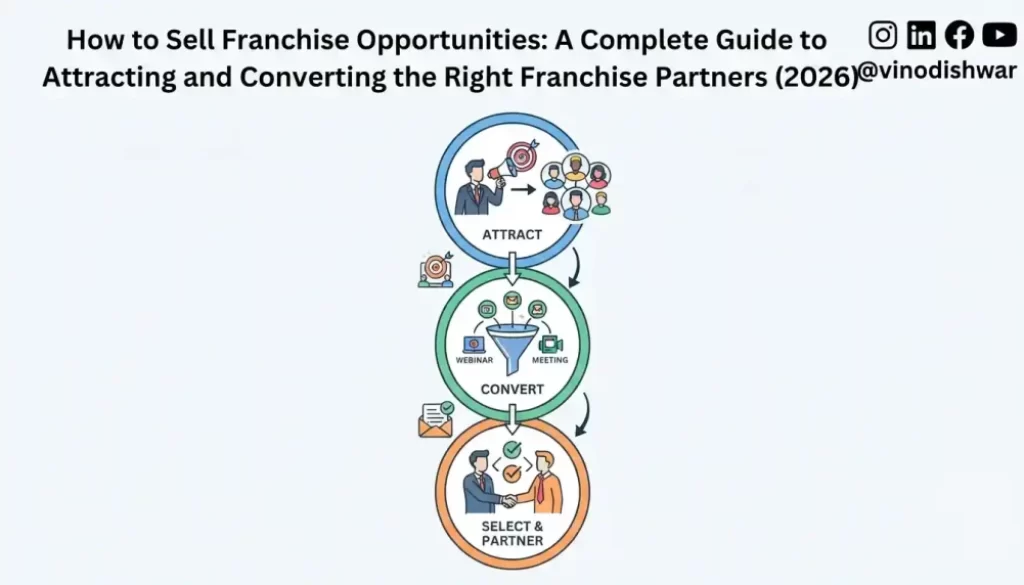
Franchise Sales Funnel
A typical franchise recruitment journey includes:
- Brand Awareness
- Website Visit
- Franchise Inquiry
- Initial Qualification
- Discovery Call
- Franchise Presentation
- Due Diligence
- Agreement Execution
- Training
- Business Launch
Every stage should have defined objectives and measurable KPIs.
Franchise Opportunity Marketing Checklist
Before promoting your franchise opportunity, ensure you have:
Marketing Assets
- Franchise website
- Digital brochure
- Franchise presentation
- Brand videos
- Success stories
- Investor guide
Sales Systems
- CRM platform
- Lead qualification checklist
- Follow-up workflows
- Sales scripts
- Automated email sequences
Documentation
- Franchise Agreement
- Operations Manual
- SOPs
- Brand Guidelines
- Disclosure documentation (where required)
Support Systems
- Training program
- Launch checklist
- Field support
- Ongoing coaching
- Performance reporting
Practical Example
A regional salon brand wanted to expand through franchising.
Instead of relying solely on franchise marketplaces, the company:
- Built an SEO-optimized franchise website
- Published educational content on franchising
- Used Google Ads and Meta Ads to reach prospective investors
- Implemented a CRM for lead tracking
- Introduced structured qualification interviews
- Conducted monthly franchise webinars
- Standardized discovery presentations
- Developed a comprehensive onboarding program
As a result, the brand improved lead quality, shortened the average recruitment cycle, and attracted franchisees who were better aligned with its operational standards.
Franchise Sales Framework
Brand Awareness
        │
        ▼
Lead Generation
        │
        ▼
Lead Qualification
        │
        ▼
Discovery Meeting
        │
        ▼
Franchise Presentation
        │
        ▼
Due Diligence
        │
        ▼
Legal Documentation
        │
        ▼
Training
        │
        ▼
Business Launch
        │
        ▼
Ongoing Support
Common Mistakes When Selling Franchise Opportunities
Avoid these common mistakes:
- Selling before your business is franchise-ready
- Targeting every investor instead of qualified candidates
- Making unrealistic financial claims
- Poor follow-up with inquiries
- No CRM or lead management system
- Weak onboarding processes
- Inconsistent franchise presentations
- Ignoring compliance requirements
- Focusing only on franchise sales rather than long-term partnerships
A disciplined recruitment process helps build a healthier franchise network.
Best Practices for How to Sell Franchise Opportunities
- Build educational content that answers common investor questions.
- Respond quickly to franchise inquiries.
- Use a CRM to manage every lead consistently.
- Create standardized presentations and qualification criteria.
- Maintain transparent communication throughout the recruitment process.
- Measure conversion rates at each stage of the sales funnel.
- Review marketing materials regularly to ensure legal compliance.
How Franchise Development Consultants Help
Professional franchise development consultants help businesses by:
- Assessing franchise readiness
- Developing franchise recruitment strategies
- Building lead generation systems
- Creating investor presentations
- Designing qualification frameworks
- Implementing CRM workflows
- Structuring onboarding programs
- Coordinating with qualified legal professionals
Consultants improve recruitment efficiency while helping businesses build sustainable franchise networks.
Why Choose Franchise Alpha?
At Franchise Alpha, we help businesses attract the right franchise partners through our proprietary SOLEMN® Framework, combining strategy, operations, legal coordination, marketing, and sales development.
Strategy
Create a customized franchise recruitment roadmap aligned with your expansion goals.
Operations
Develop standardized sales documentation, onboarding systems, and franchise support.
Legal
Coordinate with qualified legal professionals to ensure franchise agreements, disclosures, and marketing materials comply with applicable legal requirements.
Entrust
Implement governance systems that improve franchisee selection and long-term performance.
Marketing
Generate qualified franchise leads through SEO, Google Ads, Meta Ads, content marketing, and investor outreach.
Nitty-Gritty
Deploy CRM systems, automation workflows, KPI dashboards, and recruitment reporting to optimize franchise sales performance.
Frequently Asked Questions
How do I sell franchise opportunities successfully?
Build a structured recruitment system that combines franchise-ready operations, targeted marketing, lead qualification, transparent sales presentations, legal compliance, and comprehensive onboarding.
Where can I advertise my franchise opportunity?
Common channels include your franchise website, search engines, social media, franchise portals, business publications, networking events, webinars, and referral programs.
Should I qualify franchise leads before presenting the opportunity?
Yes. Qualification helps identify investors who have the financial capacity, operational commitment, and cultural fit needed for long-term franchise success.
What is the biggest mistake when selling franchise opportunities?
One of the biggest mistakes is prioritizing rapid sales over recruiting suitable franchise partners. Careful selection improves operational consistency and reduces future disputes.
Conclusion
Selling franchise opportunities is about building lasting partnerships—not simply closing deals.
By combining strategic marketing, disciplined lead qualification, transparent communication, compliant documentation, and strong onboarding, businesses can attract high-quality franchisees who contribute to sustainable brand growth. Avoid common franchising errors by reading our Franchise Documentation Mistakes to Avoid guide.
A structured franchise sales process strengthens your reputation, improves conversion rates, and lays the foundation for long-term franchise success.
Call to Action
Ready to Attract the Right Franchise Partners?
Book a Franchise Readiness Assessment with Vinod Ishwar and discover how to build a scalable franchise sales and recruitment system for your business.
Your assessment includes:
- Franchise Sales Strategy Review
- Lead Generation Audit
- Franchise Recruitment Assessment
- Sales Funnel Evaluation
- Customized Franchise Growth Roadmap
Build a stronger franchise pipeline and grow with confidence.