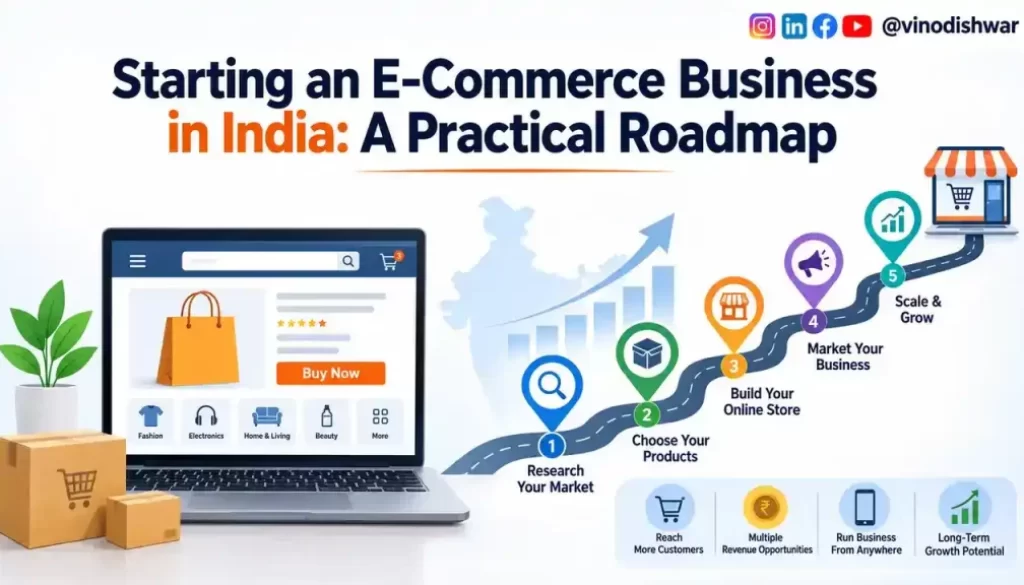
Starting an E-Commerce Business in India: A Practical Roadmap
Starting an e-commerce business in India has become easier thanks to growing internet usage, digital payments, and online shopping trends. However, building a successful e-commerce business requires more than launching a website—it demands careful planning, product validation, reliable logistics, and a strong customer experience. A professional business website gives your e-commerce business credibility and helps convert visitors into paying customers.
India’s e-commerce sector has grown from a niche convenience into a mainstream shopping habit across metros, Tier-2, and increasingly Tier-3 cities. This growth has opened genuine opportunity for entrepreneurs — but it has also raised customer expectations around speed, reliability, and experience, making a structured, well-planned approach far more important than simply “putting products online” and hoping for sales.
Step 1: Validate Your Product and Niche
Before building anything, confirm there’s genuine demand for what you plan to sell. Research search volumes for your product category, study existing competitors’ customer reviews for gaps and complaints, and ideally test demand through a small pilot — a limited product run, a simple landing page, or sales through an existing marketplace — before committing significant inventory investment. Validating your idea first is one of the smartest ways to reduce risk before investing in inventory.
Step 2: Choose the Right Business Structure and Compliance Setup
Register your business appropriately (sole proprietorship, partnership, LLP, or private limited company, depending on scale and growth plans), obtain GST registration, and ensure compliance with applicable e-commerce regulations. Getting this foundation right early avoids costly complications as the business grows.
Step 3: Decide Between Your Own Website, Marketplaces, or Both
Your own website (via platforms like Shopify or WooCommerce) offers full control over branding, customer data, and margins, but requires you to drive your own traffic. Marketplaces (Amazon, Flipkart, Meesho, and others) offer access to existing customer traffic and trust, but come with commission fees and less control over branding and customer relationships. Most successful sellers eventually use a combination of both, starting wherever validation and resources make the most sense. Many entrepreneurs use Shopify to launch professional e-commerce stores without extensive technical knowledge. Businesses using WordPress often choose WooCommerce to build flexible online stores.
Step 4: Build Reliable Sourcing and Inventory Management
Whether manufacturing, sourcing wholesale, or dropshipping, establish reliable supplier relationships with consistent quality and lead times. Poor sourcing reliability is one of the most common causes of early e-commerce failure, since stockouts and quality inconsistency directly damage customer trust and reviews.
Step 5: Solve Logistics and Fulfillment Early
Decide between self-fulfillment, third-party logistics partners, or marketplace fulfillment services, based on your order volume, product type, and geographic reach. Delivery speed and reliability significantly influence customer satisfaction and repeat purchase behavior in Indian e-commerce.
Step 6: Set Up Secure, Convenient Payment Options
Offer a range of payment methods — UPI, cards, net banking, and cash on delivery where appropriate — since payment friction is a significant cause of cart abandonment. Ensure your payment gateway is secure, reliable, and properly integrated with your order management system.
Step 7: Invest in Product Presentation
High-quality product photography, clear and accurate descriptions, and transparent pricing (including any shipping or handling costs) significantly influence conversion rates. In a category where customers can’t physically inspect products, presentation quality substitutes for the in-store experience.
Step 8: Build a Customer Acquisition Plan
Combine SEO, social media marketing, and where appropriate, paid advertising, with a clear understanding of your customer acquisition cost relative to average order value and lifetime value. Avoid discounting aggressively without understanding the margin impact.
Step 9: Prioritize Customer Service and Returns Handling
A clear, fair returns and refund policy, combined with responsive customer service, builds the trust necessary for repeat purchases and positive reviews — both critical for sustainable e-commerce growth.
Common E-Commerce Mistakes to Avoid
- Launching with too broad a product range, diluting focus and inventory investment.
- Underestimating logistics complexity, particularly for categories requiring careful handling or fast delivery.
- Ignoring compliance requirements, risking penalties or account suspension on marketplaces.
- Competing purely on price without a clear differentiation or sustainable margin structure.
- Neglecting customer reviews and feedback, missing valuable signals for product and service improvement.
Key Takeaways
- Product and niche validation should precede significant inventory investment.
- Combining your own website with marketplace presence often provides the most balanced growth path.
- Reliable sourcing and logistics are as critical to success as marketing and product quality.
- Product presentation quality directly substitutes for the missing in-store experience.
- Customer service and fair returns policies significantly influence repeat purchase behavior.
Conclusion
Building a sustainable e-commerce business in India requires more than an attractive storefront — it requires disciplined attention to sourcing, logistics, compliance, and customer experience working together. A structured, staged approach significantly improves your odds of building a lasting online business.
-Vinod Ishwar
FAQs
1. How do I start an e-commerce business in India?
Start by validating your product idea, registering your business, choosing an online selling platform, arranging logistics, setting up payment gateways, and creating a marketing strategy.
2. Do I need GST to sell products online in India?
In most cases, yes. GST registration is generally required for businesses selling through online marketplaces and for many e-commerce operations.
3. Should I sell through my own website or marketplaces?
A combination of both often works best. Your website builds your brand, while marketplaces like Amazon and Flipkart provide immediate customer reach.
4. What is the best platform to build an e-commerce website?
Popular options include Shopify, WooCommerce, and other e-commerce platforms depending on your budget, technical skills, and business requirements.
5. How much investment is needed to start an e-commerce business?
The investment varies depending on inventory, website development, marketing, and logistics. Many businesses can start with a relatively small budget by validating demand first.
6. How can I attract customers to my online store?
Use SEO, content marketing, social media marketing, paid advertising, email marketing, and excellent customer service to attract and retain customers.
7. What are the biggest mistakes new e-commerce businesses make?
Common mistakes include skipping market validation, poor inventory management, weak customer service, ignoring SEO, and relying only on discounts to drive sales.
8. Why is customer experience important in e-commerce?
A smooth shopping experience, fast delivery, secure payments, and responsive customer support help build trust, increase repeat purchases, and improve long-term business growth.